QR codes are really cool. The ability to point your smartphone camera at a blob of random black lines and have an easy link or message come from it is fascinating and useful, but hardly anyone uses them. There’s a reason for that, however.
Gartner today is out with its latest report concerning the smartphone industry during the fourth quarter of 2016. According to the data, global sales of smartphones to users totaled 432 million units during the quarter, an increase of 7 percent compared to the year before.
Perhaps most notably, Q4 2016 saw Apple leapfrog Samsung to become the number 1 global smartphone vendor….
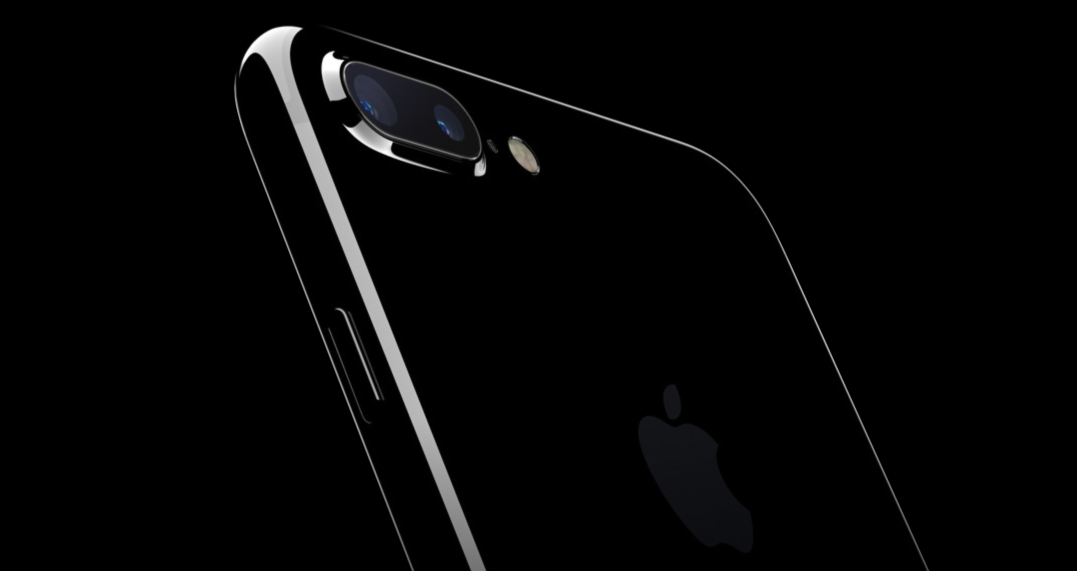
Apple stepped up. Today it announced the iPhone 7, the first true successor to the iPhone 6 that launched in 2014. While many expected this to be yet another “tock” (think iPhone 6SE) update offering little more than incremental improvements and an almost indistinguishable design, Apple instead brought a slew of substantial enhancements to the device and introduced a new glossy black design that even convinces me that the phone is deserving of its whole integer naming bump.
Most of what Apple introduced with the iPhone 7 is admittedly catchup — they’re features that Android OEMs have been offering for months (or in some cases, years). Headphone jack removal, waterproofing, dual-cameras, stereo speakers, and 32GB base storage have all been done on Android handsets. The iPhone 7 does, however, pack a lot of these features into an overall package that’s undeniably polished and backs them up with raw power enhancements under the hood…
2016 seems to be doing all sorts of good to Samsung. Its pair of flagship smartphones, the Galaxy S7 and S7 edge, are receiving accolades from both the specialized press (including us) and customers, and the momentum will probably be kept up come the Galaxy Note 7, a little over a month from now.
Consumers in particular seem to be really happy with Samsung’s recent output, so much so that its sales are soaring arguably beyond expectations…
Despite having been mocked because of its browser-only OS limitation, Chromebooks have seen an astonishing degree of success in certain sectors including education, mostly due to the combination of high efficiency and low costs.
But when MacBook enclaves Apple CEO Tim Cook‘s old high school start making “the switch” to Chromebooks from MacBooks, we take notice…
The battle between Samsung and Apple for the first spot in the consumer electronics world seems to be never ending. As products get increasingly better it becomes progressively harder for brands like these to win the customers’ hearts (and wallets), but at least for 2016, Asia has spoken…
Apple took the stage today at the Bill Graham Civic Auditorium in San Francisco, California to announce the latest new features — for developers and consumers alike — for its four main platforms: watchOS, tvOS, macOS (previously called OS X), and iOS. There is tons of new stuff in these releases set to go public later this year, but one thing that became increasingly clear as the event progressed was that the Cupertino company is playing a lot of catch up.
It’s not a new trend, really. Google has always introduced features and potential products to the public not long after they become barely workable experiments, leaving other companies like Apple to appear behind at times — whether or not they actually are “behind” in reality. It goes without saying that there are always things being worked on in the background (that’s why I put “copied” in quotes), but with many of today’s announcements, Apple brought those things to light.
According to a report from MacDailyNews, Apple will announce that iMessage is coming to Android at Monday’s upcoming WWDC 2016 keynote.
Such an announcement, which MacDailyNews claims to have obtained from “a source familiar with the company’s thinking,” would go a long way towards making it simpler for users to shift between the two competing platforms. But what would be Apple’s motivation for making such a change? Expand Expanding Close
Among other changes this morning, Apple announced a new 85-15 revenue split with developers of apps that have subscriptions. Recode is now reporting that Google has had the same plan in mind for the Play Store, but with an important advantage.
Huawei‘s ambition are not small. At the Wall Street Journal and f.ounders-held Converge technology conference in Hong Kong, Huawei director Richard Yu — who heads the company’s consumer electronic business — made it clear that the firm’s short term plan is more than aggressive…
Mobile contactless payments are becoming an increasingly important and common feature nowadays, and following Apple‘s and Google‘s push with their respective systems, Samsung too has started to offer its service in Europe, starting with Spain…
There are a number of things that need to be considered when trying to properly evaluate a device. Beyond mere specs and real life performances, for instance, customer satisfaction is indeed an important metric.
For years, Apple has boasted the iPhone as the number one choice for consumers, but as per the last American Customer Satisfaction Index, Samsung seems to have overthrown the Cupertino giant with its own Galaxy Note 5…
Few things have made the case for an interesting use of the NFC chips inside our phones like contactless payments. Revived by Apple with the introduction of Apple Pay in late 2014, mobile-based transactions have seen an interesting resurgence ever since.
Companies like Samsung and LG have come up with proprietary solutions, but Android users have all found a home under Google‘s very own rooftop with Android Pay. Initially launched in the US alone, the service is now expanding, and after recent promises of a forthcoming launch, it looks like the green light for the UK may be imminent (via Telegraph)…
With the announcement of the Apple Watch‘s “Force Touch” first and the iPhone 6s‘ 3D Touch after, Apple introduced a new, intriguing way to interact with our screens, matching interesting software features with the pressure-sensitive panel behind the actual display.
Predictably, despite some devices like Huawei‘s Mate S or ZTE‘s Axon Mini already supporting some sort of similar, proprietary technologies, Googlewas rumored to be working on a system-wide implementation for all Android OEMs to use. However, as Recode reports, the support for such a feature seems to have been put momentarily on hold…
Google parent company Alphabet has once again surpassed Apple in terms of value based on market capitalization. CNBC points out that Alphabet (GOOG) saw its market cap around $498.56 billion during trading today, while Apple (AAPL) saw its market cap down around $496.69 billion.
In the middle of seemingly stalling profits and a general slowdown of the smartphone industry — like Apple‘s notable first quarter of YoY growth drop in years — Samsung seems to be enjoying a moment of sunshine bathing.
Eleven months after losing the leadership to the Cupertino giant, the Korean manufacturer has climbed once again to the top of the US vendors’ list, as per a Counterpoint Research report (via Business Korea)…
A new open source project called PieMessage enables cross-platform iMessage support, allowing Android users to communicate using Apple’s iPhone messaging platform.
In the video below, we get a short look at the PieMessage app in action with a still unreleased prototype version of the app.
A short while ago, Google and HP announced a brand new metal-clad Chromebook which boasted some impressive specs, including the powerful, efficient Core M chips from Intel, high resolution screens, generous RAM and more than one Type-C port. In a lot of ways, this is the more affordable laptop the Pixel should have been, and will give the Dell Chromebook 13 a run for its money. But how does it compare to the other Core M laptop; Apple’s latest 12-inch MacBook?
The latest figures from Strategy Analytics show that Chinese brands Huawei and Oppo were the main winners in a year that saw the first ever fall in global smartphone sales, with established brands Samsung and Apple both seeing falls in their share.
Linda Sui, Director at Strategy Analytics, said, “Global smartphone shipments fell 3 percent annually from 345.0 million units in Q1 2015 to 334.6 million in Q1 2016. It is the first time ever since the modern smartphone market began in 1996 that global shipments have shrunk on an annualized basis. Smartphone growth is slowing due to increasing penetration maturity in major markets like China and consumer caution about the future of the world economy.”
While Samsung held its number one place in the rankings, it saw its sales drop by 3.7M year-on-year, while Apple’s iPhone sales dropped by 10M in the same time-frame. It was Chinese brands which picked up these lost sales …
While Xiaomi and Huawei may be battling it out for the top spot in China, both brands are reportedly being hit hard by Apple’s cheapest-ever iPhone, the iPhone SE.
It was previously reported that third-party retailers in the country received 3.4M preorders before the iPhone SE went on sale, and now a supply-chain report says that Apple is taking market share from local brands.
For both Google and Apple, the operations on their virtual stores are hugely important, as they account for millions of dollars. However, there has historically been a disparity between the number of downloaded applications and the actual money generated by them, a trend that seems to have peaked in the first quarter of this year.
According to App Annie‘s Index Market for Q1 of 2016, in fact, Google’s Play Store saw a number of downloads that roughly doubles that of the iOSApp Store, which in turns represents the platform with the highest profitability, with over 90% more revenue generated over its counterpart…
Re/code today reports that Silicon Valley icon and longtime Google advisor Bill “The Coach” Campbell has passed away at age 75 after a long battle with cancer. The unfortunate news comes from “many prominent tech players,” following earlier unconfirmed reports. Campbell was a mentor to many tech leaders, including Steve Jobs, Larry Page, Eric Schmidt, and Jeff Bezos.