Stay up to date on news from Google headquarters. Be the first to learn about plans for Android, Google Plus, Google Apps, and more!
Stay up to date on news from Google headquarters. Be the first to learn about plans for Android, Google Plus, Google Apps, and more!


Almost 60,000 apps have been removed from Google Play, reports TechCrunch, in a move believed to be in response to the number of apps falling foul of the store’s anti-spam policies.
Expand
Expanding
Close

New data from tech analysts Canalys (via TechCrunch) shows Google leading downloads, with Google Play accounting for 51 percent of the market against Apple’s 40 percent, but Apple well ahead in monetisation, taking 74 percent against “close to 20 percent” for Google. More on 9to5Mac.com

This past weekend, a rumor had claimed that Google is holding talks with WhatsApp to acquire the messaging service for around $1 billion. Tonight, WhatsApp has told AllThingsD that it is not holding sales talks with Google. Meanwhile, Google is rumored to soon be launching its own “Babel” messaging service.

Rumors of an upcoming messaging service from Google dubbed “Babel” have been steadily popping up in recent months. We first heard back in March that the service would unify Google’s chat services such as Google Talk, Chat for Drive, Google+ Hangouts, etc, and since got a look at two different sets of screenshots showing variations of what tipsters both alleged were an Android app for the rumored service.
After a small hint at Gmail integration for Babel this morning, we now get yet another set of photos, this time reportedly showing what the service will look like inside of Gmail. TechRadar posted the images above that apparently come from an anonymous Google employee currently testing Babel.
From the screenshots we see a slightly tweaked text layout, new emoticons and the expected Google+ integration, but not much else.
Expand
Expanding
Close
Update: WhatsApp denies the rumor
Digital Trends claims that Google is negotiating to buy the hugely popular messaging app, WhatsApp – with the company said to have rejected initial offers and to be holding out for a price said to be close to $1 billion (via Gizmodo).
Google is on record as acknowledging its weakness in the mobile messaging field, with Digital Trends arguing that the acquisition makes perfect sense.
There are rumors that Google Babel will combine Google’s disparate communication services under one roof, but the platform still needs to do something to innovate in this space; mobile messaging has been taken over by smaller apps and Facebook has made a major push as well. Google hasn’t given an answer to this competition. Even Google Product Manager Nikhyl Singhal confessed to GigaOM in June of last year that “We have done an incredibly poor job of servicing our users here.” Messaging is a huge, gaping hole in Google’s mobile strategy.
Google Voice already offers most of the features of What’s App making the acquisition primarily a subscriber play, but we’re not exactly holding our breath on this one. Remember Google already has some Bable thing being cooked up, so adding something huge like this might put a wrench in the works.

Update: Confirmed by KVUE
[protected-iframe id=”02a8e8cabc089935b8e9ebf982ceaec3-22427743-13611283″ info=”http://swfs.bimvid.com/player-3.2.15.swf” width=”470″ height=”264″]
Venturebeat got the word from some invites that went out this week.
On Tuesday, April 9, at 11 a.m., the City of Austin and Google will make a very important announcement that will have a positive impact on Austinites and the future of the city. We anticipate more than 100 community leaders and elected officials to be in attendance to celebrate this announcement. The event invitation is attached for your convenience. Although we cannot share the details of the announcement with you in advance, we know readers will want to learn more, so we encourage you to join us on Tuesday.
I’d move to Austin.

Google today announced in a blog post on its Public Policy Blog that it has asked the Federal Trade Commission and the Department of Justice to investigate and take a stronger stance against patent privateering and patent assertion entities, aka patent trolls. Google linked to a document submitted to the government agencies mentioned above and noted that BlackBerry, Earthlink and RedHat are among other companies backing the request.
Within its post, Google’s Senior Competition Counsel Matthew Bye cited losses of nearly $30 billion a year in the U.S. due to patent trolls and urged companies to help Google create “cooperative licensing agreements that can help curb privateering.”
Trolls use the patents they receive to sue with impunity—since they don’t make anything, they can’t be countersued. The transferring company hides behind the troll to shield itself from litigation, and sometimes even arranges to get a cut of the money extracted by troll lawsuits and licenses.
Google described patent privateering as companies selling “patents to trolls with the goal of waging asymmetric warfare against its competitors.” While it didn’t name any companies specifically in its blog post or document submitted to the FTC, it did link to an article on Bloomberg that mentions Microsoft, Nokia, and Alcatel-Lucent as companies linked to patent privateering.
In the document submitted to the FTC, Google outlined its stance on patent trolls and recommended the FTC initiate an investigation into patent assertion entities and or expand its broader inquiry to include a number of important areas specifically related to patent privateering:
Expand
Expanding
Close

Google’s Nathan Johns posted a picture of an all-pink Tesla Model S yesterday complete with the official bat signal on its hood, bat wings as a spoiler, and Chrome’s logo embedded in the middle of its alloys.
This candy-coated Tesla apparently belongs to Google cofounder Sergey Brin. According to Search Engine Round Table, Brin’s beloved and spirited Googlers played an elaborate April Fool’s Day prank last Monday and transformed his zero-emissions car into a cute flashy Batmobile.
Brin—seen driving his Tesla around LinkedIn’s headquarters in the image above (via Brian Li)—is sometimes called “Batman” around Google because of his Batcave-like Google X repository.
Facebook introduced the HTC First with Home for Android today, and now CEO Mark Zuckerberg is doing the press rounds and discussing everything from “Facebook phone,” building for Android, Google’s reaction to Home, and even why iOS was left in the dark.
During the unveiling event, Zuckerberg described building Home for Android as “smooth,” because the platform is open and does not require any Google intervention, where as Home for iOS would require a direct partnership with Apple.
In a wide-ranging interview at Wired.com this afternoon, Zuckerberg gave a more detailed explanation on why Facebook launched Home for Android phones instead of iOS, as well as why the company ditched the idea of building a phone directly:
Why not just build a phone?
I’ve always been very clear that I don’t think that’s the right strategy. We’re a community of a billion-plus people, and the best-selling phones—apart from the iPhone—can sell 10, 20 million. If we did build a phone, we’d only reach 1 or 2 percent of our users. That doesn’t do anything awesome for us. We wanted to turn as many phones as possible into “Facebook phones.” That’s what Facebook Home is.
It’s only available on Android phones. Isn’t it ironic that your mobile strategy is now tied to Google’s operating system?
“We have a pretty good partnership with Apple, but they want to own the whole experience themselves. There aren’t a lot of bridges between us and Google, but we are aligned with their open philosophy.”
So do you think in, say, two years you will have this on the iPhone?
“That’s above my pay grade to be able to answer that.”
That’s a pretty high pay grade.
“Look, I would love for that answer to be yes. Facebook is in a very different place than Apple, Google, Amazon, Samsung, and Microsoft. We are trying to build a community. We have a billion folks using our services now, and we want to get to 3 or 5 billion one day. We’re going to do that by building the best experience across all devices. Android is growing quickly, and we’re excited that the platform is open and that it allows us to build these great experiences. I think that this is really good for Google too. Something like this could encourage a lot of people to get Android phones, because I think people really care about Facebook. In a lot of ways, this is one of the best Facebook experiences that you can get. Of course, a lot of people also love iPhones—I love mine, and I would like to be able to deliver Facebook Home there as well.”
Zuckerberg also talked with Fortune.com today about Google’s reaction to Home and what it’s like working with Apple:
On what Google will think of Facebook’s use of the open Android platform:
“I’m not sure how they’re going to react.”
On working with Apple:
“They really control the operating system… Android is different because it’s a much more open platform.”
On Google vs. Apple in mobile:
“I think that Google has this opportunity in the next year or two to start doing the things that are way better than what can be done on iPhone through the openness of their platform. We’d love to offer this on iPhone and we just can’t today. And we will work with Apple to do the best experience that we can within what they want, but I think that a lot of people who really like Facebook–and just judging from the numbers, people are spending a fifth of their time in phones on Facebook, that’s a lot of people. This could really tip things in that direction. We’ll have to see how it plays out.”
Arthur Frommer announced yesterday that he reacquired the rights to his travel brand from Google with plans to continue publishing Frommer’s guidebooks.
Google acquired Frommer’s last summer from the Wiley publishing company, but Skift.com reported recently that the Internet Giant intended to “cease production” of Frommer’s books.
Frommer, 83, originally sold his travel line to Simon & Schuster in 1977. Despite nearly 40 years of separation, Frommer told the Associated Press on Wednesday that he bought his brand back from Google.
“It’s a very happy time for me,” said Frommer. “We will be publishing the Frommer travel guides in ebook and print formats and will also be operating the travel site Frommers.com.”


It should come as little surprise to industry observers that Facebook plans to unveil both a rich, skinned version of its Android app at a press event tomorrow, along with the first hardware to run that experience out of the box. The phone, by HTC, is appropriately named “First”—appropriate because of its status as the première phone to undergo Facebookification and its similarity to the name of HTC’s newest flagship, the One. More screenshots follow:
Expand
Expanding
Close
Google refreshed Google Places for Business last night with a new look and feel.
The streamlined interface now makes it easier for businesses to update their information, and a helpful widget will even outline what they should do to fully complete profiles.
Profile edits will also now appear across all of Google’s products, like Google Maps, within 48 hours, but the improved integration doesn’t stop there. The official Google and Your Business blog has the story:
Through this upgraded interface, you will be able to access your local Google+ page to take advantage of social features like sharing photos, videos, or posts. For businesses who also use AdWords Express and Google Offers, managing your ads and promotions is easier than ever. You can check results and make edits directly from your upgraded Places for Business dashboard.
Google+ now allows users to upload and share full-size photos from their desktops.
Google+ introduced full-size backups for Android photos in December 2012, and now it has expanded support for that functionality. Google’s Jon Emerson has the story:
To enable full-size desktop uploads, just visit your settings at www.google.com/settings/plus, and check “Upload my photos at full size.” Afterwards, any files larger than 2048px will count towards your Google storage (up to 5GB free). Photo storage at 2048px or smaller remains free and unlimited.
Emerson clarified that the update doesn’t allow users to replace previously uploaded images with a new full-size version. But, hey, now they can update their profile photo, create a new album to share, or back up pictures with better-detailed images up to 2048 pixels large.
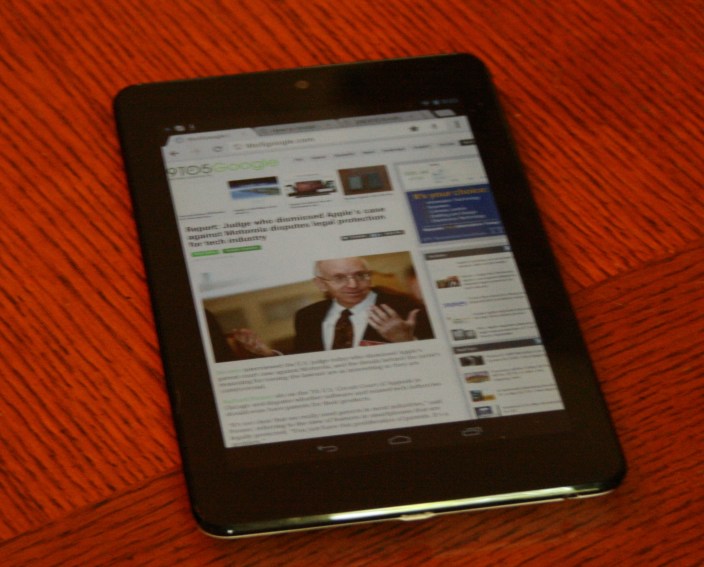
Reuters has some vague new information on the Nexus 7 successor from Google today. Rather than being available at Google I/O in May (which would have been my guess), Reuters thinks it won’t hit the mass market until July. Perhaps a limited run will be available to developers in May?
As far as specs…
Twilio, a voice and messaging API solution, announced a partnership with Google’s Cloud Platform today.
Twilio is the first of its kind to integrate with Google App Engine and give developers voice and messaging services for their apps with just a few lines of code, and its APIs are priced on a pay-per-use scale, as first noted by TechCrunch. Voice services like making calls, for instance, start at 2 cents per minute, and the ability to receive calls costs just $1 per phone number and 1 cent per minute.
“We’re very excited to partner with Google to be the first voice and messaging platform integrated with Google Cloud Platform,” explained Twilio on its blog, while also listing step-by-step instructions on how to register with Google App Engine, build a messaging app, etc.
Twilio’s SDK notably includes one-to-one voice and messaging, SIP support, in-app conference calling, group texting, two-factor authentication, phone numbers, and mobile app distribution. Hipmunk, for instance, uses Twilio’s distribution feature to supply users with a text message and link to download its app.
[youtube=http://www.youtube.com/watch?feature=player_embedded&v=Zr4JwPb99qU]
While Google has played several light-hearted April Fool’s jokes today, Microsoft’s search engine Bing took things to the next level by pretending to be Google.
To see the somewhat harsh joke, go to Bing’s website and then search for “Google.” A Google-like search page will appear with the header “Bing.” The fake search page features floating squares that criticize Google, but it most notably changed Google’s “I’m Feeling Lucky” button to “I’m Feeling Confused” with link to a blog post that fully explains the joke.
According to Bing.com’s blog:
So today we’re running a special test, where if you visit bing.com and enter a certain telltale query, you’ll get something a little more bland. We decided to go back to basics, to the dawn of the Internet, to reimagine Bing with more of a 1997, dial-up sensibility in mind. We may see some uptick in our numbers based on this test, but the main goal here is just to learn more about how our world would look if we hadn’t evolved.
So, Microsoft has basically slammed Google’s look and deemed it dated. Yeah. Way to keep things light, Redmond. Don’t worry, though: Google has lashed back.
http://www.youtube.com/watch?v=kusQK7PCXTM
If Nuance gets its way with the just announced ‘Voice Ads’ mobile advertising platform, soon every mobile ad could include Siri-like functionality that lets you communicate with and ask questions about the product being advertised.
Nuance, the company behind the voice recognition module now used in Apple’s Siri, today announced a new project to bring its voice recognition technology to the mobile advertising world. The basic concept of the new platform, which Nuance made available through an SDK for advertising companies, is to bring a two-way, interactive conversation to mobile ads. As highlighted by Nuance in the video above, ads that implement the Voice Ads platform will allow users to engage in a Siri-like conversation with an advertisement:
Nuance Voice Ads gives mobile advertisers and creative agencies an opportunity to go beyond the limitations of the four-inch mobile device screen and create a conversation with consumers through the power of voice recognition. Voice Ads finally creates an opportunity for brands to deepen the relationship with their consumers, with targeted interactive ads that deeply engage their core audience – much in the way that the world’s most popular mobile personal assistants have deepened consumers’ relationship with their mobile phones.
In the demo above, Nuance shows an advertisement for a fictional deodorant brand that uses a magic 8-ball theme to answer any question that users might have. The ad of course ends in a pitch for the product in question, as you might expect. Other ads could allow users to ask specific questions about a product’s release date or specs…

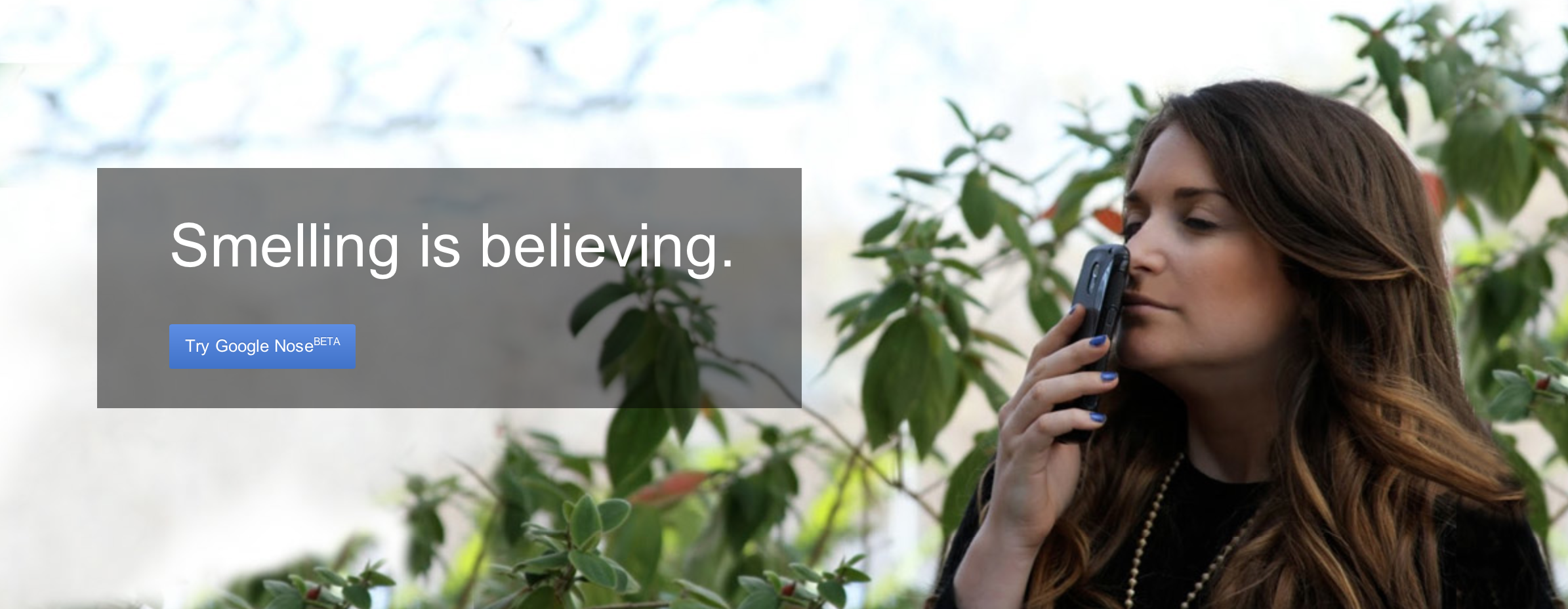
Google has begun its yearly unveiling of April Fool’s Day jokes with some clever new ideas that probably come up in strategy meetings throughout the year.
Google Nose. Searching a query on Google and clicking the ‘Nose Beta’ button can only find this ‘service’. The service isn’t real of course, but you can read about its features on Nose’s homepage. Funniest bit?
Don’t ask, don’t smell: For when you’re wary of your query – SafeSearch included.
More Google jokes are on the way…
Expand
Expanding
Close
Patents don’t always become reality, but they—such as Google’s latest camera settings patent— are certainly an interesting look into the possible future.
As reported by Engadget, a new Google patent filed with the United States Patent and Trademark Office describes a method of using GPS technology to auto-adjust a camera’s settings. The GPS would gather data for local climate and tune the camera’s white balance and saturation, for instance, to match the weather.
For those interested, the patent’s legalese abstract follows:
Disclosed herein is a method for capturing an image using an image capture device equipped with a processor. The method includes receiving an electromagnetic signal transmitted from a remote station, determining a location of the image capture device based on the received electromagnetic signal, establishing communication over a network between the image capture device and a remote server, transmitting a request to the remote server for weather information pertaining to the determined location; receiving the weather information, determining an ambient lighting value based on the weather information, capturing an image using the image capture device, and processing the captured image using the determined ambient lighting value.
Photographers can fine-tune their own settings now, obviously, but Google’s patent is an interesting spin on GPS and camera settings. Marrying the two functions together would certainly create new, appealing technology for snapping beautiful images in rain or shine and on the fly.
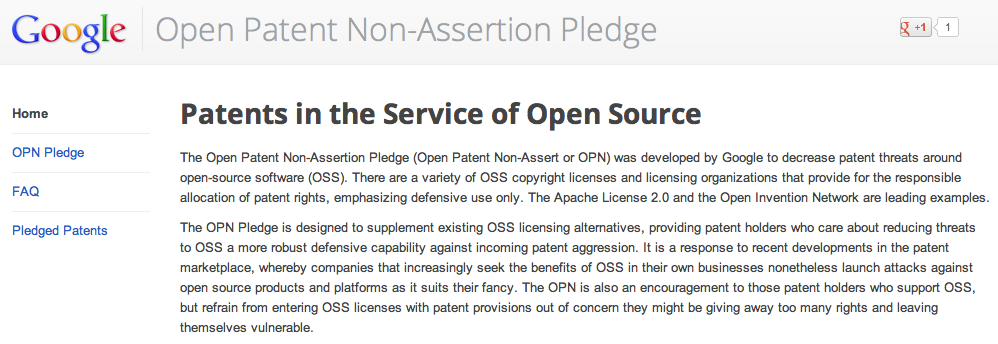
Google, a noted supporter of open-source software, has pledged not to sue anyone developing, distributing, or using open-source software that uses any of a specified number of Google patents unless attacked first.
Google announced an update today to Google Translate for Android that brings an extremely useful feature for those who are traveling or in need of translations when without an Internet connection. Starting today, the updated Android app will now allow users running devices on Android 2.3 and up to access the service using downloadable offline language packages.
Google noted that there are currently around 50 languages available for offline use and detailed how to download the necessary packages through the app:
You can select [Offline Languages] in the app menu to see all the offline language packages available for download. To enable offline translation between any two languages, you just need to select them in the offline languages menu. Once the packages are downloaded, you’re good to go.
While the languages packages provide everything you need to get quick translations when offline, Google warned that the offline modes are “less comprehensive than their online equivalents” without explaining in detail.
Users of the updated app will also now be able to translate vertical text for Japanese, Chinese, and Korean—using their device’s camera.
The updated Google Translate app for Android is available now through Google Play.
Google announced today in a post on Google+ that the results from its #ifihadglass contest are in and the winners will be contacted with invitations to the Google Glass Explorer program over the next few days.
We could never have imagined such an enthusiastic response! There were so many creative, diverse, and (sometimes) crazy applications. We’ve certainly learned a lot through this whole process and it’s inspiring to hear how much passion there is for Glass.
Google didn’t mention availability for those who signed up for the $1,500 Explorer Edition at last year’s Google I/O, but we’ll likely hear more on availability for others with invitations going out to contest winners in the near future.
Google noted in today’s post that it currently isn’t offering the Explorer Program to businesses, but it will work “on connecting with businesses in other ways.” Those who received an invitation to the Explorer program will be able to pick up their Glass at one of several events planned for later this year in New York, San Fran, and L.A. Invitations will be announced through @projectglass on Twitter and +Project Glass on Google+.
We have been hearing a lot about the much rumored Motorola X phone. Motorola’s new advisor Guy Kawasaki has been hinting at some big customization options for upcoming Motorola devices, and previously Google CEO Larry Page said Motorola was working on some advanced new features for future smartphones. Some sketchy reports of specs first leaked earlier this month, but a new report today would seem to make sense given Page’s previous comments.
While they don’t exactly match the rumored specs from earlier this month, PhoneArena is reporting a tipster has provided some information on specs for the Motorola X device. Most notable is the mention of a 4.8-inch made of sapphire glass and a 4,000mAh battery, two things that would seem to line up with Page’s comments related to better batteries and impact-resistant designs.
Other specs in the report include corners “made with rubber bumpers”, a carbon fiber back case, and a quad-core 2Ghz Quallcomm Snapdragon 800. The rubber bumpers could also be related to Page’s comments about devices that are more resistant to impact. PhoneArena is also claiming that the device will be water resistant and launch in November in time for the holiday shopping season.
No word on potential hardware customization options as speculated by many following Kawasaki’s comments.
Expand
Expanding
Close
Google has been constantly updating its Maps and Google Earth apps with new Street View imagery in recent months. Earlier this month it began rolling out new imagery for famous mountains including Kilimanjaro and Everest, and now Google’s Street View team is hitting Northern Canada for the first time with its Street View Trekker backpacks:
This is the first Trekker expedition in Canada for Google Maps. I’m wearing the backpack to collect Street View imagery as I walk to the shore of Frobisher Bay, where the wind is the strongest and you can see the tide piling up mountains of sea ice. On the way I’ll pass sled dogs tied up outside houses, yapping in anticipation of their next trip. And I may stop to check out an igloo, built by Inuit craftsmen using methods passed down over a millennia.