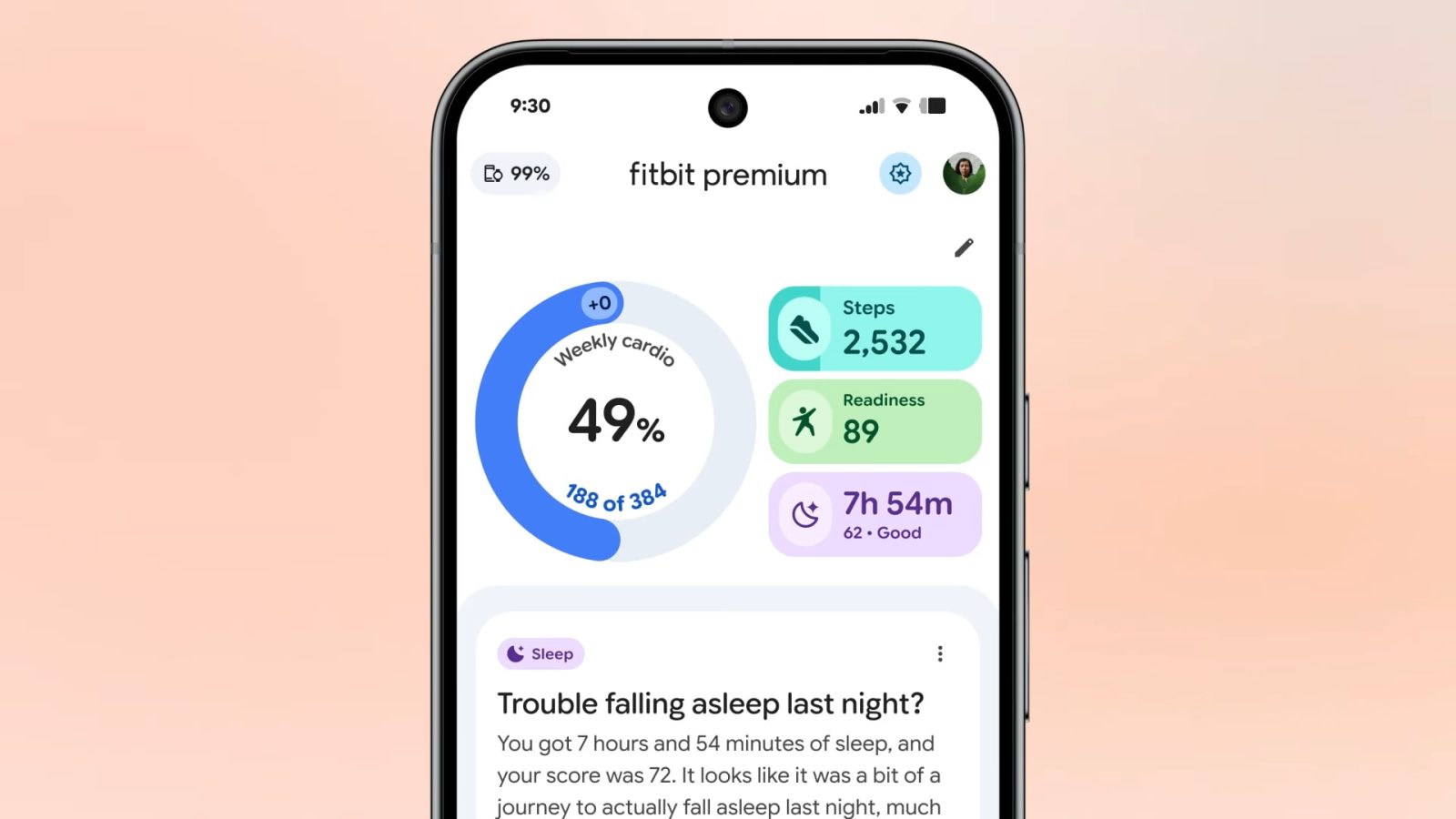
Fitbit Public Preview adds food & water logging, more as app redesign comes to free users


Google today announced two changes to AdSense but doesn’t “expect publishers to see a change in their earnings” and payments. Consistency and “greater transparency” were cited as the reason for these updates.
Expand Expanding Close

Reuters reports that Google is facing trouble in Russia this week, as the country has threatened a slowdown of the company’s services unless it deletes content that’s been banned by the government.
Expand Expanding Close

Google has been fined $1.69 billion after EU regulators claimed that the tech company abused its own search system to essentially force third-party sites to use the AdSense network over other rival online ad serving companies.
While all the YouTube attention may be centered on the upcoming music streaming service, the Google company last night announced new ways for advertisers to target television viewers. Revealing an interesting trend, new ad types will help those who watch YouTube on the big screen.
Ahead of tomorrow’s Congressional hearings, Google has published its findings on Russian interference related to the 2016 U.S. election. In several reports, Google provided an overview of how a Russian-linked organization used Ads, YouTube, and other services to spread information, as well as upcoming steps to counteract it.
As rumored earlier this month, Android Pay is continuing its international expansion by launching in Russia. Google’s mobile payment system is now available in its 11th country and is live with a slew of support from local retailers, applications, and bank partners.

Google has announced today a couple of initiatives to make AdSense more transparent for publishers. Not only is Google announcing a new ‘Policy Center’ today that will serve as a “one-stop shop” for publishers to control policy actions on their site, but the company says that soon policy actions will happen on the page level by default, leaving ads on non-offending parts of a site alone…
Expand
Expanding
Close
Following a 2015 ruling of anti-monopoly behavior involving Android, Google has settled with Russia’s regulatory agency in an out-of-court deal. Google will allow apps and competing search engines to be pre-loaded on devices, with a new tool to select the latter.


Not even a week after being requested to pull The New York Times app from the Chinese Apple App Store, both Apple and Google will have to pull the LinkedIn app from their respective app stores. According to The New York Times, the removal comes after a court ruled that LinkedIn had violated Russia’s data protection laws.
As election season comes to a close, many are still looking up information about the results. Earlier today those searches turned up some interesting results are Google surfaced fake election results at the top of the page, even putting those results front and center in Google Assistant. Now the company is making some changes to help prevent fake news from spreading.


Despite its recent foray in the hardware business, Google is first and foremost a company that relies on advertising. And so, in turn, lots of people rely on the company’s own online monetization tool, AdSense, whose website just got a Material Design coat of paint…

Google Adwords will be banning ads for so-called ‘payday loans’ and other lending at very high interest rates. As of July 13th, Google will no longer accept ads for loans that have to be repaid within 60 days, or any loan with an APR exceeding 36%.
The change was announced on Google’s Public Policy Blog.
When reviewing our policies, research has shown that these loans can result in unaffordable payment and high default rates […] This change is designed to protect our users from deceptive or harmful financial products.
Google also shared a stat on action taken against harmful ads in general …
As Sundar Pichai said in the 2016 Founders’ Letter, advertising allows Google’s services to be free. At the same time, it cares about delivering high quality ads and nothing ruins the experience more than accidental clicks. In a blog post, the company delved into various measures that prevent accidental clicks and announced it was extending click protections to native ads on mobile.
With imminent troubles looming in Europe, Canada just closed its three year investigation into anti-competitive practices involving Google’s search and advertising business (via The Verge). The country’s Competition Bureau ultimately “did not find sufficient evidence” that Google’s practices harmed local rivals.

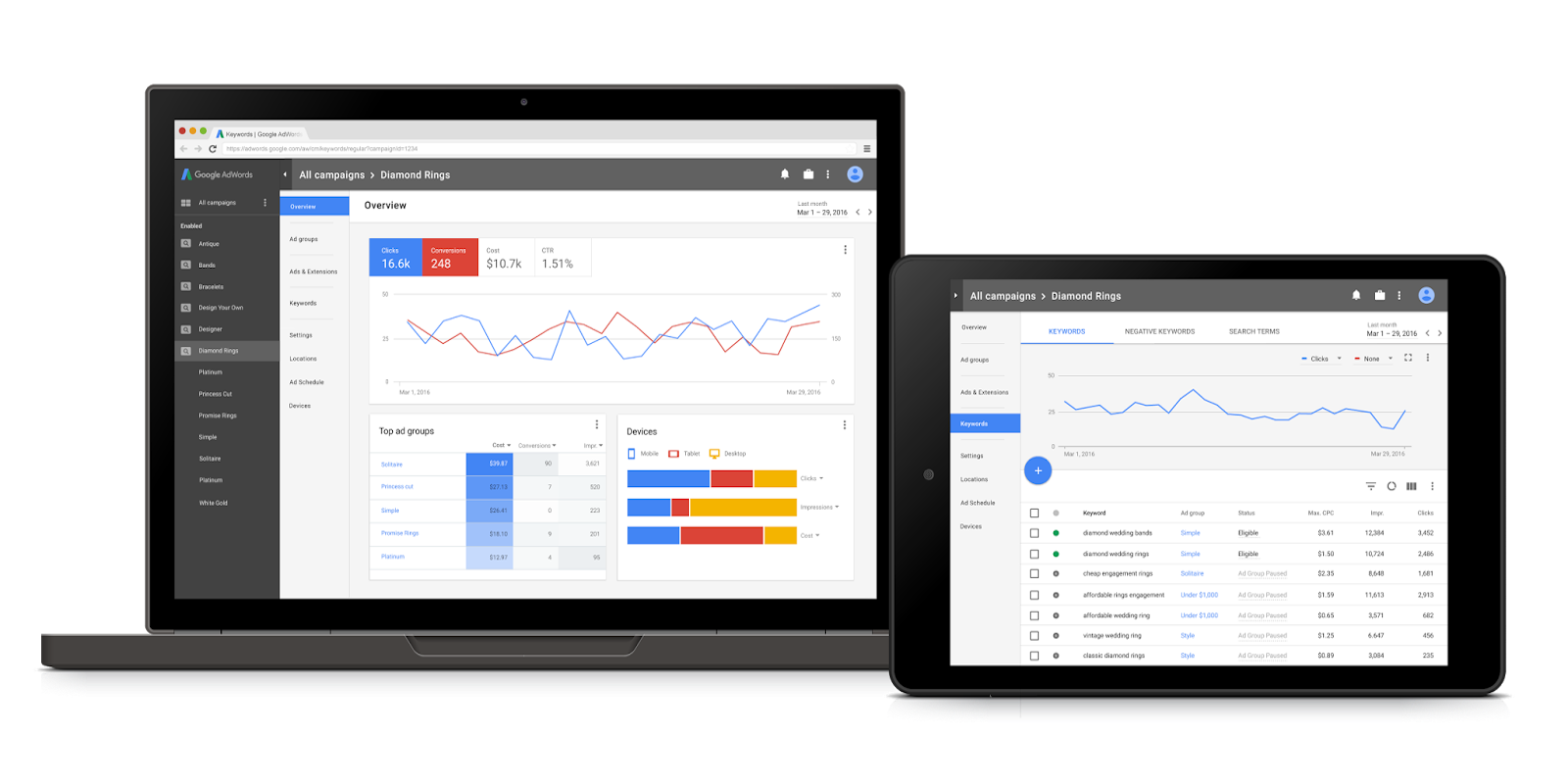
Google is today showing off redesigned apps for its AdWords advertising service that it says bring a completely reimagined experience based on user feedback.

Google announced on its AdWords G+ profile today that its display ads will soon be 100% HTML5. From June 30th this year, display ads built using Flash can no longer be uploaded into AdWords or DoubleClick Digital Marketing. From January 2nd, 2017, Flash format display ads will no longer run on the Google Display Network or through DoubleClick.

In what Bloomberg describes as ‘a 90-minute interview peppered with expletives,’ Russia’s new Internet advisor has said that he wants to force Google and Apple to pay more taxes.
German Klimenko is pushing to raise taxes on U.S. companies to help level the playing field for Russian competitors such as Yandex and Mail.ru […]
Bloomberg says that he has an interesting ally in this aim …
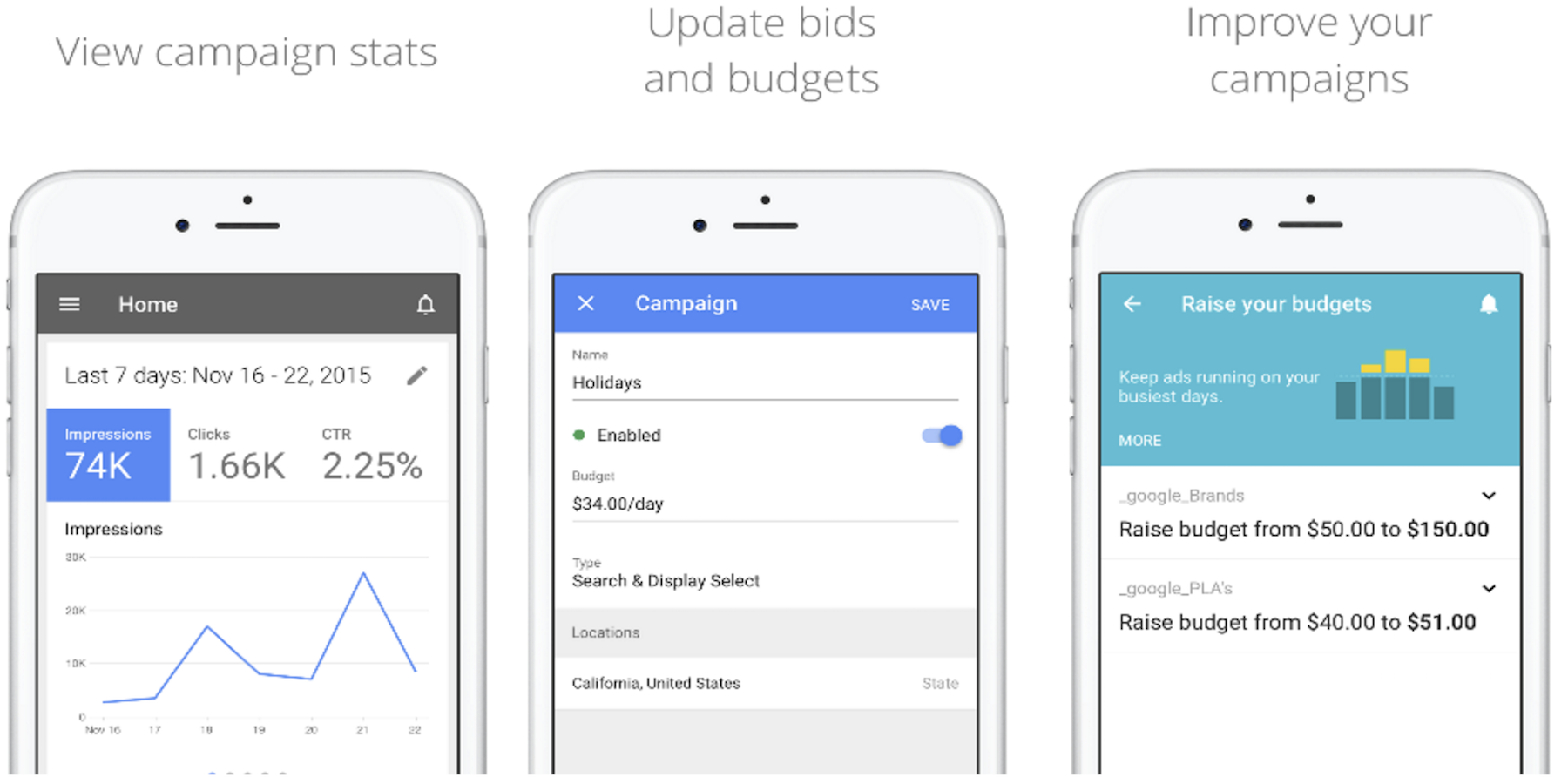
Google has finally launched a full-fledged iOS app for users of its AdWords advertising service. The AdWords app arrives today as the first official iOS app for the service and it’s available for both iPhone and iPad users now.
Google has published a blog post revealing just how many bad ads it removed from the web in 2015. Spoiler: they removed a lot.
There can be all kinds of bad ads, whether they’re ads which falsely claim to help weight loss, or phishing sites that trick unassuming web users to submit personal information. Thanks to a team of some 1,000 employees, and some clever computer algorithms, the company was able to remove a ton of ads and ban a huge number of misbehaving advertisers…
Google today announced changes to its display ad network that will ensure advertisers only pay for ads that are 100% viewable. The move could be viewed as a first step by Google to combat ad blockers that many believe could drastically change the landscape for advertising online going forward.
Expand
Expanding
Close

It’s no secret that Google makes the majority of its money from advertising revenue, and has done for a very long time. So, when a product comes along to threaten that major revenue stream, it has to find ways to combat it. That’s seemingly what it’s done with AdBlock Plus, a relatively well-known Chrome extension used to block out ads across the internet. This includes the ads shown before and during video playback on YouTube…


Adobe Flash is notoriously both resource intensive and ubiquitous on the web, which hasn’t helped the open web survive in the consumer shift to mobile devices that have smaller screens and processors. Flash isn’t even supported in most mobile environments anymore because of its poor performance. Google is as a result working hard to eliminate Flash content from its ad network and create a better web browsing experience. Today it announced September 1st is when it will begin pausing many of the Flash ads seen around the web for users of its Chrome web browser.
Fortunately for Google, it’s able to convert most of the Flash ads uploaded to its AdWords advertiser network to the less intensive HTML5 automatically. The company provides a section on its support site where advertisers can go to see what Flash ads are eligible for this conversion, and it has even made a step-by-step tool for converting ads which can’t be automatically converted or haven’t already been uploaded to Google’s servers.
Google first announced this shift back in June, and while the company has its own mobile operating system with a massive amount of native apps in the form of Android, it’s still a big proponent of the web. Perhaps because that’s where it was born, but really because the web isn’t closed off like mobile operating systems, and the underlying hypertext language of the web allows the company to easily scrape and index it for its Search business, among other things. The company introduced a setting to its Chrome browser in March which enables this disabling of Flash plugin content. Chrome for Android and iOS doesn’t support it at all.
AdSense, Google’s publisher ad network used by millions of websites across the web, has just seen its Android app brought up to the company’s Material design language standards.
The app itself is mostly read-only, meaning you can quickly see data on your performance like how much money you’ve made from your ad placements over different time periods, but you cannot create new ads to place on your site from within the app. That would be cumbersome from a mobile device, though, as it requires copying and pasting HTML code into your site’s backend.
AdSense 3.0 also brings with it a new logo the company unveiled back in June. It looks like this:
And for the curious, here’s what the app looked like before today’s update:
The update hasn’t propagated completely in Google Play yet, but it’s available as a direct download through APKMirror right now.

Many of us are visual learners, and by visualizing data you may be able to notice trends that you otherwise wouldn’t have by just looking at the numbers written out. Google understands this, and is making it possible to quickly visualize data from its AdWords online advertising service through a simple drag-and-drop tool available soon from directly within AdWords itself — yes, no more needing to download your data and explore it elsewhere.


