Kyle Bradshaw joined 9to5Google in 2018 with a special interest in Google’s Fuchsia OS, rooted in his experience of being the first to offer a visual preview of the revolutionary design of the in-development operating system. Since then, his attention has broadened to include the secrets hidden within other areas of Google’s public codebases.
By reading the public Fuchsia code, Kyle was able to prove the existence of the Nest Mini and the Nest Hub Max months ahead of their respective announcements. With evidence from Chromium, he reported on Google’s since-canceled efforts to create an offshoot of Android designed for “touchless” feature phones.
In 2018, Kyle reported on three distinct Made by Google Chromebooks in development, the Pixel Slate, the Pixelbook Go — a full year before its release — and “Meowth,” the original version of the Pixel Slate that was canceled due to Intel’s delays that year. For ChromeOS itself, Kyle was the first to demonstrate the upcoming light theme redesign in action.
Looking at the early evidence of the Pixel 5’s specs, Kyle accurately predicted in February 2020 that the Pixel 5 might not be a traditional “flagship” phone. In 2021, he reported that Google’s next headset would be the “Pixel Buds A.”
Kyle was the first to report that the Pixel 6 would mark the debut of Google’s in-house processors, later revealed to be the Tensor chips.
He can be reached for tips or just friendly chat by Threads, Mastodon, Bluesky, or email. If you’re looking for his other works or side projects, head over to Kyle’s personal portfolio.
Last year, Google unveiled the Stadia Makers program as a way for indie developers to get funding and assistance with porting their upcoming games to the cloud. Today, Google is sharing a glimpse at the next 10 games coming soon as part of Stadia Makers, including fan favorite Skyclimbers.
This morning, it was revealed — through an elaborate series of puzzles — that Google I/O 2021 will take place in the middle of May. With the dates now confirmed, you can now register for Google I/O 2021, allowing you to participate in the event’s workshops, Q&As, and more.
Google has unveiled Lyra, a new technology that allows Duo, and soon other apps, to offer natural-sounding voice chat with as little as 3 kilobytes per second of network bandwidth.
Update: Google has now made Lyra open source for other apps to use.
For years, Google Translate has been one of the better ways to quickly exchange information between two languages. Over the weekend, the Google Translate app for Android reached a whopping 1 billion downloads on the Play Store.
In this week’s top stories: the Pixel 6 is set to run on a Google-made chip, the existence of the “Pixel Buds A” is leaked, and Samsung’s April 2021 security update rolls out.
As it stands today, Google has two distinct apps for managing your Google Wifi and Nest Wifi networks, with Google Wifi and Google Home. Starting next month, the older Google Wifi app is shutting down in favor of the all-in-one Google Home.
9to5Google can report today that Google’s upcoming phones for this fall, including the presumed Pixel 6, will be among the first devices to run on the “GS101” Whitechapel chip.
During an earnings call last fall, Google CEO Sundar Pichai teased “some deeper investments in hardware” and that there was a “terrific roadmap ahead” in 2021. Many interpreted that as a confirmation that Google would be developing their own processors, an effort codenamed “Whitechapel.”
Official builds of LineageOS version 18.1, the Android 11 based update to the ever-popular third-party ROM, are becoming available for the Pixel 5, Pixel 4a 5G, Pixel 4a, and OnePlus 8 series.
Last year, for the safety of their workers, Google shifted to work from home, closing their offices across the United States. With the ongoing rollout of vaccines in the US, Google is now looking likely to begin returning to working in-person and in-office.
For a few years now, Google has offered affordable variants of its Pixel phones with the Pixel 3a and Pixel 4a. We can exclusively report that the next Made by Google true wireless earbuds will be the “Pixel Buds A,” available in two new colors.
Over the past week, the eyes of the world have been on the Suez Canal, which has been blocked closed by a single ship, the Ever Given. Now that the Ever Given has been freed from the Suez Canal and the global trade route reopened, Google Search has joined celebrations with a new easter egg.
Wear OS has stagnated a bit in recent years, with little in the way of noticeable changes, but Google still manages to bring new tweaks and quality of life upgrades from time to time. The latest tweak adds a “Manage” button to the Wear OS notification panel.
In this week’s top stories: Chrome and WebView cause many Android apps to crash, Google launches WifiNanScan for developers to experiment, we settle whether the OnePlus 9 Pro is worth upgrading to from the OnePlus 8 Pro, and more.
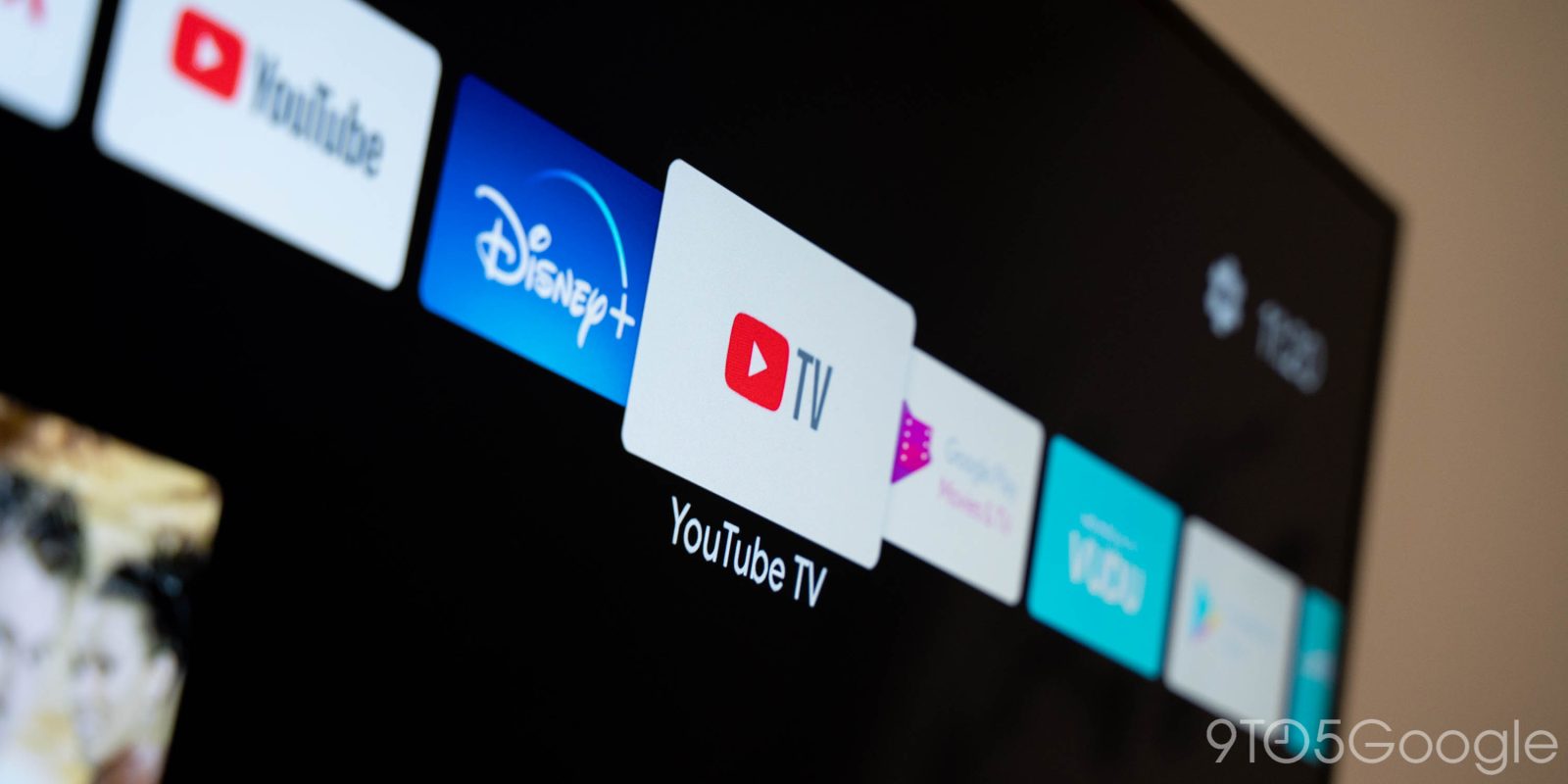
Every year since launch, YouTube TV has bumped up its monthly cost, with Google using the ever-expanding channel list as justification for the cost. But how many channels are we all actually watching?
Last week, we asked you what channels you actually watch on YouTube TV, as the service has ramped up in both cost and number of channels. Let’s take a look at what you told us.
NIS America has announced today that four games from two of their beloved JRPG franchises, Ys and The Legend of Heroes, are coming soon to Google Stadia.
The latest update to the Stadia app for Android readies a brand new way to play games from your touchscreen, the ability to makes notes about friends, and the long-awaited Android TV app.
Last month, Google began the process of winding down Stadia Games and Entertainment, its division for first-party and second-party Stadia titles. As a parting gift, the team at Stadia Games and Entertainment has open sourced some of the tools that were created to assist development.