Kyle Bradshaw joined 9to5Google in 2018 with a special interest in Google’s Fuchsia OS, rooted in his experience of being the first to offer a visual preview of the revolutionary design of the in-development operating system. Since then, his attention has broadened to include the secrets hidden within other areas of Google’s public codebases.
By reading the public Fuchsia code, Kyle was able to prove the existence of the Nest Mini and the Nest Hub Max months ahead of their respective announcements. With evidence from Chromium, he reported on Google’s since-canceled efforts to create an offshoot of Android designed for “touchless” feature phones.
In 2018, Kyle reported on three distinct Made by Google Chromebooks in development, the Pixel Slate, the Pixelbook Go — a full year before its release — and “Meowth,” the original version of the Pixel Slate that was canceled due to Intel’s delays that year. For ChromeOS itself, Kyle was the first to demonstrate the upcoming light theme redesign in action.
Looking at the early evidence of the Pixel 5’s specs, Kyle accurately predicted in February 2020 that the Pixel 5 might not be a traditional “flagship” phone. In 2021, he reported that Google’s next headset would be the “Pixel Buds A.”
Kyle was the first to report that the Pixel 6 would mark the debut of Google’s in-house processors, later revealed to be the Tensor chips.
He can be reached for tips or just friendly chat by Threads, Mastodon, Bluesky, or email. If you’re looking for his other works or side projects, head over to Kyle’s personal portfolio.
With everyone — including students of all ages — working from home, video conferencing apps like Zoom have become essential parts of daily life. However, the Chromebooks that many students have handy were hindered by not being able to install the Chrome extension for either Zoom or Hangouts, but that has just changed.
Update 4/22: Even more extensions are coming soon to Chromebooks with Family Link.
Over the last two years, Google’s massively cross-platform Flutter SDK has seen significant growth both to their team and to the number of developers making Flutter apps worldwide. Today, the Flutter team is sharing some insights into how that growth will affect their release schedule going forward.
Earlier this month, Google Stadia launched its free tier to the public including a two-month trial of Stadia Pro and its library of free games. Since Stadia’s free tier launched, we’ve found that at least one game, Destiny 2, has seen a meteoric rise in player count.
When some Android apps need to open a web page, sometimes they will use a what’s called a Chrome Custom Tab to display the page in a themed tab provided by your phone’s default browser. As of the latest beta update, the Google app is moving away from this style of browser to include an in-app browser of its own.
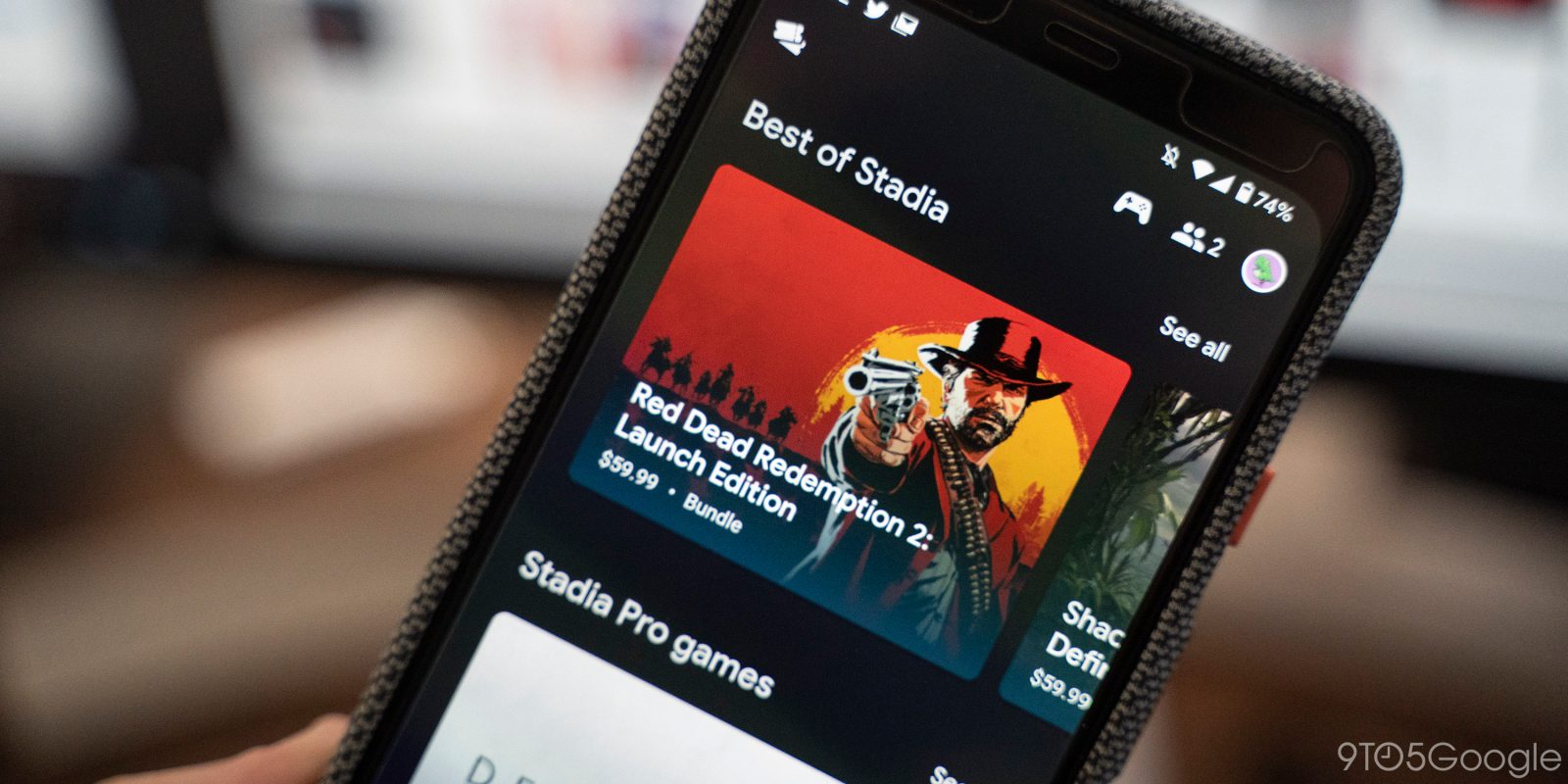
Looking to add a little excitement and escapism to your new work from home schedule? Google Stadia has you covered by discounting Red Dead Redemption 2 and two other games for its Pro members.
No two ways about it, the world is in a medical crisis the likes of which our generations have never experienced. COVID-19 continues to spread around the world, taking more lives each day. To help encourage as many people as possible to stay home, Google has replaced their homepage with a Doodle offering coronavirus tips, including a reminder to “Stay Home. Save Lives.”
In this week’s top stories: we compare the Google Pixel 4a against Apple’s new iPhone SE spec-for-spec, our Damien Wilde goes hands-on with the Google Camera Go app, and much more.
Earlier today, the first concrete details leaked out about Google’s answer to the Apple Card, something we’ve been hearing about since roughly September. Coinciding with the arrival of the new report, early support for this “Google Card” has appeared in Chrome.
One of the best parts of the web is the ability to easily share a link to a friend to more or less get them to the same page that you’re looking at. While there are numerous ways to share a link with someone online, it’s a bit harder to do in-person without manually typing in a URL. Google Chrome is now ready to change that with its new QR Code sharing option, appearing in the latest Canary builds.
Google Stadia recently enjoyed a public launch, and if you’re anything like us on the 9to5Google team, you’ve probably added your coworkers as friends for the occasional after-work game session. But what if you maybe want to jump into Destiny 2 for a few minutes without showing everyone what you’re playing? It’s actually very easy to more or less appear offline on Google Stadia to hide your mid-day gaming sessions from your friends and/or co-workers.
This spring, two of the world’s biggest tech heavyweights, Apple and Google, are releasing mid-range smartphones, reportedly even starting at the same $399 price point. With that in mind, will you be buying either the iPhone SE 2020 or the Google Pixel 4a?
One of the most satisfying things to do after you’ve created a cool new design is to find a way to show it off, and for web developers, one of the best ways to do that is through CodePen. Today, Google is announcing a partnership between CodePen and Flutter to let developers easily create and share their designs online.
If you haven’t heard by now, “Killed by Google” is a hilarious trip through the ever-growing graveyard of projects and apps that Google has shut down over the years. In an interesting bit of irony, Google wants to hire the creator of Killed by Google.
With the coronavirus having an impact on all of us in one way or another, companies around the world are all looking to do their part. And Fitbit is launching a “COVID-19 Resource Hub” into their app on Android and iOS.
As the variety of devices in the Internet of Things expands, so too do the kinds of devices the Google Assistant supports. Over the weekend, the Google Assistant publicly gained support and documentation for three new gadget categories — TVs, media remotes, and set-top boxes.
As we face this time of crisis together, one of the most important things we can do — aside from washing your hands and maintaining social distance — is combat misinformation with the truth. To that end, the World Health Organization is launching an official Android, iOS and Web app for news, tips, alerts, and more to keep you informed during the COVID-19 pandemic.
In this week’s top stories: Google devotes its homepage to Doodles thanking Coronavirus helpers for two full weeks, we reveal almost the full spec sheet for the Pixel 4a, the April security patch arrives on Pixels, and more.
With the coronavirus keeping everyone at home and at a safe distance, parents haven’t been able to have their kids’ pictures taken with the Easter Bunny. To help, Google is preparing to launch the mythical holiday rabbit as its next 3D animal to play with in augmented reality.
For years, Google publicly displayed the percentage of Android devices running each historic version of Android in what is known as the Android distribution chart. After not updating it in nearly a year, Google has finally taken the Android distribution chart off of the web altogether.
Google Stadia officially launched its free tier yesterday, bringing gaming to a brand-new market of folks who may not have considered it before. One thing many Stadia fans have been asking for, though, is Android TV support, which now appears to be much closer to a reality.
Coinciding with the launch of Stadia’s free tier yesterday, version 2.13 of the Google Stadia app arrived on Android. Digging through the update, we’ve found that Google has begun working on the ability to play Stadia games with touch controls on your phone, as well as initial Android TV support.
Google Stadia opened its doors to the public yesterday, and while some criticize the platform’s lack of games, Google has been working steadily to grow the library. Today, Stadia has announced three more titles arriving in the near future, including the hand-drawn action platformer Monster Boy and the Cursed Kingdom and bizarre cowboy comedy West of Loathing.
Google is properly launching Stadia to the world over the next 48 hours, allowing folks who may have been on the fence about the idea of game streaming a chance to try it for themselves. However, like many things in life, there’s a bit of a catch, as there may technically be a limit on the number of free Stadia account slots at first.