Android

See All Stories

Breaking news for Android. Get the latest on apps, carriers, devices, and more!
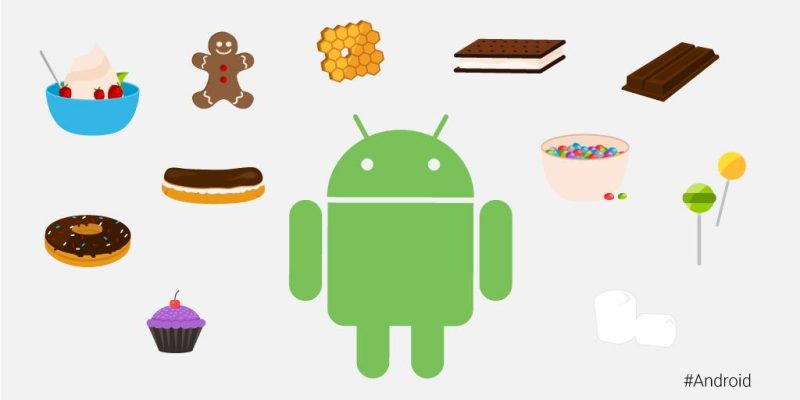
Android is Google’s mobile operating system, launched in September 2008, although its history technically began with the release of the Android alpha in November 2007. To this day, Android powers the majority of the world’s smartphones and comes in several different flavors across many phone makers.

What is Android?

Android Inc.

Android, before it was Android, was a company called Android Inc. That company was founded in Palo Alto, California, in 2003 by a crew of four: Andy Rubin, Rich Miner, Nick Sears, and Chris White. The company and its project was acquired by Google in 2005 for a sum of more than $50 million, although the exact number is unknown. The company’s founders joined Google as part of the deal.

In its infancy, Android was an operating system built not for touch screen smartphones like the iPhone, but rather BlackBerry-like devices with physical keyboards. It’s well documented that after Apple shocked the world with the iPhone, ahead of its nearest competition by at least a couple years, Google and Android Inc. had to go back to the drawing board to build something competitive.

Adoption by third-party makers

It didn’t take long after the launch of the iPhone for various manufacturers to enter the market with their alternatives — and Google’s Android immediately became the obvious platform of choice for just about everyone except Microsoft. HTC was the first manufacturer on board, and introduced the T-Mobile G1 running Android in September 2008. Soon after, HTC, Motorola, Samsung, and carriers like Sprint and T-Mobile jumped on board to form the Open Handset Alliance.

Android makers across the world

Iconic Android handsets

There have been thousands of Android phones released since Android’s inception, but some have been more important to the platform’s history than others. There was the original T-Mobile G1, as mentioned, but there was also the HTC One Google Play Edition, Moto G, Samsung Galaxy S4, and others. Some of the most iconic Android handsets include:

  • HTC G1
  • HTC Nexus One
  • Samsung Galaxy S, S2, S3, S4, and their successors
  • HTC Incredible S
  • Samsung Nexus S
  • Samsung Galaxy Nexus
  • Samsung Galaxy Note
  • Nokia 8
  • BlackBerry KeyOne
  • Google Pixel and its successors

In more modern times, there are several Android smartphones makers that popped up across various niches and in several international markets. Huawei is a dominant Android maker in China and many European markets, while Samsung is by far the most popular maker in the United States by far — effectively creating a duopoly with Apple. Today, there are dozens of major device makers contributing to the Android ecosystem.

Full list of Android OEMs

History of major Android versions

Android has seen countless software revisions over the course of its life, but in modern times the OS usually sees a major release on an annual cadence. In the earlier days, Google famously gave its major software releases dessert-themed codenames, but retired that practice in 2019 with the release of Android 10.

VersionNameReleaseDevices
2.3GingerbreadFebruary 9, 2011Nexus S
4.0Ice Cream SandwichOctober 19, 2011Galaxy Nexus
4.1Jelly BeanJuly 9, 2012Nexus 7
4.2Jelly BeanNovember 13, 2012Nexus 4, 10
4.3Jelly BeanJuly 24, 2013Nexus 7 (2013)
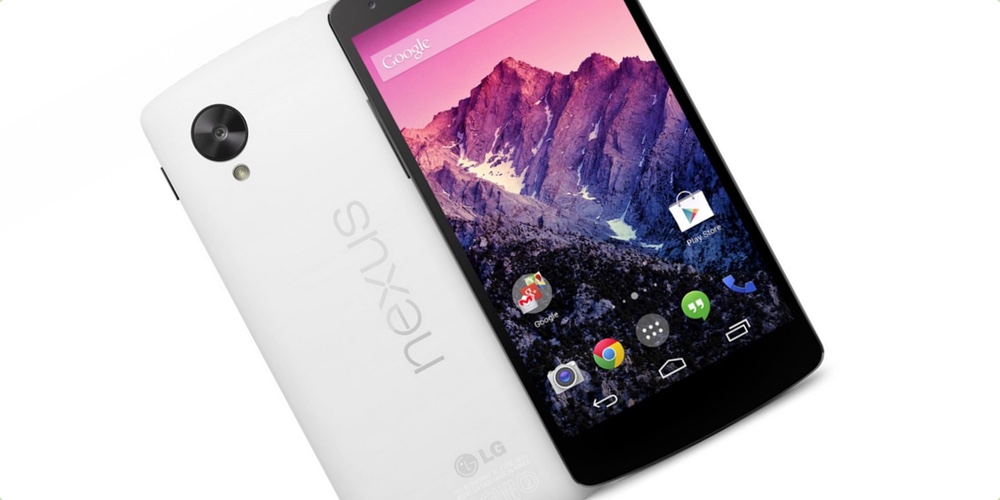
4.4KitKatOctober 31, 2013Nexus 5
5.0LollipopNovember 3, 2014Nexus 6, 9
5.1LollipopMarch 9, 2015Android One
6.0MarshmallowOctober 5, 2015Nexus 5X, 6P
7.0NougatAugust 22, 2016Nexus 5X, 6P
7.1NougatOctober 4, 2016Pixel, Pixel XL
8.0OreoAugust 21, 2017Pixel, Pixel XL
8.1OreoDecember 5, 2017Pixel, Pixel XL
9PieAugust 6, 2018Pixel 2, Pixel 2 XL
1010September 3, 2019Pixel 3, 3a
1111September 8, 2020Pixel 4

List of major Android OS platforms

While Android proper is certainly the most widespread of Google’s Android operating systems, the company has also launched many offshoots of the main OS over the years. There’s Android Auto, Android Wear (now Wear OS), Android TV (now rebranded to Google TV), as well as versions of Android built for tablets and Android Things (now defunct).

Google announces plans to bring Vulkan 3D rendering API to Android

Google today announced at SIGGRAPH 2015 that it plans to bring Vulkan, a 3D rendering API, to Android. You can read more about the new API over the Android Developers blog, but here’s the gist:

In order to address some of the sources of CPU overhead and provide developers with more explicit control over rendering, we’ve been working to bring a new 3D rendering API, Vulkan™, to Android. Like OpenGL™ ES, Vulkan is an open standard for 3D graphics and rendering maintained by Khronos. Vulkan is being designed from the ground up to minimize CPU overhead in the driver, and allow your application to control GPU operation more directly. Vulkan also enables better parallelization by allowing multiple threads to perform work such as command buffer construction at once.

Android has long supported OpenGL, and now Google is introducing Vulkan to hopefully combat some of the sources of CPU overhead. The company says that it will give developers “more explicit control over rendering,” and will enable “better parallelization”.

Google says that it’s working hard to “help create, test, and ship Vulkan,” but also plans to continue supporting the simplicity of OpenGL ES. You’ll be able to choose which API is right for you, and Google says that it is committed to “providing an excellent developer experience” either way.

HTC is now effectively worthless following stock dive

HTC‘s stock has taken such a dive in recent months that, this morning, the company’s market value is now less than the cash it has on hand. In its most recent earnings, the Taiwanese manufacturer stated that it had NT$47.2 billion (New Taiwanese Dollar) cash. Today, its market price dropped to NT$47 billion, effectively making the company worthless to shareholders.

Originally reported by Bloomberg, this is a pretty damning turn of events for HTC. One analyst from Sinopac Financial Holdings stated that “HTC’s cash is the only asset of value to shareholders.” So its other assets like buildings and factories are worth nothing. What’s more, investors clearly aren’t confident in the future of the company either. A feeling perhaps based on this year’s flagship model, the HTC One M9, being just a modest upgrade to last year’s all-metal smartphone. And also the fact that now, lesser-known Chinese manufacturers are on the rise and capable of producing competitive smartphones at much lower prices.

HTC’s approach to dealing with this almost-collapse is to cut costs by focussing on the high end of the market where margins are higher. It’s a bold move, and one that might backfire for the company. Especially if the next few flagship devices continue to lose out heavily to the likes of Apple’s iPhone and Samsung’s Galaxy series. In my mind, the solution would be to ensure it has fewer items in its inventory and ensure supply doesn’t massively outweigh demand like it does currently.

How this turns out for HTC isn’t something easily predicted, but right now, it’s not looking so good for the company that once churned out hits like the popular Evo handset in 2010.

4.7-inch Alcatel OneTouch Idol 3 available in US and Canada from Friday

Months after its initial announcement at MWC in Barcelona, Alcatel OneTouch is finally making the smaller, 4.7-inch Idol 3 available to buy in the US and Canada. You will be able to order the device for $179 from the company’s online store or  Alcatel’s official Amazon store from Friday, August 14. In terms of design, the 4.7-inch model looks virtually identical to its bigger brother. But it does come with different specifications.

Instead of housing a full HD display panel, the smaller phone comes with a 1280×720 resolution screen. Thanks to its size, that still pushes it over the 300ppi mark. It has a 13MP rear camera, 5MP front camera and has a 2,000mAh battery to keep it going all day. What’s more, it’s powered by a Quad-core 1.2GHz processor paired with 1.5GB RAM and with 16GB of internal storage. Like the bigger model, you can expand the memory using a MicroSD card, but only up to an extra 32GB. Surprisingly, for a phone this small, it still manages to pack in a pair of stereo front facing speakers powered by JBL audio, just like the 5.5-inch model.

On the software side, it runs Android 5.0.2, what’s more, a security update to patch the Stagefright bug will be available to download OTA as soon as you power the device on.

Overall, it’s a promising device but it will be interesting to see how well it compares to Motorola’s latest Moto G. At the same price point, and similar-ish specs, these two devices are clear competitors.

Fresh BlackBerry ‘Venice’ renders leaked, again hint at Android presence


We’ve been hearing a lot about BlackBerry’s long-rumored Android smartphone over the past few months. In fact, almost as soon as BlackBerry teased the ‘Venice’ slider back at MWC in Barcelona, it was rumored that the upcoming device would ship with Google’s OS onboard. A previous render showed a pretty clear image of Android running on the BlackBerry slider, and now some more official-looking images appear via CrackBerry to hint at a Google-powered system.


Expand
Expanding
Close

Google aiming to at least halve cost of Android One smartphones, from $100 to $30-50

Site default logo image

Google is making a “massive” investment in its Android One program, designed to make pure Android devices available to customers in developing markets at affordable prices, reports the FT. It hopes “over the next few years” to bring down the retail price of Android One handsets in countries like India from the equivalent of $100 to somewhere in the $30-50 range.

Rajan Anandan, managing director in India and Southeast Asia, told the Financial Times that the company [recognized that the] much-hyped mobile standard had “not delivered to expectations” … 


Expand
Expanding
Close

Xiaomi announces new Redmi 2 Prime, its first smartphone ‘made in India’

Smartphone manufacturers are climbing over each other to take full advantage of the rapidly expanding market opportunities in India. Chief among them is Chinese smartphone manufacturer, Xiaomi, which has just announced its first smartphone assembled in India, for the Indian market only. The Redmi 2 Prime still predominantly uses parts from China, but is assembled in Sri City.

As for the device itself, the Redmi 2 Prime offers a considerable memory and storage upgrade on the regular Redmi 2 without costing a whole lot more. For just under 7,000 Rupees ($110 USD) you get a device packing 2GB RAM and 16GB storage, that’s double the memory and capacity of the Redmi 2 which costs just under 6,000 Rupees ($94 USD). Both devices make use of Qualcomm’s 64-bit Snapdragon 410 processor and host 4.7-inch IPS HD (1280×720) displays and an 8MP camera on the back. What’s more, they’re dual SIM and can cope with LTE speeds up to 150Mbps.

Xiaomi plans to bring more of its manufacturing process to India, eventually producing more of its components and packaging within Indian borders. Hugo Barra, Xiaomi’s chief stated “this is like the typical chicken and egg story. Unless there is any smartphone manufacturing happening in the country, you cannot expect to get components locally.” So this is very much just the first step in its journey to cracking the Indian market.

Indian consumers can purchase the new Redmi 2 Prime direct from mi.com from today.

Motorola confirms StageFright bug fix coming to 11 smartphone lines including new Moto X and Moto G

Motorola has joined several other Android OEMs in confirming that it will be rolling out a StageFright software fix for many of its popular smartphone lines. As you’d expect, this includes the newly announced Moto X and Moto G handsets as well as a number of older devices.

The new devices will be patched from launch, while others may be subject to the usual carrier approval and testing. Carrier partners will receive the software and start testing on August 10th. In all, there are 200 variants of software to be patched, tested and released. So it could take time for you to get your fix.

The list of devices includes:

  • Moto X Style (patched from launch)
  • Moto X Play (patched from launch)
  • Moto X (1st Gen, 2nd Gen)
  • Moto X Pro
  • Moto Maxx/Turbo
  • Moto G (1st Gen, 2nd Gen, 3rd Gen)
  • Moto G with 4G LTE (1st Gen, 2nd Gen)
  • Moto E  (1st Gen, 2nd Gen)
  • Moto E  with 4G LTE (2nd Gen)
  • DROID Turbo
  • DROID Ultra/Mini/Maxx

As I’m sure you’re now aware, it recently came to light that Android had a serious, gaping hole left in its coding. Dubbed ‘Android’s worst vulnerability in Mobile OS history‘ StageFright would essentially allow anyone with the ability and motive to include malware in any video MMS message. It could potentially affect your phone before you even open or see the message. To be safe, be sure to read our guide on how you can protect yourself against it until your software fix arrives.

Galaxy Note 5 leaked in clearest images yet, complete with retail packaging

Samsung’s upcoming Galaxy Note 5 has been leaked in full, showing the device from almost every angle, complete with packaging and compared alongside the iPhone 6 Plus to show its relative size. As you can probably tell from the images, the photos were snapped by a retail worker. A Samsung rep had been in to his store with the two unreleased phablets (Note 5 and S6 Edge+).


Expand
Expanding
Close

Upcoming Huawei device leaks ahead of purported September launch

With Samsung pulling out of IFA this year and opting for hosting its own event, you may be left wondering if there’s anything worth looking forward to at this year’s tech show in Berlin. Thankfully, it looks as though Huawei is preparing to show off one of its own new devices. Two leaks have shown up on Twitter today, one press render from Evan Blass and another picture of a pre-release device running AnTuTu benchmark tests from Steve Hemmerstoffer.

According to Evan Blass, better known as @evleaks, the device is going to be announced on September 2nd, at an event during IFA. Although he doesn’t know what the device’s name will be, he does state that it will feature ‘Force Touch’. If true, this will make it one of the first smartphones announced with a built in sensor to detect pressure on the touchscreen. Of course, Apple is expected to implement the technology in to its upcoming smartphones, but Cupertino isn’t likely to announce anything new until September 9.

Add that to the images of what is almost certainly a prototype, or pre-release test unit, and we start to get a clearer picture of the device. Looking at the information on screen from the benchmark tests suggests we’ll see a 1080p display, with an octa-core 64-bit processor. If you were to look at design alone, you might think this is perhaps the next generation Huawei Ascend Mate device. However, look closely and you’ll realize that can’t be the case.

You’ll also see that it has a 13MP camera and runs Android 5.1.1. But what’s really interesting to me is the claimed DPI count (better known as PPI or pixels per inch). The benchmark states that it has a pixel density of 480ppi. If so, using a pixel density calculator, it can’t possibly be a follow-up to the 6-inch Mate7. 1080×1920 over 6-inches is 367ppi. So this could perhaps be the mini version of Huawei’s Ascend Mate 7, with a screen measuring 4.6-inches diagonally. That’s not forgetting, the Mate 7 was only announced in March this year.

Of course, this is all just speculation for now. We’ll find out all about this device once it has been announced. It’ll be intriguing to see where in the market this supposed device will sit alongside the Huawei P8 and P8 Lite and if it’ll be restricted to just specific markets, or available globally. It’s unlikely that this is the long-rumored Huawei Nexus phone, if it is being announced at IFA.

Latest comScore data shows iOS continuing to gain on Android in US market

Research firm comScore today released its report on United States smartphone subscriber market share for the three month period ending in June. The report, released monthly, tracks the rankings of the top smartphone OEMs (original equipment manufacturers) and operating systems by consumer adoption. Month-to-month fluctuations in market share aren’t often major, but the data gives us more context around how the top players are doing as we eek towards the 2015 holiday season.


Expand
Expanding
Close

9to5Toys Lunch Break: Bose SoundTrue On-Ear Headphones $90, Samsung Galaxy S6 (unlocked) $480, more

Keep up with the best gear and deals on the web by signing up for the 9to5Toys Newsletter. Also, be sure to check us out on: TwitterRSS FeedFacebookGoogle+ and Safari push notifications.

Today’s can’t miss deals:

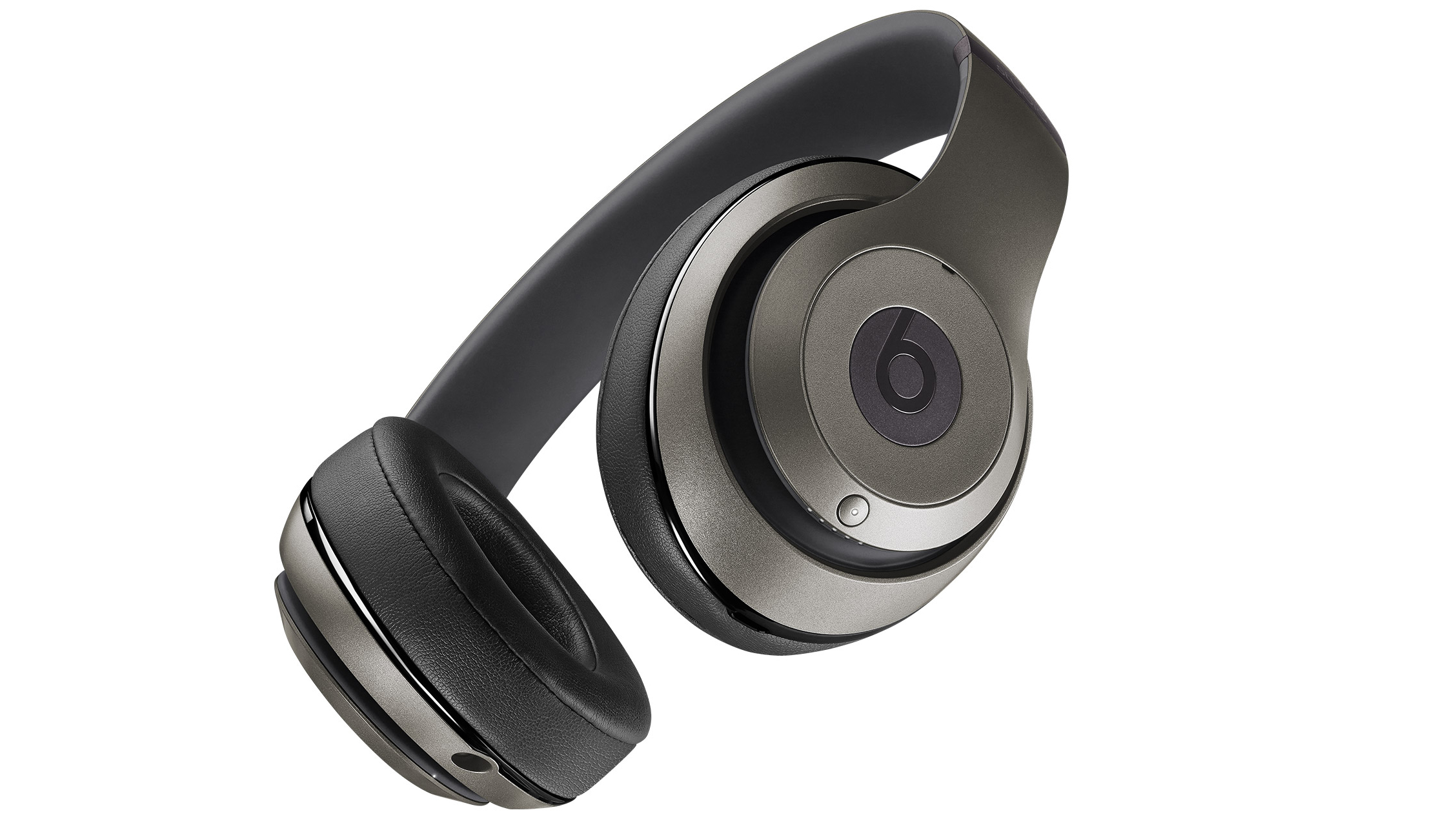
Bose SoundTrue On-Ear Headphones in black or white: $90 shipped (Reg. $120)

Samsung Galaxy S6 smartphone 32GB (unlocked): $480 shipped (Reg. $800) | eBay

Verizon Wireless Prepaid LG Optimus Exceed 2: $20 shipped (Reg. $70)

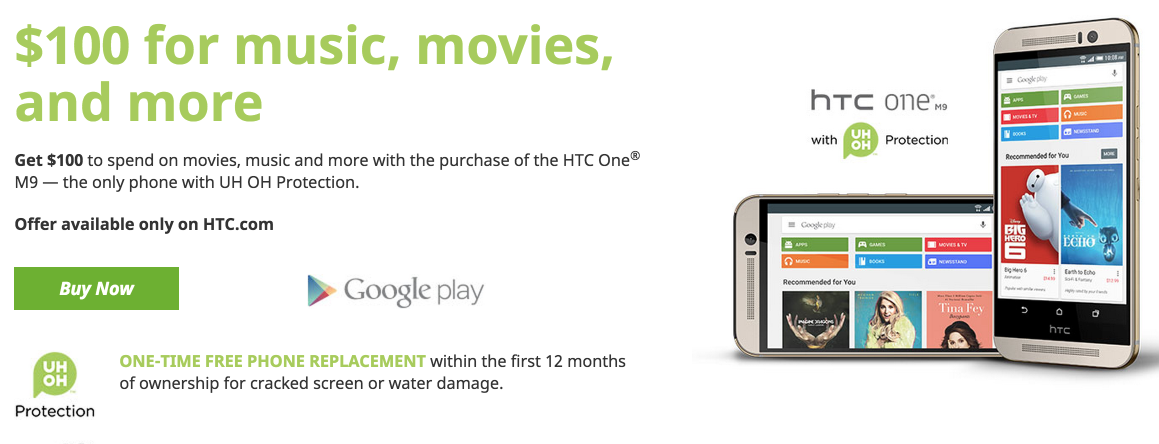
Refurb HTC One M9 32GB flash 4G LTE (unlocked): $380 shipped (Reg. $500+) | eBay

Samsung Galaxy Note 4 32GB (unlocked): $370 shipped (Reg. $700) | eBay

More new gear from today:

Games/Apps: LEGO Marvel Super Heroes from $14, Hunger Games goes free, Korg iOS sale, more

More deals still alive:

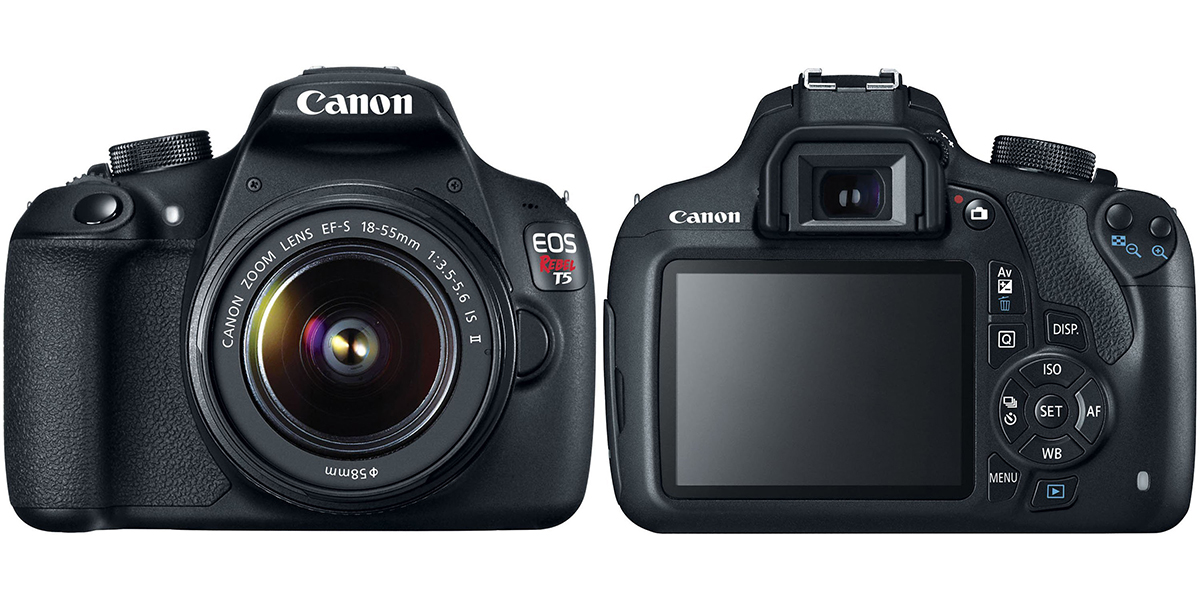
Canon’s refurbished T5 DSLR w/ 18-55mm lens kit is on sale for $252 shipped (Orig. $549)


Two Philips Hue connected light bulbs (multiple styles) for $100 shipped (~$120 value)

New products & more:

The CydeKick uses renewable energy to charge your iPhone while you ride


Google Maps v4.9 for iOS brings new night mode, ability to label custom places

iOS users of Google Maps just got some new functionality that has been in the Android version for some time now. Version 4.9 (iTunes link) brings a new night mode as well as the ability to label custom places so they can be easily found on the map and in search.

Night mode does something pretty common amongst dedicated GPS navigation units: It darkens the maps on-screen while you’re navigating somewhere. The reason this matters is because distracted driving is one of the biggest causes of driving-related accidents, and the white glow of a smartphone screen directed at ones face at nighttime can most definitely make it difficult to see what’s in view of the vehicle.

The other notable addition to come with this update is the ability to label places on the map that aren’t already in Google’s own database of places and points of interest. It’s already possible for anyone to add new places to the map through the iOS app, but these were only for public places and, if approved, would be seen by everyone using the app. The new labels are private, intended to make it easier to find and navigate to places that matter to you.

Google Maps for Android already has these features, but for iOS users who still cannot stand Apple’s own mapping product, they’re surely a welcome addition.

Could this Galaxy S6 Edge+ keyboard cover possibly be real? [Update: Yes]

Update: Yes, it’s real.

Evan Blass of evleaks has a pretty solid track record, and we’ve cited his leaks hundreds of times. This time, though, we can’t tell if what he has leaked is a joke or if it’s actually a real product on the way from Samsung. As you can see above, it looks like the Korean company might maybe possibly eventually release a keyboard cover for the yet-to-be-announced Galaxy S6 Edge+.

Knowing Samsung, this could very well be the real deal. And Evan hasn’t exactly been known to be a jokester when it comes to his leaks. He’s ended up wrong a couple of times, but I can’t remember many times that he has just posted a “leak” that was purely a practical joke. With that in mind, I have to say that this cover looks absolutely horrid — and useless.

A physical keyboard is something that many have desired since the move away from BlackBerry-esque devices, but I don’t know if this is the solution. I would much prefer that some companies — like BlackBerry, maybe? — make a smartphone that actually has a physical keyboard built-in. This hunk of plastic covering up half of your screen is surely be a nuisance and nothing more.

ASUS ZenFone 2E Review: Nothing unexpected from this ZenFone 2 turned GoPhone

I recently reviewed the ASUS ZenFone 2, and — like many others — had mostly great things to say about it. The phone has been a success for ASUS, a company which has previously had trouble getting any respect or recognition for any of its Android entries. That changed with the ZenFone 2 at CES 2015, when the company announced that the higher-end model, the one that I reviewed, would be shipping with 4 GB of RAM. In the real world, having 4 GB of RAM over the typical 3 GB doesn’t make much difference, but it was impressive nonetheless. Now, ASUS is taking a step back. They’ve taken the ZenFone 2 and gone the opposite direction, introducing an AT&T GoPhone variant of their flagship. And it’s pretty much exactly what you’d expect…


Expand
Expanding
Close

Microsoft Translator is a beautified Google Translate with Android Wear support

Real world, on-the-fly language translation has always been a little gimmicky if only because it still doesn’t quite hit the mark in terms of accuracy. Human spoken languages are a lot different from computer code in that words can have many meanings based on the context of the other words surrounding them. But that hasn’t stopped Microsoft from releasing its own translation app for Android called Microsoft Translator.

As you can see from the images above, the app is pretty simple. You speak or type in some words you want to translate, then choose the language you want to translate them into. You can save the translated result for later by pinning it, and then come back to it when you really need it — say, if you’re hitting a vacation town for the evening and need some common phrases to help you get around.

Unlike Google Translate, Microsoft Translator has a companion app for Android Wear so you don’t have to pull out your phone to make a new translation or access your pinned translations. Google Now can do some short translations, but nothing very long from my experience. Where Google Translate may lack, however, it makes up in a conversation mode which requires less tapping of the microphone to translate the voices of two people having a conversation — something Microsoft’s solution does not do.

Microsoft Translator, the underlying translation technology powering the app, supports just over 50 languages (yes, including Klingon), and Microsoft periodically adds new languages. The company says that the most important data its translation tools need to accurately translate languages on-the-fly is a lot of existing translations — 1 million translations of the same text into two languages, approximately.

Clearly, though, the new Wear app in particular is an experiment for Microsoft. From their blog post on the launch:

Wearables are a fascinating place to understand user experiences for translation. No other type of device allows people to interact with so little physical intrusion from the device itself— PC’s, tablets, and even phones can be occasionally awkward and unnatural in the middle of a conversation. With these smart devices, we want to learn how people use the apps and how effective the translation experiences can be. By integrating translation capabilities into devices that are instantly on hand (pun intended), we hope to continue to break down the last barrier in human communication— language.

LG joins Google and Samsung in committing to monthly security updates following Stagefright discovery

Site default logo image

The major Android manufacturers seem to at last be getting serious about security. Following the recent discovery of the Stagefright vulnerability, Google announced that it would commit to issuing monthly security updates to Nexus devices for at least three years. Samsung yesterday said that it too would do the same, though without stating how long it would continue to support older devices. LG has now joined in, reports Wired.

LG will be providing security updates on a monthly basis which carriers will then be able to make available to customers immediately.

Other manufacturers have also responded quickly to Stagefright, with HTC, Sony and Android One among the groups to be issuing patches … 
Expand
Expanding
Close

Lara Croft GO by Hitman creators Square Enix launching for Android on August 27

Hitman creators, Square Enix are about to launch their next mobile title for Android. Lara Croft GO will hit the Google Play Store on August 27 and will feature similar gameplay to the popular Hitman GO title. The developers promise beautiful graphics and challenging stages:

Square Enix Montréal today announced that Lara Croft GO, the follow-up to the hugely successful Hitman GO® mobile game, will release on mobile platforms Aug. 27. The turn-based puzzle game offers a never-before-seen take on the iconic franchise, featuring challenging levels, gorgeous visuals and a mesmerizing soundtrack.

If it’s anything like the Hitman GO title, the Tomb Raider inspired version is going to be frustratingly addictive and could be one of the surprise hits of the year. Hitman GO was incredibly well reviewed. Just browsing through the Play Store listing shows glowing reviews. And — for once — it’s not a freemium game. So let’s hope Lara Croft’s version sticks to that pricing model.

As well as announcing the impending arrival of Tomb Raider GO, Square Enix has joined with Crystal Dynamics to launch an art contest. Artists are being invited to submit their own original Lara Croft GO-inspired artwork between now and August 21. The top 10 entries will be selected by a panel of “experts” and will be showcased during a party at PAX Prime in Seattle on August 28, one day after the game lands on the Play Store. Of these 10 entries, three will be selected to go to auction, with the proceeds going to Child’s Play, a “game industry charity”.

If you want to submit artwork, simply email info@square-enix-montreal.com with the subject line ‘Lara Croft GO Art Contest Submission’, along with your name.


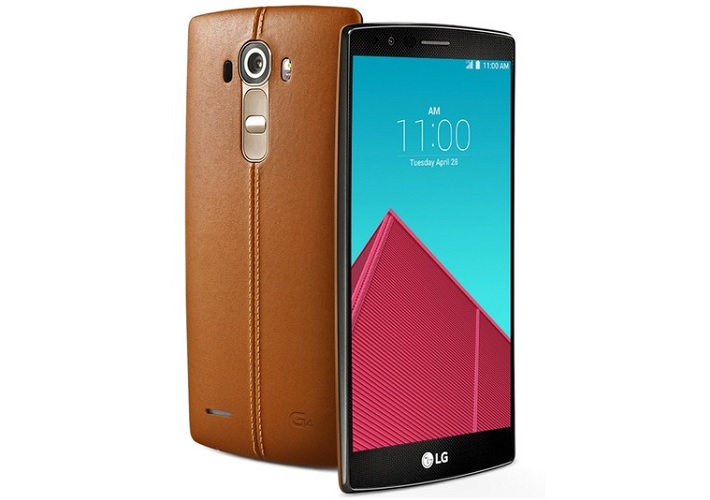
Roundup: 5 Best cases for LG G4 [Video]

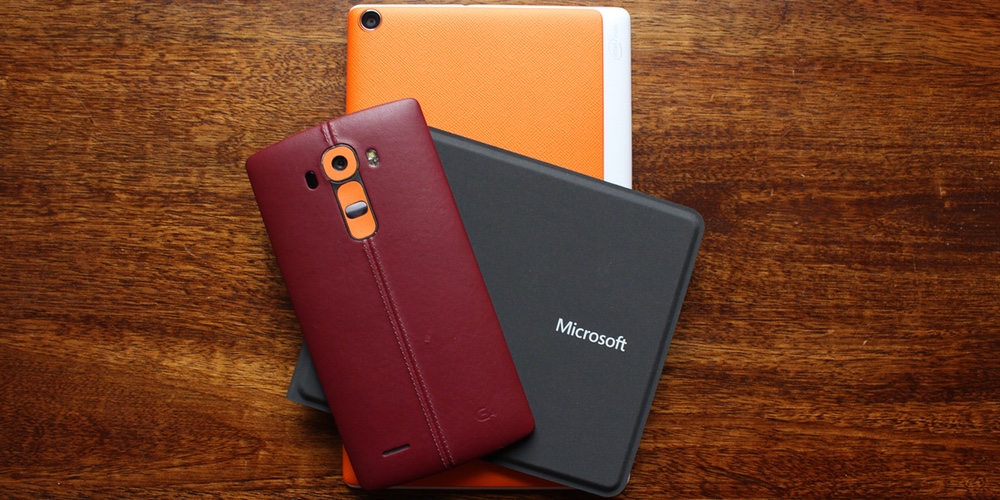
The LG G4 has been around for a couple of months now, and since launch there’s been enough time for a handful of case-makers to get their wares to market. Although there might not be as many options as there are for Galaxy S or HTC One owners, there are still a good few cases on the market which I think you should consider. Unless you have a leather-backed G4, in which case, don’t bother. All the cases in this list came with a warning that they aren’t compatible with the leather back, or will probably ruin it over time…


Expand
Expanding
Close

How to check & protect against the “worst Android vulnerability” ever, Stagefright

When mobile security researchers recently discovered what they described as the “worst Android vulnerability in the mobile OS history,” there appeared little you could do about it beyond waiting for your carrier or manufacturer to push Google’s fix. The exploit could auto-run as soon as you received an MMS designed to trigger it, whether or not you opened the message.

The same researchers have now created an app that allows you to check whether or not your devices has been patched against Stagefright, together with a step you can take to prevent the exploit from running automatically … 
Expand
Expanding
Close

Google and MIT have created an algorithm that brings amazing obstruction-free photography [Video]

When you’re taking a picture, it’s not rare for obstructions like fences and reflections to make the resulting image less than ideal. Given a few frames, though, shouldn’t it be possible to do some post-processing and eliminate these problems? That’s what Google and MIT have demonstrated in a paper entitled “A Computational Approach for Obstruction-Free Photography”. It’s fascinating stuff.

If you’re taking a picture in a window, it’s pretty common that a reflection of inside the room or car could obstruct what would otherwise be a really nice looking photo. And that’s what this algorithm seems to focus on most. The team demoes several examples of taking several frames, and actually separating the obstructing reflection, leaving a clear image of the background.

It seems to work well with photos taken through fences and other situations too, the end result providing an image of the background as well as a fairly accurate representation of what the obstruction looks like by itself. This could have plenty of applications for everyday smartphone photography, but perhaps for forensic research as well. You’ll just have to watch it for yourself. Hopefully, this tech isn’t far from being added to the Camera app.

9to5Toys Lunch Break: LG Optimus Exceed 2 $15, Canon T5 w/ lens kit (refurb) $252, HTC One M9 (unlocked) $380, more

Keep up with the best gear and deals on the web by signing up for the 9to5Toys Newsletter. Also, be sure to check us out on: TwitterRSS FeedFacebookGoogle+ and Safari push notifications.

Today’s can’t miss deals:

Verizon Wireless Prepaid LG Optimus Exceed 2: $15 (Reg. $70)

Canon’s refurbished T5 DSLR w/ 18-55mm lens kit is on sale for $252 shipped (Orig. $549)

Refurb HTC One M9 32GB flash 4G LTE (unlocked): $380 shipped (Reg. $500+) | eBay

Samsung Galaxy Note 4 32GB (unlocked): $370 shipped (Reg. $700) | eBay

Acer 15-inch Chromebook 1.5GHz/4GB/32GB SSD: $270 shipped (Reg. $350)

Samsung Galaxy S6 smartphone 32GB (unlocked): $480 shipped (Reg. $800) | eBay

More new gear from today:

Sony Headphones: Bluetooth over-ears $95 (Orig. $150), Extra Bass w/ mic (refurb) $25 (Orig. $118), more

  • Games/Apps: Pokemon X/Y $30, $100 PlayStation credit for $90, Motocross Elite goes free, more
  • Daily Deals: TurtleCell iPhone 5/5s headphone case $25, Mpow Bluetooth 4.0 Receiver $20, more
  • Harman Kardon HKTS9 5.1-channel Surround Sound System w/ Subwoofer: $190 shipped (Orig. $600)
  • TigerVPN Lite Lifetime Subscription: $29 (Orig. $790)

More deals still alive:

Two Philips Hue connected light bulbs (multiple styles) for $100 shipped (~$120 value)

New products & more:

Bang & Olufsen brings it all together with new whole home audio capabilities for existing products

Review: Sony’s RX100 IV is the best compact photo/video camera that money can buy (Video)

DJI reveals a new Phantom 3 for beginner pilots loaded with specs


Angry Birds 2 review: How Rovio wrecked a classic [Video]

Once upon a time there was a small Finnish game development company called Rovio. It wasn’t particularly famous, nowhere near the likes of EA Games, but then Angry Birds happened. The original title took the iOS App Store by storm before eventually landing on Android. Since those early days the brand has become one of the most recognizable brands in the world. There’s clothing, toys and even short animated shows as well as numerous movie tie-in games like Angry Birds Rio and Star Wars. What was once the popular darling of the App Store is now a digital behemoth.


Expand
Expanding
Close