Android

See All Stories

Breaking news for Android. Get the latest on apps, carriers, devices, and more!
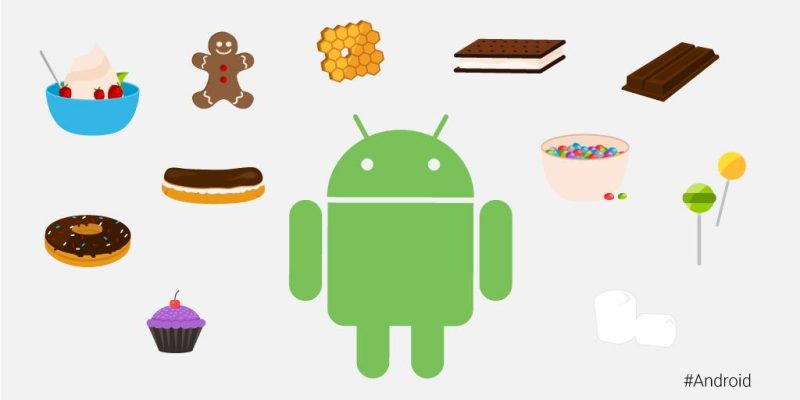
Android is Google’s mobile operating system, launched in September 2008, although its history technically began with the release of the Android alpha in November 2007. To this day, Android powers the majority of the world’s smartphones and comes in several different flavors across many phone makers.

What is Android?

Android Inc.

Android, before it was Android, was a company called Android Inc. That company was founded in Palo Alto, California, in 2003 by a crew of four: Andy Rubin, Rich Miner, Nick Sears, and Chris White. The company and its project was acquired by Google in 2005 for a sum of more than $50 million, although the exact number is unknown. The company’s founders joined Google as part of the deal.

In its infancy, Android was an operating system built not for touch screen smartphones like the iPhone, but rather BlackBerry-like devices with physical keyboards. It’s well documented that after Apple shocked the world with the iPhone, ahead of its nearest competition by at least a couple years, Google and Android Inc. had to go back to the drawing board to build something competitive.

Adoption by third-party makers

It didn’t take long after the launch of the iPhone for various manufacturers to enter the market with their alternatives — and Google’s Android immediately became the obvious platform of choice for just about everyone except Microsoft. HTC was the first manufacturer on board, and introduced the T-Mobile G1 running Android in September 2008. Soon after, HTC, Motorola, Samsung, and carriers like Sprint and T-Mobile jumped on board to form the Open Handset Alliance.

Android makers across the world

Iconic Android handsets

There have been thousands of Android phones released since Android’s inception, but some have been more important to the platform’s history than others. There was the original T-Mobile G1, as mentioned, but there was also the HTC One Google Play Edition, Moto G, Samsung Galaxy S4, and others. Some of the most iconic Android handsets include:

  • HTC G1
  • HTC Nexus One
  • Samsung Galaxy S, S2, S3, S4, and their successors
  • HTC Incredible S
  • Samsung Nexus S
  • Samsung Galaxy Nexus
  • Samsung Galaxy Note
  • Nokia 8
  • BlackBerry KeyOne
  • Google Pixel and its successors

In more modern times, there are several Android smartphones makers that popped up across various niches and in several international markets. Huawei is a dominant Android maker in China and many European markets, while Samsung is by far the most popular maker in the United States by far — effectively creating a duopoly with Apple. Today, there are dozens of major device makers contributing to the Android ecosystem.

Full list of Android OEMs

History of major Android versions

Android has seen countless software revisions over the course of its life, but in modern times the OS usually sees a major release on an annual cadence. In the earlier days, Google famously gave its major software releases dessert-themed codenames, but retired that practice in 2019 with the release of Android 10.

VersionNameReleaseDevices
2.3GingerbreadFebruary 9, 2011Nexus S
4.0Ice Cream SandwichOctober 19, 2011Galaxy Nexus
4.1Jelly BeanJuly 9, 2012Nexus 7
4.2Jelly BeanNovember 13, 2012Nexus 4, 10
4.3Jelly BeanJuly 24, 2013Nexus 7 (2013)
4.4KitKatOctober 31, 2013Nexus 5
5.0LollipopNovember 3, 2014Nexus 6, 9
5.1LollipopMarch 9, 2015Android One
6.0MarshmallowOctober 5, 2015Nexus 5X, 6P
7.0NougatAugust 22, 2016Nexus 5X, 6P
7.1NougatOctober 4, 2016Pixel, Pixel XL
8.0OreoAugust 21, 2017Pixel, Pixel XL
8.1OreoDecember 5, 2017Pixel, Pixel XL
9PieAugust 6, 2018Pixel 2, Pixel 2 XL
1010September 3, 2019Pixel 3, 3a
1111September 8, 2020Pixel 4

List of major Android OS platforms

While Android proper is certainly the most widespread of Google’s Android operating systems, the company has also launched many offshoots of the main OS over the years. There’s Android Auto, Android Wear (now Wear OS), Android TV (now rebranded to Google TV), as well as versions of Android built for tablets and Android Things (now defunct).
Motorola returning to China in February w/ Moto X, Moto X Pro, and Moto G

Site default logo image

Motorola has just announced in a blog post that it is making a return to China. Following the company’s acquisition by Lenovo, Motorola Mobility says that it is returning to China with three of its newest devices. Motorola calls China “one of the world’s fastest-growing smartphone markets,” and promises to release the Moto X, Moto X Pro, and Moto G with LTE in early 2015.


Expand
Expanding
Close

Dell Venue 8 7000 Android-powered tablet now available for $400, includes ‘infinity display’ and ‘world’s thinnest’ design

Site default logo image

Dell announced today at CES 2015 that its Venue 8 7000 Android-powered tablet is now available. The device—originally announced back in September at an Intel event—costs $400 and is available now in the US from Dell.com and Best Buy stores. It will launch in Canada later this week and in Australia, New Zealand, China, Hong Kong, Japan, Singapore, India, Germany and the UK during early 2015.

The Dell Venue 8 7000 is “the world’s thinnest tablet,” according to the company, coming in at just 6mm. Dell also touts that the device features an “infinity display” with very little side bezel, making the display nearly edge-to-edge. The 8.4-inch display comes with a QHD 2560 x 1600 resolution, as well.
Expand
Expanding
Close

Pioneer unveils three new Android Auto-enabled in-dash receivers

Site default logo image

Android Auto, Google’s solution to integrating content from your smartphone to your car’s built-in display, is on full display at CES 2015 this week as Pioneer announced three new aftermarket in-dash receivers with Android Auto support. Starting at $700, Pioneer will beginning shipping the second generation of its NEX receivers starting in March bringing Android Auto to the car you already own.
Expand
Expanding
Close

Misfit introduces Bolt, its smart light bulb w/ sleep tracking device integration

Site default logo image

We saw Misfit introduce a unique, luxury version of its Shine fitness and sleep tracking wearable with Swarovski at CES yesterday, and today Misfit is launching Bolt—its first smart bulb. Misfit describes Bolt as “a wirelessly connected color-changing light bulb that lets users personalize their home lighting.” Misfit points out that its Bolt connected light bulbs won’t require a hub and actually integrate with the company’s existing sleep tracking devices (Shine, Flash, Beddit) to gently wake you up with lighting during light sleep.
Expand
Expanding
Close

Site default logo image

Wireless power system charges devices via WiFi up to 20 feet away

Wireless charging has been around for some time now, but charging pads are really almost as clunky as wires: you still have wires going to the pads, and you have to put your device in a specific place to charge them. What we really want is true wireless charging, where power is beamed directly to the device through the air.

Which is exactly what Energous has been demonstrating at CES with a system it calls WattUp, reports Engadget.

WattUp […] works using a mix of RF, Bluetooth and a lot of patent-pending technology. The transmitter is where most of the magic happens. It communicates with and locates compatible devices using low-energy Bluetooth. Once they’ve established contact with a device, they send out focused RF signals on the same bands as WiFi that are then absorbed and converted into DC power by a tiny chip embedded in the device. These transmitters can be built into household appliances, TVs, speakers and standalone “energy routers.”

What looks like an oversized Internet router beams power up to 20 feet, so have enough of these – or transmitters embedded into other devices around the home – and your portable devices are powered wherever they are. All that’s needed is for the receiving devices to have the necessary chip.

Energous used an iPad app to demonstrate switching power between devices, but the plan is to build intelligence into the system so that it beams power to devices automatically depending on how much charge they have left. Once your phone has enough power, it switches instead to powering your tablet. As you move around the home, power transmission is handed off to the next source in much the same way as your phone switches between different WiFi networks.

Energous wants to license the technology to manufacturers, and the big smartphone manufacturers are clearly in the company’s sights. This, not pads, is the way charging should work, and sooner or later this – or some equivalent tech – is how our portable tech will be charged. I’m very much hoping for ‘sooner.’


Samsung promises every piece of hardware the company makes will be a connected device within five years

Site default logo image

Announcing a new version of its SmartThings Hub, Samsung co-CEO BK Yoon said that every piece of hardware the company makes will be a connected device within five years.

By 2017, 90% of all Samsung’s products will be Internet of Things devices, and that includes all of our televisions and mobile devices[…] Five years from now, every single piece of Samsung hardware will be an IoT device, whether it is an air purifier or an oven.

Yoon also said that the company was committed to open connectivity, rather than the walled garden approach the company has previously taken, where its devices only talk to other Samsung devices … 
Expand
Expanding
Close

CES 2015: Asus Zenfone 2 first impressions and hands-on (Video)

We got a chance to go hands-on this morning with the Asus Zenfone 2 at CES in Las Vegas, and I think I’ve come to the conclusion that this is one of the most notable smartphones to ever come from the Taiwanese company. Forget the fact that this device is the first smartphone in the world to come with 4 GB of RAM and consider this: At $199, this device, even without its headlining feature (which the base model is notably lacking anyway), is now by far the best $199-level phone on the market.
Expand
Expanding
Close

Site default logo image

CyanogenMod 12 nightly builds enabled with Android 5.0.1 support

Cyanogen announced on Monday that it has enabled nightly releases of CyanogenMod 12 based on Android 5.0.1 Lollipop. The company also confirmed that its more stable “M” release of the custom ROM is 85% complete. CyanogenMod 12 supports a limited number of Android devices at this time, including the OnePlus One and Moto G.
Expand
Expanding
Close

Sony unveils refreshed SmartWatch 3 with a stainless steel design

Site default logo image

Sony just kicked off its press conference at CES 2015, and one thing for the company will be showing off during the event is a new stainless steel designed SmartWatch 3. The SmartWatch 3 was originally released in October of 2014, but Sony has taken the opportunity at CES to give it an updated, more high-end design.


Expand
Expanding
Close

Live stream: Watch Samsung’s CES 2015 press conference right here

Site default logo image

https://www.youtube.com/watch?v=URy4fN4sSqI

Samsung is next on the list for CES 2015 press day. The company’s press conference is set to kick off in just a few minutes at 2PM PT/5PM ET. Samsung will undoubtedly showcase a lot of new products during the event, the details of which, however, remain to be seen.

You can watch the live stream of Samsung’s press conference up above. Stay tuned to 9to5Google for all the news from the event, as it happens.


Expand
Expanding
Close

Lenovo unveils first 64-bit Intel Atom-powered device, new budget tablets, VB10 wearable

Site default logo image

At CES 2015, Lenovo has unveiled a handful of new Android-powered devices, including both phones and tablets. First off, the company has announced the Vibe X2 Pro (seen above, left), which is an updated version of the Vibe X2 we saw back at IFA. The X2 Pro features a 5.3-inch 1080p display and is powered by a 64-bit 1.5GHz octa-core Snapdragon 615 processor. There are also two 13MP cameras on the device, one on the front and one on the back. The Vibe X2 Pro launches in April outside the U.S. and is powered by Android 4.4 with Lenovo’s custom skin on top.


Expand
Expanding
Close

LG shows off new, faster G Flex 2 with curved HD display at CES 2015

Site default logo image

After revealing the G Flex 2 name previously through CES banners, LG officially unveiled its next generation curved display Android handset at the Consumer Electronics Show today. The first LG G Flex was met with early reviews characterizing it as an expensive prototype, and we found it hard to recommend especially next to LG’s other smartphones in our own hands-on review. So what does LG have planned for the G Flex 2 as it takes the curve for a second spin?
Expand
Expanding
Close

Site default logo image

Polaroid’s Socialmatic camera packs 14MP & mobile printing in a WiFi-connected Android shooter

Even in the age of Instagram and amazing cameras on our smartphones, the classic concept of shoot-and-print isn’t dead thanks to Polaroid’s Socialmatic camera on display this week at CES. Polaroid’s vintage-style cam is actually modernized with WiFi connectivity and an Android-based system for shooting and sharing with a retro design.
Expand
Expanding
Close

Parrot introduces Android Auto-powered RNB6 infotainment system

Site default logo image

[youtube https://www.youtube.com/watch?v=LfrN8IVQB84&channel=parrot]

Parrot today introduced its new Android-powered infotainment system, currently known only by its model number, “RNB6,” that features a 7-inch 720p display. The system runs on a custom build of Android Lollipop, and has full support for that operating system’s Android Auto feature, allowing control of your cell phone’s key functions through your dashboard.

Even without a phone connected, the system offers onboard navigation (integrated with the dashcam), phone call capability (presumably over Bluetooth unless connected via Android Auto or Apple CarPlay), vehicle diagnostics, music and climate control, and more.


Expand
Expanding
Close

Samsung reportedly showing Galaxy S6 to select partners at CES 2015

Site default logo image

Samsung’s Galaxy Note Edge

According to a new report out of the usually-reliable SamMobile, Samsung will have its latest Galaxy S6 flagship on display at CES 2015 this week. Unfortunately, however, the device will not be showed to consumers, but rather only to select partners. Presumably, those partners include carriers and accessory makers.


Expand
Expanding
Close

Acer announces 4G-capable Liquid Z410 smartphone ahead of CES

Acer is definitely taking advantage of a little down time in the flow of news this weekend, and has decided to show off a couple of things the company plans to unveil this upcoming week at CES. Amongst a wide variety of other non-Google-related products, the company has announced a new budget Android smartphone with 4G LTE (which seems like it’s going to be an even more prevalent trend than ever at this year’s CES.) Yesterday, the company also announced a new 15.6-inch Chromebook that it claims is the first of its kind.


Expand
Expanding
Close

Early banners reveal LG’s plans to unveil the G Flex 2 at CES 2015

Site default logo image

The official start of CES 2015 is right around the corner, but as is the case every year, some early signage has revealed the plans of one company. According to a plethora of posters posted throughout the main hallway at CES, LG is planning to unveil its G Flex 2 device during the show this week (via The Verge). The original G Flex was released all the way back in December of 2013, so an update is certainly needed by this point.


Expand
Expanding
Close