Android

See All Stories

Breaking news for Android. Get the latest on apps, carriers, devices, and more!
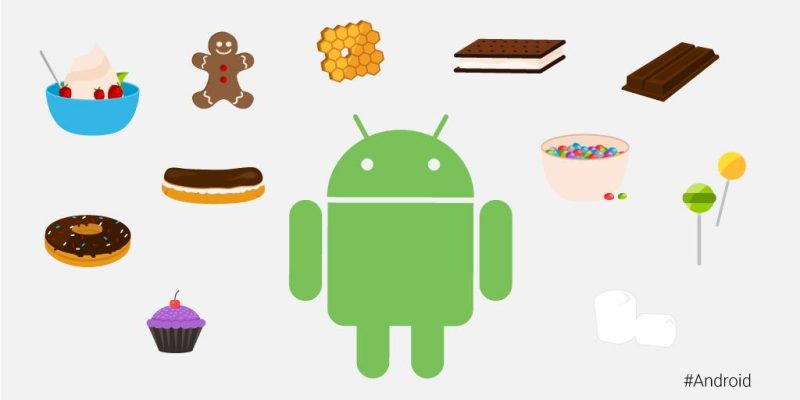
Android is Google’s mobile operating system, launched in September 2008, although its history technically began with the release of the Android alpha in November 2007. To this day, Android powers the majority of the world’s smartphones and comes in several different flavors across many phone makers.

What is Android?

Android Inc.

Android, before it was Android, was a company called Android Inc. That company was founded in Palo Alto, California, in 2003 by a crew of four: Andy Rubin, Rich Miner, Nick Sears, and Chris White. The company and its project was acquired by Google in 2005 for a sum of more than $50 million, although the exact number is unknown. The company’s founders joined Google as part of the deal.

In its infancy, Android was an operating system built not for touch screen smartphones like the iPhone, but rather BlackBerry-like devices with physical keyboards. It’s well documented that after Apple shocked the world with the iPhone, ahead of its nearest competition by at least a couple years, Google and Android Inc. had to go back to the drawing board to build something competitive.

Adoption by third-party makers

It didn’t take long after the launch of the iPhone for various manufacturers to enter the market with their alternatives — and Google’s Android immediately became the obvious platform of choice for just about everyone except Microsoft. HTC was the first manufacturer on board, and introduced the T-Mobile G1 running Android in September 2008. Soon after, HTC, Motorola, Samsung, and carriers like Sprint and T-Mobile jumped on board to form the Open Handset Alliance.

Android makers across the world

Iconic Android handsets

There have been thousands of Android phones released since Android’s inception, but some have been more important to the platform’s history than others. There was the original T-Mobile G1, as mentioned, but there was also the HTC One Google Play Edition, Moto G, Samsung Galaxy S4, and others. Some of the most iconic Android handsets include:

  • HTC G1
  • HTC Nexus One
  • Samsung Galaxy S, S2, S3, S4, and their successors
  • HTC Incredible S
  • Samsung Nexus S
  • Samsung Galaxy Nexus
  • Samsung Galaxy Note
  • Nokia 8
  • BlackBerry KeyOne
  • Google Pixel and its successors

In more modern times, there are several Android smartphones makers that popped up across various niches and in several international markets. Huawei is a dominant Android maker in China and many European markets, while Samsung is by far the most popular maker in the United States by far — effectively creating a duopoly with Apple. Today, there are dozens of major device makers contributing to the Android ecosystem.

Full list of Android OEMs

History of major Android versions

Android has seen countless software revisions over the course of its life, but in modern times the OS usually sees a major release on an annual cadence. In the earlier days, Google famously gave its major software releases dessert-themed codenames, but retired that practice in 2019 with the release of Android 10.

VersionNameReleaseDevices
2.3GingerbreadFebruary 9, 2011Nexus S
4.0Ice Cream SandwichOctober 19, 2011Galaxy Nexus
4.1Jelly BeanJuly 9, 2012Nexus 7
4.2Jelly BeanNovember 13, 2012Nexus 4, 10
4.3Jelly BeanJuly 24, 2013Nexus 7 (2013)
4.4KitKatOctober 31, 2013Nexus 5
5.0LollipopNovember 3, 2014Nexus 6, 9
5.1LollipopMarch 9, 2015Android One
6.0MarshmallowOctober 5, 2015Nexus 5X, 6P
7.0NougatAugust 22, 2016Nexus 5X, 6P
7.1NougatOctober 4, 2016Pixel, Pixel XL
8.0OreoAugust 21, 2017Pixel, Pixel XL
8.1OreoDecember 5, 2017Pixel, Pixel XL
9PieAugust 6, 2018Pixel 2, Pixel 2 XL
1010September 3, 2019Pixel 3, 3a
1111September 8, 2020Pixel 4

List of major Android OS platforms

While Android proper is certainly the most widespread of Google’s Android operating systems, the company has also launched many offshoots of the main OS over the years. There’s Android Auto, Android Wear (now Wear OS), Android TV (now rebranded to Google TV), as well as versions of Android built for tablets and Android Things (now defunct).

Post-mortem: Google Pixel C was an admirable piece of tablet hardware that sadly ran Android

Pixel C Netflix

Tablets aren’t exactly a thriving breed; people who want a high-performance tablet for whatever reason are pretty much stuck at this point with choosing between one of Apple’s iPad models (and there are many) or a Samsung Galaxy Tab. But now that it’s discontinued, I think it’s time to a take a look once again at Google’s Pixel C tablet, which was announced way back in 2015… a time long, long ago… before Google (seemingly) gave up on the idea of a tablet running Android.


Expand
Expanding
Close

Huawei Mate 10 Pro and Honor 7X: Hands on with Huawei’s 2018 entries into the US market

Huawei has been working hard for the past few years to bring its devices, and specifically its flagships, to the US market. It’s made ground with sub-brand Honor and the “X” series, and last year’s Mate 9 managed to turn some heads. However, 2018 is going to mark a big year for the Chinese brand, so before we enter the new year, let’s take a closer look at what Huawei has in store for the States.


Expand
Expanding
Close

Here’s how to play HQ Trivia on your Android device right now

HQ Trivia, the live trivia game show that has become incredibly popular on iOS, is aiming to launch on Android around January 1 of next year. But if you can’t wait that long, you’re in luck because the company has opened a small private beta for Android users, and the APK file has leaked. Now, if you want to play on your device, it’s as simple as sideloading the application…


Expand
Expanding
Close

Huawei Mate 10 Pro expected to land on AT&T this February following CES reveal

Huawei has been on a mission for the past several years to bring its devices to the US market, and specifically to bring them to the mainstream market. Last year’s Mate 9 and the past couple of Honor devices have laid the groundwork, but for 2018, Huawei is going after flagships with its Mate 10 Pro, landing this time on an actual carrier.


Expand
Expanding
Close

Chrome for Android gets a redesigned video player, tap to rewind/fast forward feature

Generally speaking, most of us tend to stick to the official YouTube app when it comes to streaming content on mobile, but there are instances when it’s convenient to watch a YouTube video within the Chrome browser. Recently, Google has quietly added a new feature to that experience, as well as giving it a brand new look.


Expand
Expanding
Close

Galaxy Note 8’s dual-OIS cameras crush the Pixel 2, Mate 10 Pro, and iPhone X in vibration comparison [Video]

When it comes to smartphone cameras, everyone knows that just about any flagship will take a good shot. However, finding a camera that can truly do it all — from stills to video — isn’t easy. In a recent comparison, one reviewer discovered an interesting tidbit about the Galaxy Note 8’s camera, and with this feature it crushes the competition.


Expand
Expanding
Close

OnePlus confirms it will bring ‘Face Unlock’ to the OnePlus 5, but not in first Oreo update

While fingerprint sensors are still the main option for using biometrics to unlock your phone in today’s market, the debut of the iPhone X means that using your face to unlock will be the next big trend. With the debut of the OnePlus 5T, the company added “Face Unlock,” and it’s now bringing that same tech to the OnePlus 5.


Expand
Expanding
Close

Google Photos ‘Smiles of 2017’ takes a look back at your year of selfies

Google Photos Assistant

One of the best features of Google Photos (other than the free cloud backups) is its automatic creation of collages and movies using the pictures captured by your smartphone. As we quickly approach the end of 2017, Photos is celebrating with a new film titled “Smiles of 2017” in which the app automatically finds your selfies from the past year and displays some of your favorite memories…


Expand
Expanding
Close

‘AutoNotification’ adds fully customization actions to Gmail notifications on Android [Video]

Notifications on Android are pretty much the best you can find today, but they’re not perfect. Part of that is on the operating system, but a larger part lies on developers taking full advantage of what Android offers. In many cases, it’s third-party developers who come up with the best ideas, and recently one well-known developer has brought his skills to enhancing Google’s own Gmail app.


Expand
Expanding
Close

Zooper Widget returns to the Play Store after being mysteriously removed earlier this month

Zooper Widget has long been one of the best ways to customize your homescreen beyond a third-party launcher. With tremendous support from third-party developers and from its community, the app has turned into a hub for customization. However, that all came to a screeching halt earlier this month when the app vanished from Google Play. Thankfully, Zooper is back.
Expand
Expanding
Close

twitter for android

How to set up two-step login verification for your Twitter account

For some time now, Twitter has allowed users to set up and use two-step verification to help protect their accounts. But until now, Twitter has sent authentication codes through SMS or required users to use a login code generator within a mobile app already signed into the account. Just announced this morning, Twitter users can now use third-party apps like Google AuthenticatorAuthy, and 1Password to generate the authorization code. Here’s how to set it all up…


Expand
Expanding
Close