Stay up to date on news from Google headquarters. Be the first to learn about plans for Android, Google Plus, Google Apps, and more!
Stay up to date on news from Google headquarters. Be the first to learn about plans for Android, Google Plus, Google Apps, and more!


Have you ever wondered what the most commonly searched terms which lead to your site appearing in Google’s results are? Or maybe the top queries on mobile that lead to your site appearing in results? Well, Google has offered a Search Analytics Report in the Google Search Console for some time which provides this exact kind of data (where have you been?), and now it has created an API developers can use to play around with this data in their own apps.
It’s called the Search Analytics API and with it, developers get access to all the data on traffic that has come to them through search, and can sort it by parameters like country to gain insights into, for example, what are the top queries in India that lead to visitors.
The potential here is for developers to create graphical user interfaces to this data, so less tech savvy individuals would gain the ability to sift through their search data without needing prior knowledge on how to use an API.

Google has announced today that the company is bringing its Fiber Internet service to San Antonio, the second city in Texas to get the service and the company’s “largest Fiber city to date”:
Fast growing cities need Internet speeds that can keep up with their progress. For the 1.4 million residents of San Antonio, one of the biggest and fastest growing cities in the country, this is truer than ever. Which is why, today, we’re proud to announce that Google Fiber is coming to San Antonio—the largest Fiber city to date.
Rollout of Fiber even in the Austin area — which has been an official Fiber city for quite a while — has been very slow, and Google says that it is only just now entering the “design phase” of building out Fiber in the San Antonio area. It’s going to be a while before residential customers can actually get on board.
Most recently, Google announced that it is launching a program to bring completely free internet access to public and affordable housing residents in four of its Google Fiber markets — part of President Barack Obama’s ConnectHome initiative. San Antonio was recently selected for ConnectHome as well.

Google has a lot of data on how different decisions made throughout the creation of an AdWords display marketing campaign can lead to a lot of different end results. Now it wants to use that insight to help marketers make the right decisions to reach their objectives, be it a transaction or even just an engagement with their website, and has created a step-by-step solution to do just that.
The new tool for display ads, live now in AdWords, takes marketers through the whole ad campaign creation process based on what they want to result to be. For example, someone who just wants people to visit their website may not realize that they can pay just for each click they get, rather than every single impression. Someone who wants to optimize for the amount of times their advertisement is simply seen, though, will probably want to pay for viewable impressions, or those ad placements guaranteed to be visible on the page (i.e. not needing the user to scroll to see them). Using the new setup flow, advertisers can also input their website URL and have Google choose keywords they may want their ad to appear against in search results.
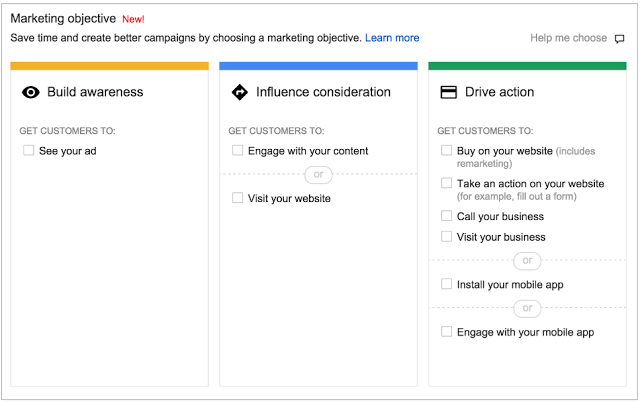
There are a lot of small decisions like these that advertisers have to consider when creating a new campaign, and a lot of ways to make a mistake that impacts the results. So this new tool simply makes it a lot easier to not mess up. It’s important for Google, too, because a low return on investment for an advertiser is a negative experience that may lead them to not using AdWords again.

Android is notorious in the developer community for its rampant fragmentation. Developing an app for Google’s platform means wrestling to make the app work optimally on the ecosystem of thousands of devices in different shapes and sizes. And according to a new report out today giving us a look at the state of Android fragmentation as of this month, August 2015, there’s both some bad and good news: There are more devices than ever before, but fewer users that are spread out across different operating system versions.

Google has announced the results of an experimental initiative to buy tech patents and license them at fair rates in order to prevent them falling into the hands of patent trolls. The company revealed that it bought 28% of the “relevant” patents offered to it, paying a median price of around $150k, reports IEEE Spectrum.
Google’s senior product licensing manager Kurt Brasch said that the company was “very, very happy” with the program, with the number of submissions substantially higher than expected…
Expand
Expanding
Close
Language annotation platform Genius, formally known as Rap Genius, has launched an Android version of its mobile app (Play Store link). Genius originally launched as a music annotation service popular in the rap community, but has since expanded to cover basically the whole human corpus with vertical sections for annotations on poems, books, and more.

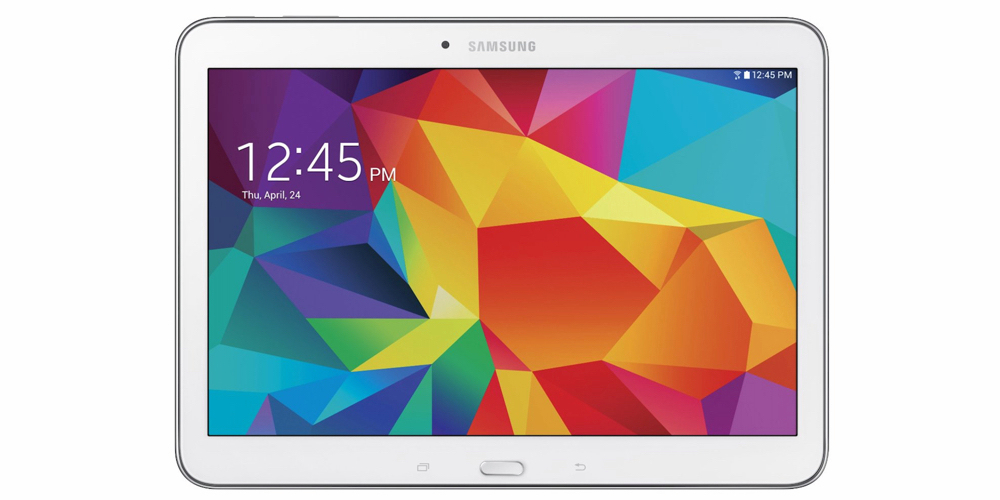
Starting today, the Project Tango Development Kit tablet is available to purchase in the Google Store — beyond the United States — for developers in South Korea and Canada. And on August 26th, it’ll be available in quite a few more places: Denmark, Finland, France, Germany, Ireland, Italy, Norway, Sweden, Switzerland, and the United Kingdom.
Expand
Expanding
Close
Keep up with the best gear and deals on the web by signing up for the 9to5Toys Newsletter. Also, be sure to check us out on: Twitter, RSS Feed, Facebook, Google+ and Safari push notifications.


In case you didn’t notice (which is basically no one at this point, thanks to the more-than-loud John Legere), T-Mobile has tried to be as disruptive as possible over the last couple years. And now, Sprint, which has long been the third-largest mobile carrier in the United States, is admitting defeat. It seems T-Mobile’s tactics are working, and Sprint’s first fiscal quarter report released today shows that its 56.8 million subscribers are just shy of the 58.9 million that T-Mobile reported it had last month.
Expand
Expanding
Close

Not quite in time for the influx of visitors that surely happened earlier this summer, Disney has now released an official Disneyland app for Android. As you might expect, the app is intended to basically be your companion during your visit, allowing you to do everything from buy your tickets in advance to browse detailed maps of the park…
Expand
Expanding
Close
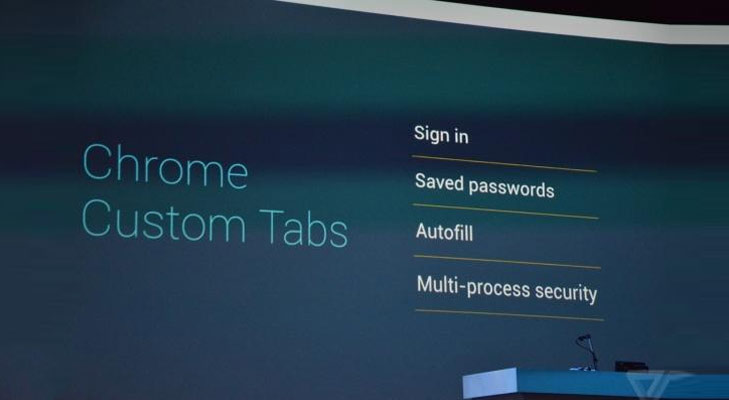
Chrome Beta version 45 for Android is rolling out today (Play Store link) and includes some nice interface tweaks as well as one addition that was previously announced at Google’s I/O developer conference back in May. Chrome Beta is a build of the Chrome browser which includes features and changes that are almost, but not quite, ready for use by the masses. Showing up in the Beta build of the browser is a good indicator that a feature or adjustment will soon reach those masses, so it’s always interesting to see what’s been added.
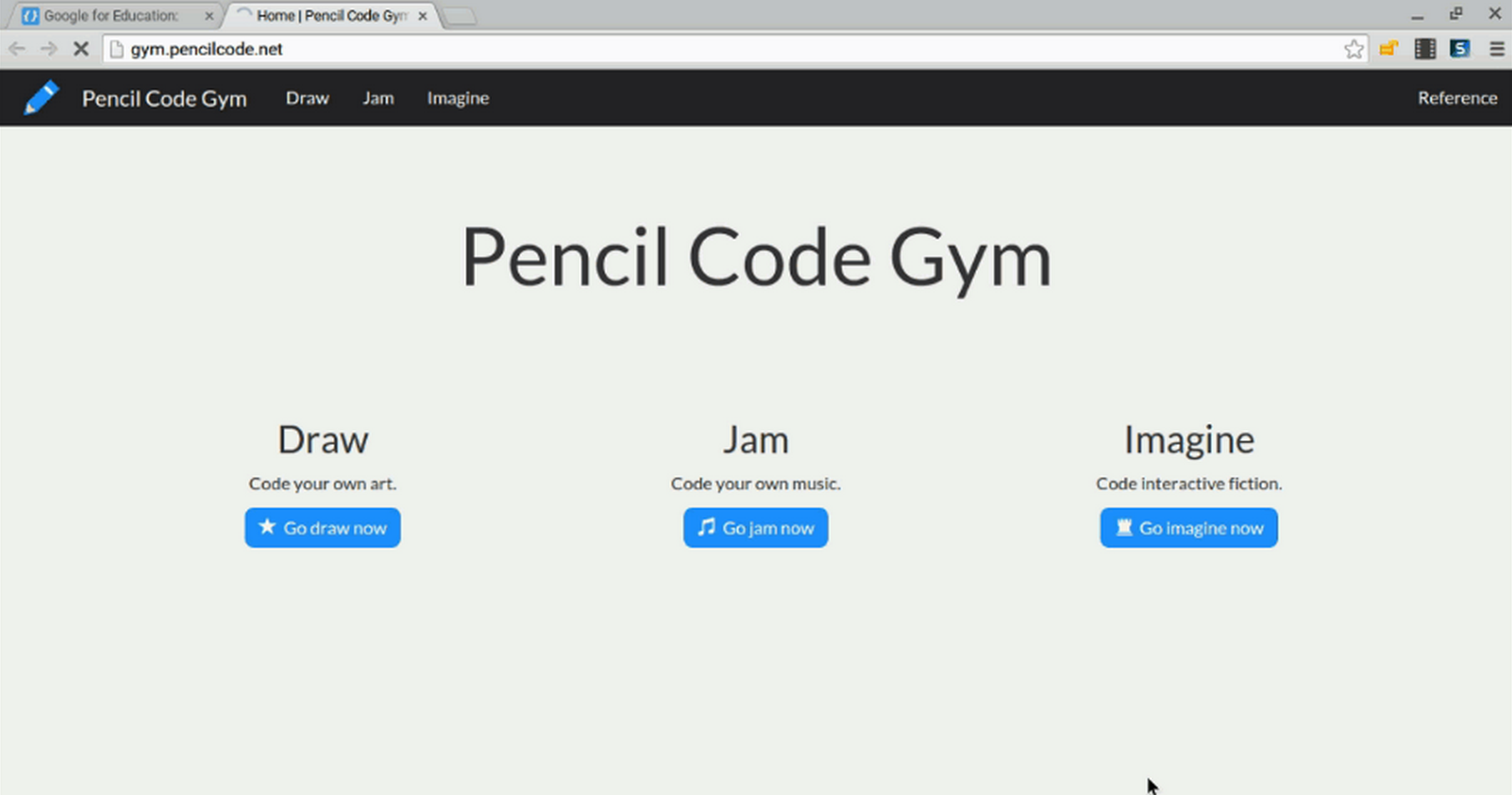
Many job openings in the field of computer science go unfilled — not for lack of quality applicants, but due to a lack of any applicants at all. This is a big problem for technology companies, Google included, because it means they have to compete for the few candidates there are with large compensation packages and cushy benefits like on-site masseuses and shuttles to take employees to and from work (both benefits that Google offers). Google in particular has been working hard both to get more people into computer science and also increase the diversity of those going into the field, and today it rolled out an online destination where anyone can go to find computer science learning opportunities.
The new portal, which can be found on the Google for Education website (click here), aims to increase exposure to all kinds of opportunities for one to gain computer science skills — be it through online games, grants, summer camps, etc — by collecting them in one place and allowing anyone to then sort them by age and region for the highest relevance to ones needs. Google notes in its blog post about the portal that encouragement and exposure can have a direct impact on a child’s interest in pursuing computer science education, and that goes especially for girls. This development is aimed particularly at students, but anyone interested in the field can take advantage of it.
“CS is much more than computer programming and coding— it’s a gateway to creativity and innovation not just in technology but in fields as diverse as music, sports, the arts, and health,” said Google in its blog post about the portal.

Keep up with the best gear and deals on the web by signing up for the 9to5Toys Newsletter. Also, be sure to check us out on: Twitter, RSS Feed, Facebook, Google+ and Safari push notifications.

Google+ has largely been heralded as dead, and that isn’t for no reason. Most recently, Google has decided that it’s time to stop pretending like people want it, and has started decoupling its other services from the infamous social network wannabe. For those that just couldn’t stand the fact that Google was pushing them into something they didn’t want, I guess that’s great. Google is listening to feedback, and they’re acting on it. But for me, Google+ is an invaluable part of my daily routine. There is so much interesting commentary and conversation that happens there that I can’t imagine a day without it. I’ve made friends on Google+. I’ve had some of my most viral social media postings go viral on Google+. I’ve talked with Google employees personally on Google+. I have the ability to write about Google and its products in-depth partly because of Google+. And no, this isn’t satire.
Expand
Expanding
Close
Hangouts, since the beginning, has separated incoming messages into two categories. Either the app detects that you probably know the person that’s contacting you (by way of you circling them, them having your email address, or otherwise) and lets them send you a message directly, or it puts incoming messages into an “Invitation” that you have to accept. How this works has never been customizable, but now Google is letting you customize these invitations to make them more or less strict.
Here’s the image that Jordanna Chord shared:
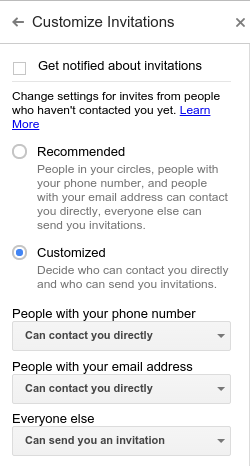
In the new options, you can choose to go with Google’s recommended system, or you can opt to customize three different categories of incoming messages yourself. If you’d like, you can require that only invitations can be sent — regardless of if the sender has your email/phone number or not. Or, if you’re more of a free spirit, you can conversely use this opportunity to open up your inbox to any and all messages and allow everyone to contact you directly. Personally, I like the way Google has things set up. But I also like options. Options are good.
These settings will be available across the Hangouts apps, and of course, those who are using the Hangouts app on the desk through Google+ or otherwise will be able to take advantage of them as well.
Keep up with the best gear and deals on the web by signing up for the 9to5Toys Newsletter. Also, be sure to check us out on: Twitter, RSS Feed, Facebook, Google+ and Safari push notifications.


[tweet https://twitter.com/9to5toys/status/627142072085159936 align=’center’]

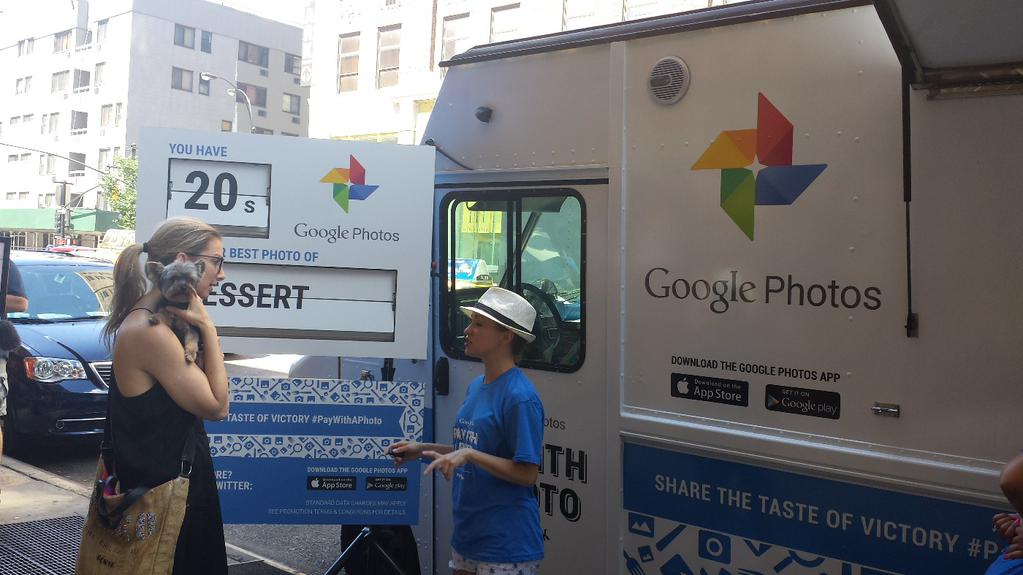
Google teased some kind of #paywithaphoto Google Photos promotion last week, and now it looks like the food trucks are rolling out. The first locale luckily able to participate is New York City, and you can see the full schedule, running until August 2nd, below.
Expand
Expanding
Close
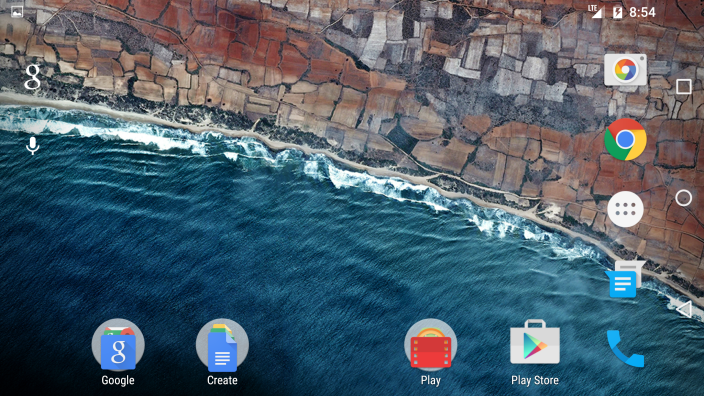
According to a post by an Android Developer Advocate on Google+, the Mountain View company has had to delay Android M Developer Preview 3 just a bit to make sure it’s closer to being a “near final’ build. Google never promised a release date, so most probably won’t be too disappointed, but the company says it just needs a “little more time.”
As per Wojtek Kaliciński:
A quick update on M Developer Preview 3.
We want this to be a near final release to test your apps on, but we need a little more time to get it out to you.
Please be patient and refrain from posting speculations about the release date. We will announce the Preview 3 availability in this community and on +Android Developers as soon as it’s ready.
We’ll of course let you know as soon as the new Developer Preview is out, and we’ll quickly be digging through it to find the latest additions and fixes. The first two previews went without any kind of Google Now on Tap support, so that’s likely part of what the company is scrambling to put together right now.
Google has appealed against France’s order that it must implement ‘Right to be forgotten‘ requests globally, rather than just within Europe, reports the WSJ. The company argued in a blog post that to comply would mean the Internet would only be as free as the least free country in the world …
Expand
Expanding
Close

You might notice that 9to5Google has changed. Indeed so has the whole network. Long before the page size/speed and advertising controversies, we knew that we needed to rethink how we presented ourselves.
While we were one of the lightest and fastest sites in our field, our feature creep and advertisers were adding complexity and page load times, which is especially crucial on mobile – an ever expanding percentage of our growing audience.
We decided to start over…
Expand
Expanding
Close
OnePlus earlier this week finally took the wraps off the much anticipated OnePlus 2, the successor to the company’s first Android smartphone, the OnePlus One. And while the young Chinese company says it significantly increased manufacturing capacity for the 2 over the One, it still seems to believe that demand will initially outstrip supply. As such, once the OnePlus 2 launches on August 11th you’re likely to do some more waiting before you get it.
Expand
Expanding
Close

As I first told you across several exclusive reports, Google’s next move for Google Glass is into the enterprise (via The Wall Street Journal). As I said, the device is expected to have improved internal hardware including an Intel Atom processor, a new physique that makes it more suitable for less-than-ideal working environments, and will be coming exclusively to the workplace through the Glass for Work partner groups.

Update: Google posted to Google+ shortly after we published this to announce that Play Movies is actually now available in three new countries: Indonesia, Malaysia, and Singapore. Our report below doesn’t mention Singapore as a new supported country.
Google Play and Play Movies are both getting some international love today. Play is Google’s store for apps and games, while Play Movies contains movie and television content.
First up, developers in India can now price their Play Store apps lower than ever before: Rs. 10, which comes out to approximately 10 cents in US dollars. This is major because while India is a rapidly developing country with many starting to rise to the middle class, its per capita GDP is still much smaller than that of the United States. Also, and this is just my opinion, 10 cents is much more of a impulse buy area. This new minimum pricing only applies to India. Google recently began selling Play Store gift cards in the country as well – India is very reliant on cash over plastic (credit, debit cards), so by making gift cards available that can be purchased with cash, the company has ostensibly increased its potential customer base in that country.
Also new today, or at least very recently, is the launching of Play Movies in Indonesia and Malaysia. Several people have reached out to Android Police as of late with tips and screenshots of its availability in the two countries, so it’s pretty assured to be real. Play Movies is, as mentioned, Google’s movie and television entertainment store for Android devices. The company also rents out video content through YouTube, although the availability of both of these varies widely by region and country.

Up until today, testing out an Android app that’s in beta has required going through a non-intuitive process that includes joining a group on Google+ (or Google Groups) and then clicking a special Play Store link which typically doesn’t even work until a few minutes after you join the associated group (which can lead people to thinking that something isn’t working). It’s weird and inelegant, so Google has just announced two new (easier) ways through which developers can grant users access to their betas.