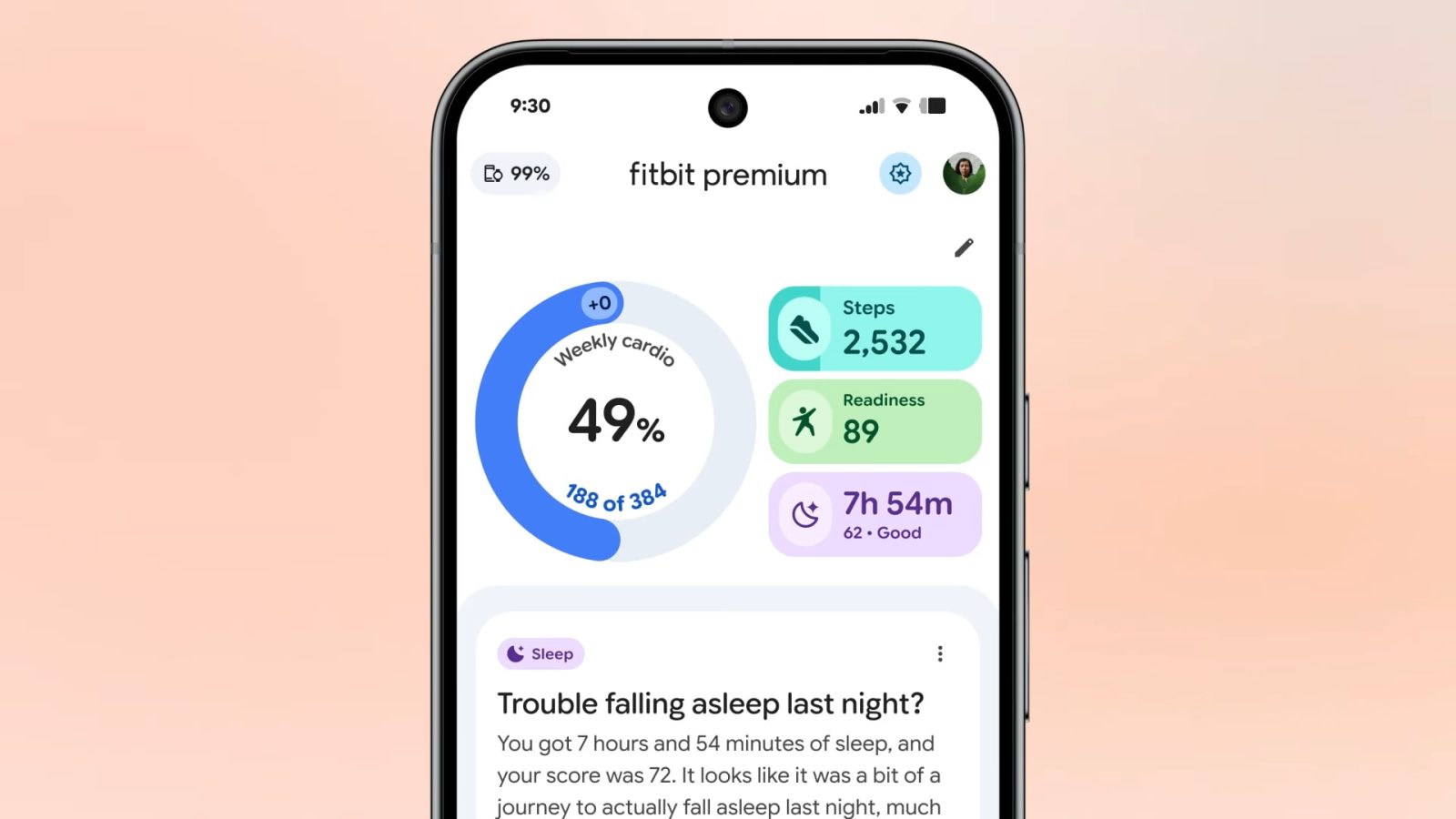
Fitbit Public Preview adds food & water logging, more as app redesign comes to free users


In recent Android versions, safety and privacy have been forefront in the majority of changes made, though are still ways that others can see your Android device’s location without acting in a malicious way. This guide will bring you through several location-sharing features and how to configure or disable them entirely, letting you take control of who can see your Android phone’s location.
Expand Expanding Close

Google has officially announced that Google Pay is now available in Germany. There are currently 4 banks that support the service, although the list is certain to grow in the coming months: Wirecard, Comdirect, Commerzbank, and N26.

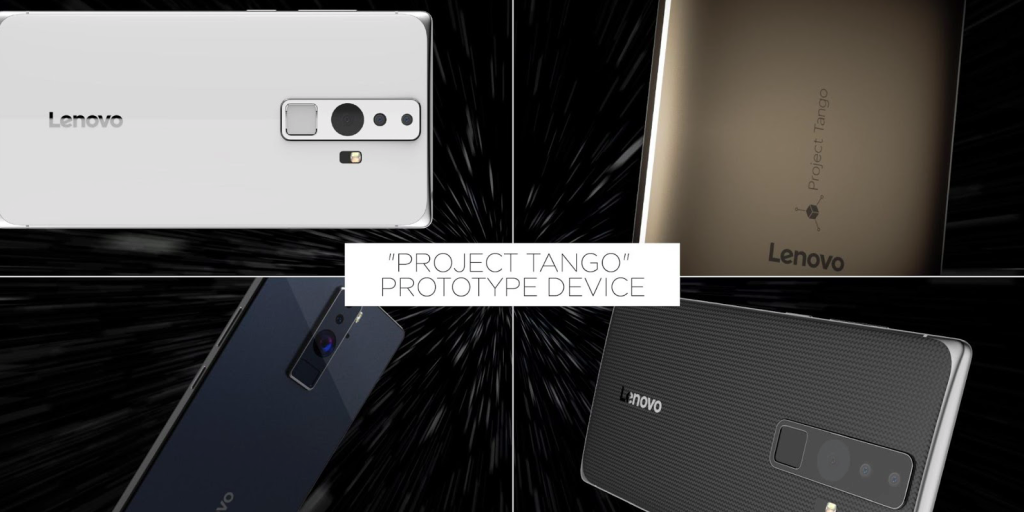
Google is planning on tapping into its Project Tango technology to offer superior interior 3D mapping of buildings and a new revenue stream through virtual reality apps using the platform, Bloomberg reports.

Announced last year, YouTube’s 360-degree videos are one of the easiest source of content for VR headsets, like Cardboard. Today, Google is announcing support for live 360-degree video streaming, as well as support for spatial audio.
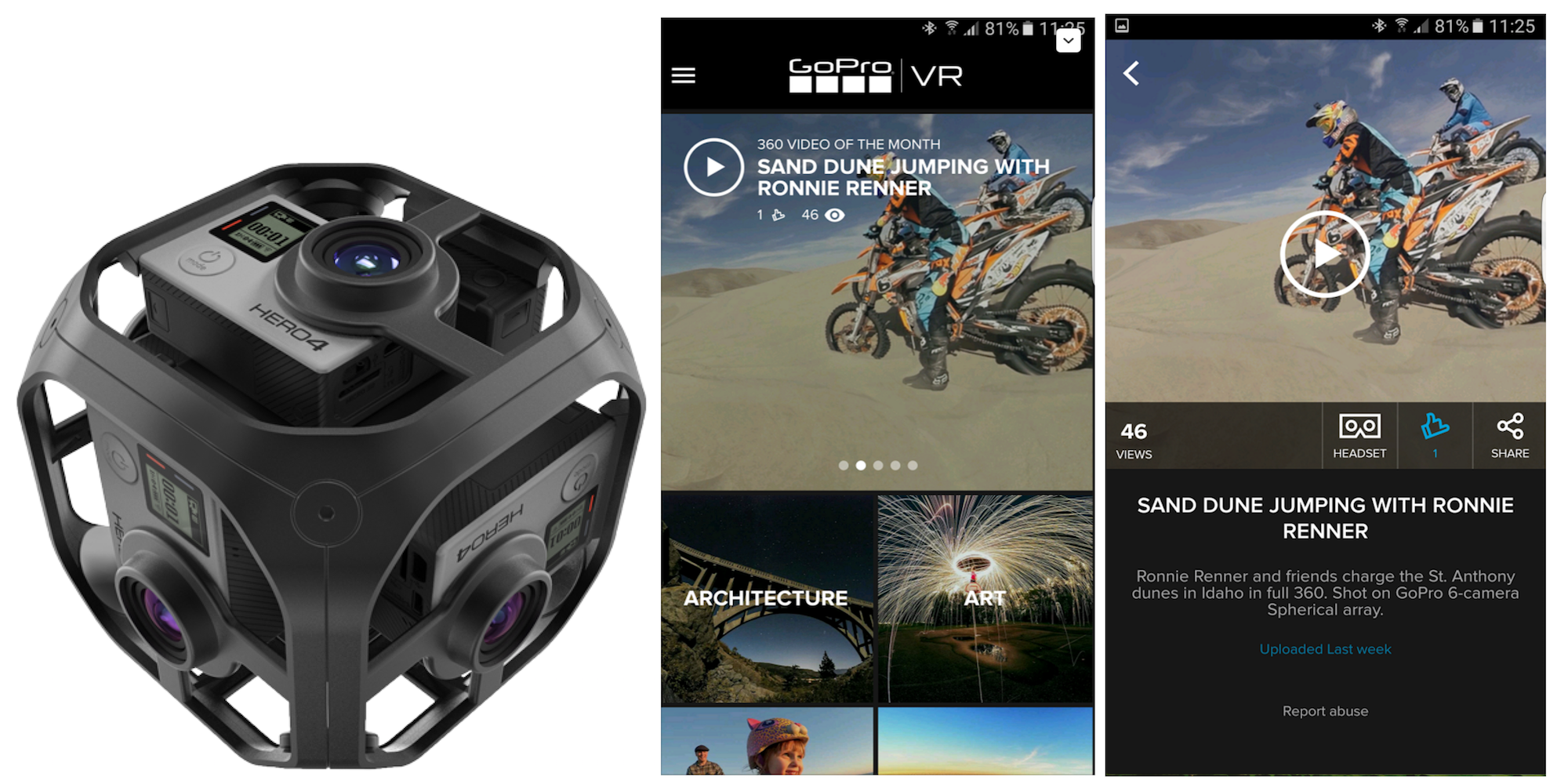
GoPro is today launching a new GoPro VR mobile app where anyone will be able to view 360-degree and virtual reality content uploaded using its new Omni and Odyssey camera rigs also announced today.
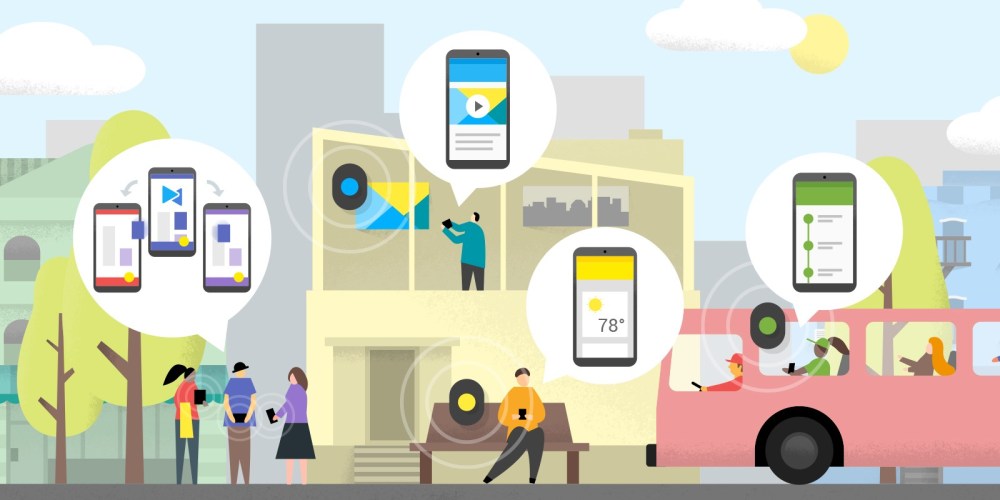
Bluetooth beacons usually only broadcast public one-way signals. By allowing secure and private communication with users, the Eddystone-EID opens up a variety of new use cases for beacons. Along with the new secure open beacon format, Google is announcing a number of new hardware partners that will make compatible devices.


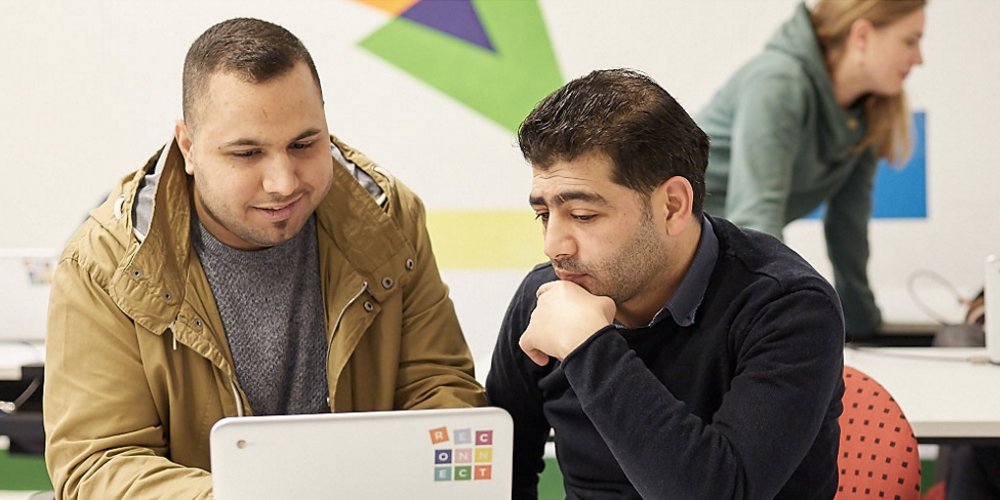
Google has announced a new philanthropic partnership with NetHope aiming to help Syrian refugees in Germany get reconnected by making 25,000 Chromebooks available to nonprofits. The goal — as described on the Project Reconnect home page — is “to help refugees as they strive to rebuild their lives, by facilitating access to education and information resources on the web.”
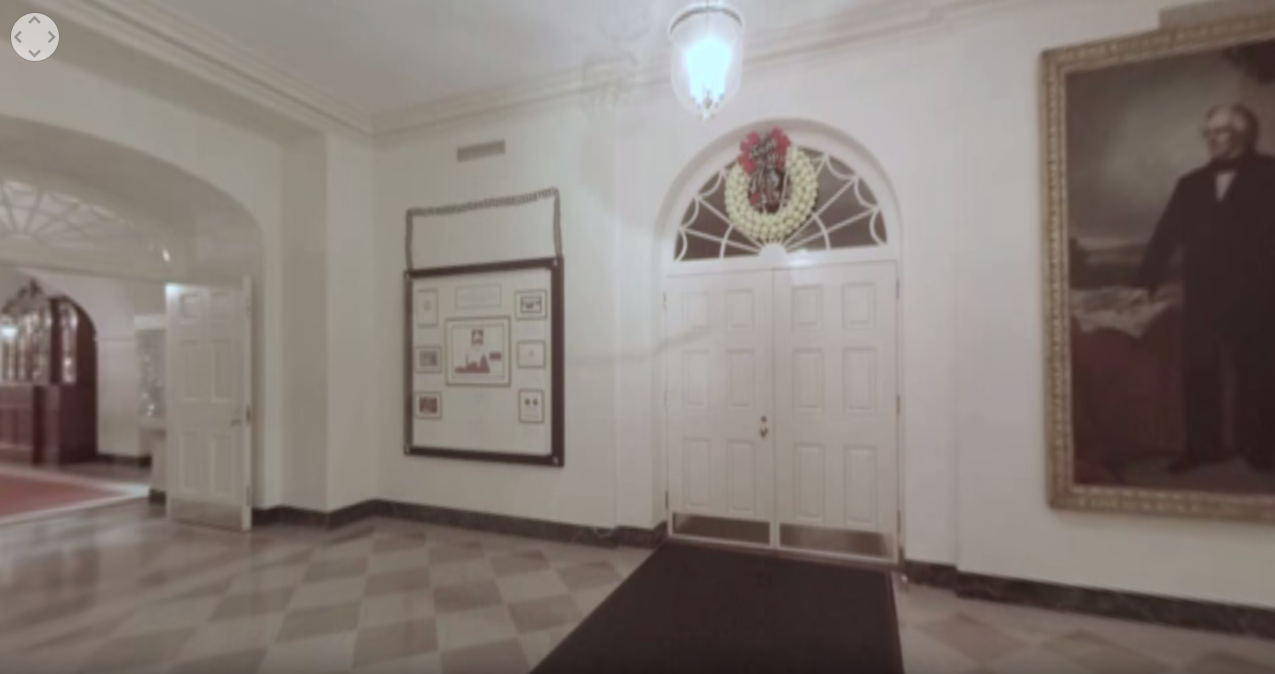
360 degree video has taken off this year, and now yet another creation use of the technology is hitting YouTube. Just in time for the holidays, the White House has taken to YouTube to upload a 360 degree video tour of the decked out temporary residence and workplace of the President of the United States.
Beyond just being a 360 video that you can pan around, this video also offers 3D options for those that have a pair of classic 3D glasses laying around. Also, as with any 360 degree video on YouTube, you can also head over to your mobile device and pan around the video using your phone’s gyroscope. There’s also Google Cardboard support.
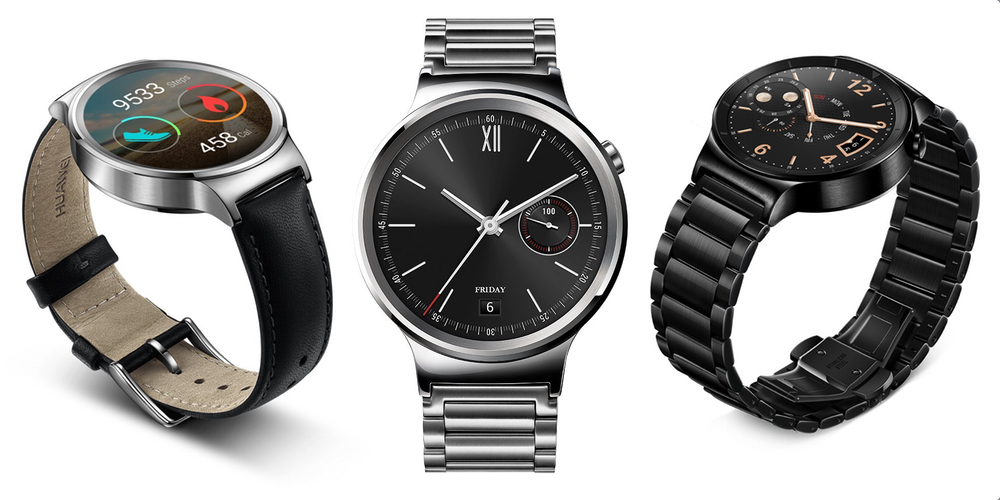
I already love the Huawei Watch (and so does Dom), and now I think I love it even more. Today, the Chinese OEM has announced that new buyers of company’s Android Wear smartwatch are getting an extended manufacturer’s warranty. Originally just 12 months, the Huawei Watch is now eligible for an additional 12 months of coverage if you buy direct from Huawei…
Expand
Expanding
Close

Google puts a lot of effort into making the world’s knowledge organized and accessible, and in particular it has a record through its Crisis Response project of making certain information more accessible during times of disaster. Today it released a blog post detailing how it’s doing more to help people be prepared.
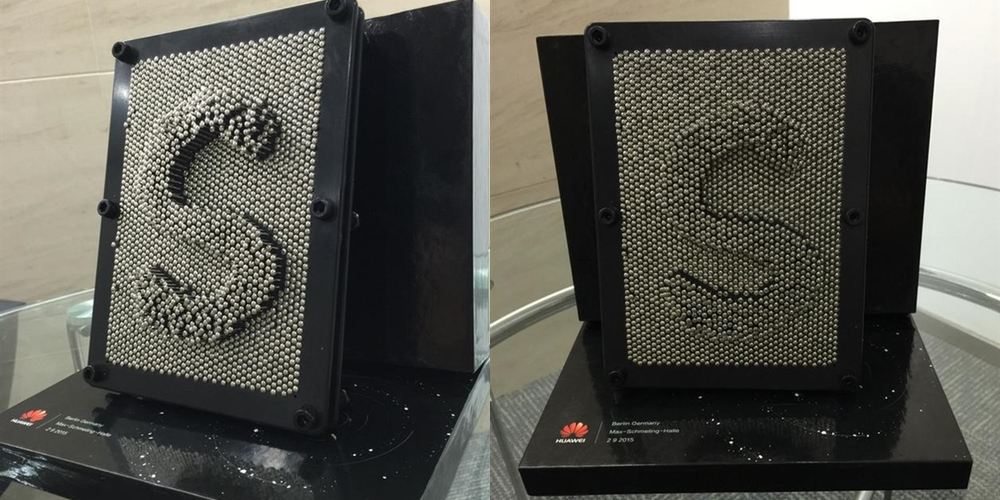
Huawei has started sending out invitations to an event on September 2nd in Berlin, Germany. The invites fit in perfectly with previous speculation that the Chinese manufacturer would use IFA as its platform to launch a new smartphone. What’s interesting about these invites is that they seemingly hint at the name of the upcoming device.
Expand
Expanding
Close

Google today announced in a blog post on its AdWords blog that it is rolling out new 360-degree video advertisements to help advertisers “engage their audience in an entirely new way.” The feature is currently supported in Chrome and on Android and iOS. Users can navigate through the 360-degree video by either dragging their mouse or tilting their phone up, down, left, and right. Google originally unveiled 360 video support earlier this year.

Google has just announced a new beacon technology called Eddystone along with APIs that will together make it easier for devices in close proximity to communicate. Essentially, these technologies will make it as easy for devices to communicate as it is to turn to a person next to you and talk in the real world.

In a world where we’re increasingly reliant on our phones to navigate the world, online reviews can make or break local businesses. Lawsuits regarding negative reviews show up in the news at least a couple times every year, and these review pages are increasingly becoming the battleground where individuals protest against businesses partaking in practices they disagree with. On the other hand, however, a good rating online can entrench and create a moat around a business for years to come. That’s why Google now allows advertisers to include their Google reviews in their AdWords ads.
Expand
Expanding
Close
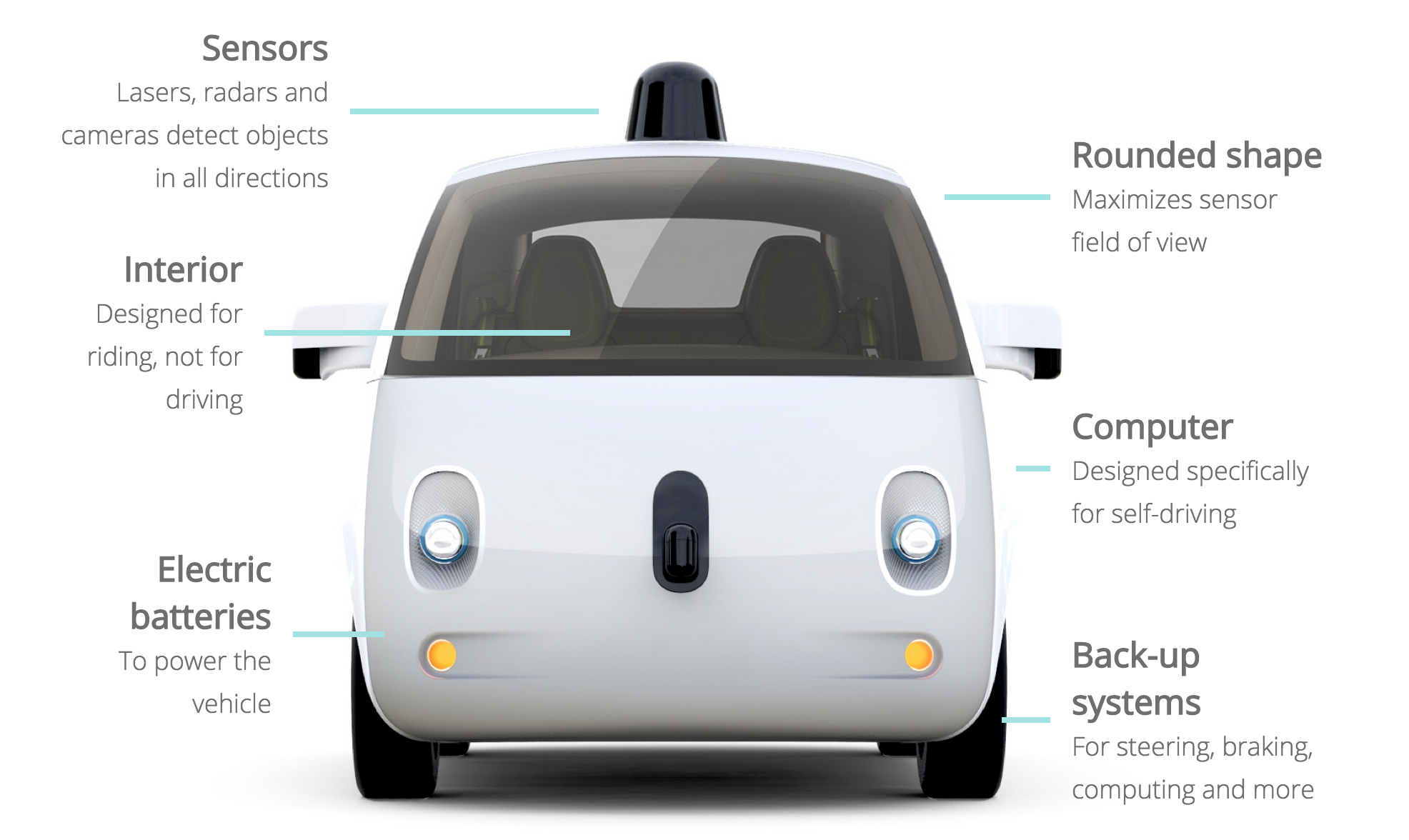
Google has launched a new website that will offer monthly updates on its driverless car project including reporting accidents the vehicles have been involved in.
Expand
Expanding
Close
[youtube=https://youtu.be/7IaYJZ2Usdk?list=PLbsGxdAPhjv_tgCNWGaGvSnlIMZNkmnrM]
YouTube is adding support for 360-degree video uploads alongside a new viewing experience for the video format on both mobile and the web.
Users viewing the 360-degree video (like the one embedded above) will be able to do so by dragging with their mouse in Chrome on the web or by physically moving their Android device (and soon iPhone and iPad) in the mobile app:
Expand
Expanding
Close

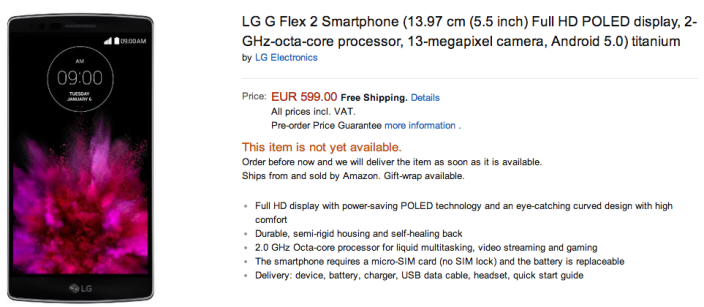
LG announced several features of its new G Flex 2 smartphone at CES 2015 last week, including a full HD 5.5-inch dynamically curved P-OLED display, Qualcomm Snapdragon 810 processor with Octa-Core 64-bit capable CPUs, 13-megapixel rear-facing camera with dual LED flash, 3,000 mAh battery and Android Lollipop. But one important piece of information that LG has withheld to this point is how much the G Flex 2 will cost…
Expand
Expanding
Close
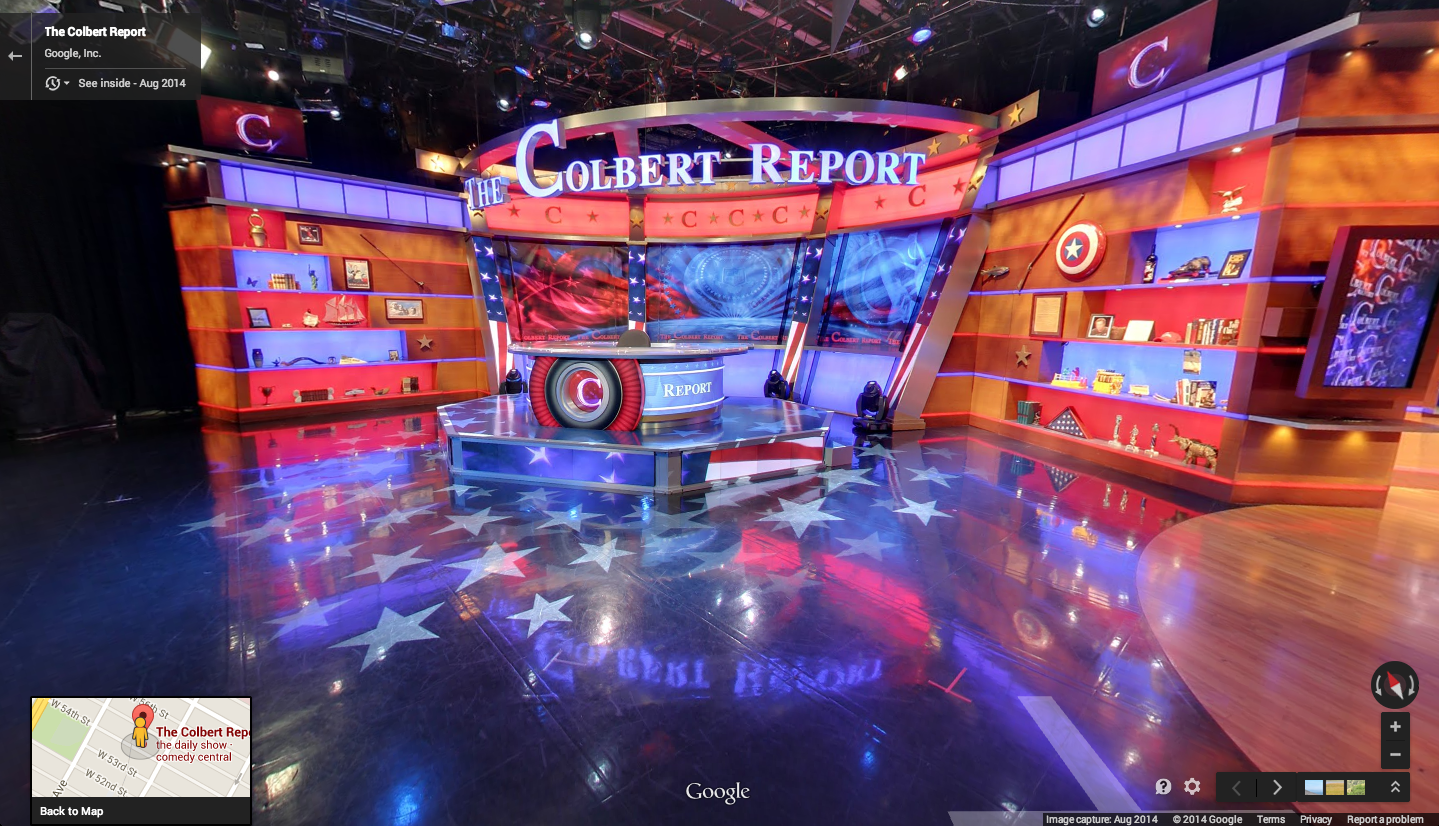
With Comedy Central’s The Colbert Report officially coming to an end tonight and host Stephen Colbert moving on to “The Late Show” next year, Google today added a virtual, 360-degree tour of the show’s studio to Google Maps.
Google is promoting its Google Maps Business View feature, which allows businesses and others to add the indoor virtual tours to Maps to complement the Street View imagery it has long offered for navigating outdoors.
The series concludes tomorrow, but you can still feel like you’re in the audience (or relive the good ol’ days) with a brand-new virtual tour of the studio. And the show has created an interactive experience with the Business View imagery that lets you explore and remember some of your favorite moments from the show. And for those who want to tour more entertainment and news studios, check out our Views gallery.
As always, Google reminds that Business Views feature is available across platforms in Maps whenever a “See Inside” marker appears over locations. Google says it has already added indoor imagery for hotels, restaurants and retail locations in over 30 countries.

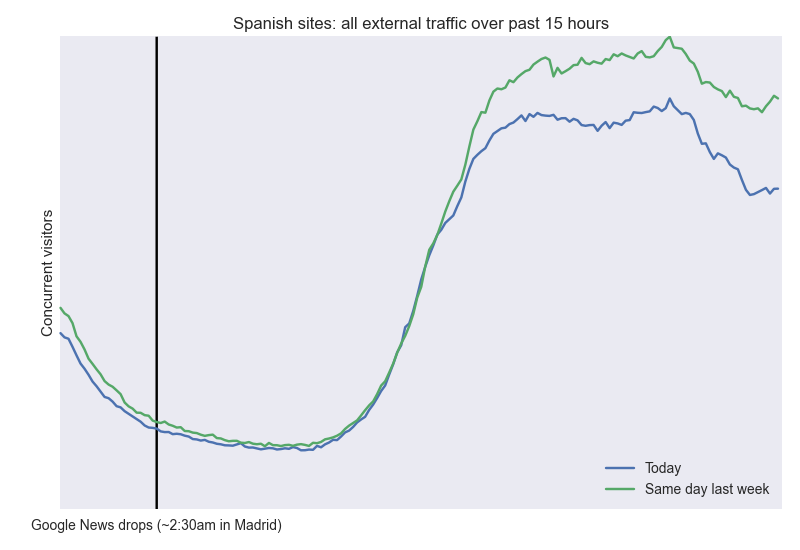
Spanish newspaper websites have seen their web traffic drop by an average of 10-15% after a law they lobbied for drove Google News out of the country. The figures were shared with GigaOM by web analytics company Chartbeat, which tracks around 50 Spanish news sites.
The law required Google to pay a fee for every story excerpt it displayed in search results, leading to the company – which generates no income from the ad-free Google News service – to close the service in Spain. Publishers clearly realized the implications right away, making a forlorn plea for the Spanish government to somehow ‘force’ Google to re-open the service …
Expand
Expanding
Close

Google has been locked in a nasty battle with a group of German publishers for several years, with the troop complaining that the tech company’s web search results were making their online articles available to the public. But after two weeks of restricted access to Google News results, major news publisher Axel Springer has changed its mind.
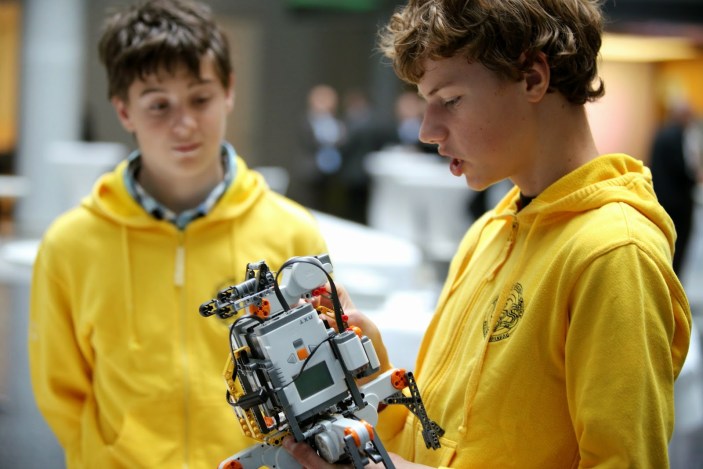
Google recently launched a new program called “Open Roberta,” a cloud-based platform that helps teachers and students in Germany learn to program small robots. In terms of hardware, the search company’s new project uses LEGO MINDSTORMS kits that feature unique hardware and software to develop simple programmable robots.
As a result of an ongoing legal battle, Google recently changed the way it displays search results for news stories from select European publishers. A syndicate known as VG Media is claiming that Google’s search engine is letting people bypass their sites’ paywalls, and is demanding compensation for lost revenue. In an effort to smooth things over, Google removed text previews and thumbnail images from its search results for select publishers involved in this claim, but it appears that VG Media has had a change of heart.
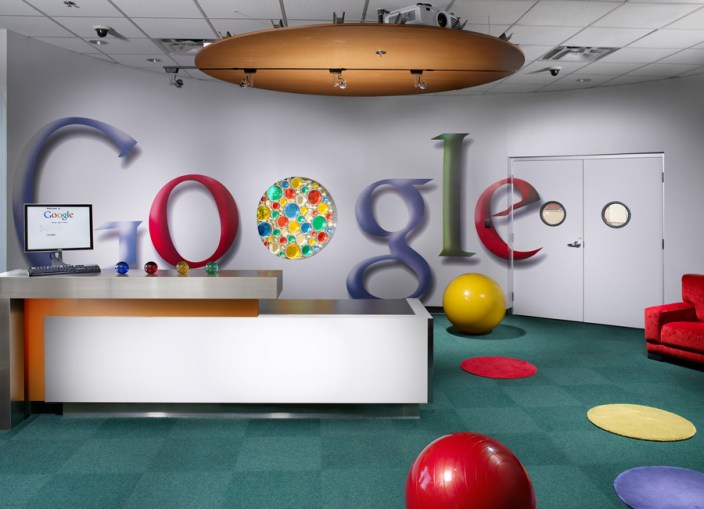
Photo: http://www.corporateofficeheadquarters.com
After receiving a lot of pressure from a group German publishers, Google is changing the way its search engine handles news articles. The company is now removing excerpts and image thumbnails from its web search results for sites like bild.de, bunte.de or hoerzu.de and replacing them with headlines and story links.
Google is in hot water in Germany, with the Hamburg Data Protection Authority warning the company that its user profiling practices violate the Telemedia Act and Federal Data Protection Act. A continuation of the search giant’s ongoing problems in Europe, the German regulatory organization is stating that spreading a person’s information across multiple services such as Gmail, Maps and YouTube is unnecessary and a violation of the country’s privacy laws.


