Android

See All Stories

Breaking news for Android. Get the latest on apps, carriers, devices, and more!
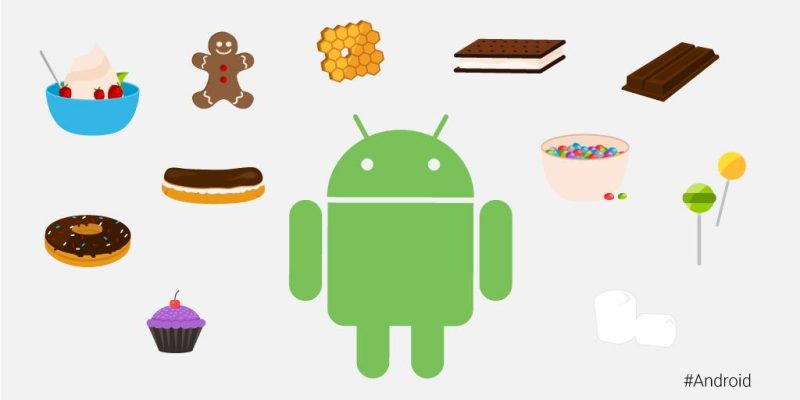
Android is Google’s mobile operating system, launched in September 2008, although its history technically began with the release of the Android alpha in November 2007. To this day, Android powers the majority of the world’s smartphones and comes in several different flavors across many phone makers.

What is Android?

Android Inc.

Android, before it was Android, was a company called Android Inc. That company was founded in Palo Alto, California, in 2003 by a crew of four: Andy Rubin, Rich Miner, Nick Sears, and Chris White. The company and its project was acquired by Google in 2005 for a sum of more than $50 million, although the exact number is unknown. The company’s founders joined Google as part of the deal.

In its infancy, Android was an operating system built not for touch screen smartphones like the iPhone, but rather BlackBerry-like devices with physical keyboards. It’s well documented that after Apple shocked the world with the iPhone, ahead of its nearest competition by at least a couple years, Google and Android Inc. had to go back to the drawing board to build something competitive.

Adoption by third-party makers

It didn’t take long after the launch of the iPhone for various manufacturers to enter the market with their alternatives — and Google’s Android immediately became the obvious platform of choice for just about everyone except Microsoft. HTC was the first manufacturer on board, and introduced the T-Mobile G1 running Android in September 2008. Soon after, HTC, Motorola, Samsung, and carriers like Sprint and T-Mobile jumped on board to form the Open Handset Alliance.

Android makers across the world

Iconic Android handsets

There have been thousands of Android phones released since Android’s inception, but some have been more important to the platform’s history than others. There was the original T-Mobile G1, as mentioned, but there was also the HTC One Google Play Edition, Moto G, Samsung Galaxy S4, and others. Some of the most iconic Android handsets include:

  • HTC G1
  • HTC Nexus One
  • Samsung Galaxy S, S2, S3, S4, and their successors
  • HTC Incredible S
  • Samsung Nexus S
  • Samsung Galaxy Nexus
  • Samsung Galaxy Note
  • Nokia 8
  • BlackBerry KeyOne
  • Google Pixel and its successors

In more modern times, there are several Android smartphones makers that popped up across various niches and in several international markets. Huawei is a dominant Android maker in China and many European markets, while Samsung is by far the most popular maker in the United States by far — effectively creating a duopoly with Apple. Today, there are dozens of major device makers contributing to the Android ecosystem.

Full list of Android OEMs

History of major Android versions

Android has seen countless software revisions over the course of its life, but in modern times the OS usually sees a major release on an annual cadence. In the earlier days, Google famously gave its major software releases dessert-themed codenames, but retired that practice in 2019 with the release of Android 10.

VersionNameReleaseDevices
2.3GingerbreadFebruary 9, 2011Nexus S
4.0Ice Cream SandwichOctober 19, 2011Galaxy Nexus
4.1Jelly BeanJuly 9, 2012Nexus 7
4.2Jelly BeanNovember 13, 2012Nexus 4, 10
4.3Jelly BeanJuly 24, 2013Nexus 7 (2013)
4.4KitKatOctober 31, 2013Nexus 5
5.0LollipopNovember 3, 2014Nexus 6, 9
5.1LollipopMarch 9, 2015Android One
6.0MarshmallowOctober 5, 2015Nexus 5X, 6P
7.0NougatAugust 22, 2016Nexus 5X, 6P
7.1NougatOctober 4, 2016Pixel, Pixel XL
8.0OreoAugust 21, 2017Pixel, Pixel XL
8.1OreoDecember 5, 2017Pixel, Pixel XL
9PieAugust 6, 2018Pixel 2, Pixel 2 XL
1010September 3, 2019Pixel 3, 3a
1111September 8, 2020Pixel 4

List of major Android OS platforms

While Android proper is certainly the most widespread of Google’s Android operating systems, the company has also launched many offshoots of the main OS over the years. There’s Android Auto, Android Wear (now Wear OS), Android TV (now rebranded to Google TV), as well as versions of Android built for tablets and Android Things (now defunct).

Play Store reportedly topped App Store in total apps and developers for the first time in 2014

Site default logo image

The latest numbers from app metrics tracking firm AppFigures reveal that Google’s Play Store topped Apple’s App Store based on total number of apps and developers for the first time in 2014. Google moved ahead of Apple with 1.43 million Android apps in the Play Store, compared to 1.21 million on the App Store for iPhone, iPad and iPod touch.
Expand
Expanding
Close

Live stream: Watch today’s Project Ara developers conference here

The second Project Ara Developers Conference is happening today, and while it’s definitely going to be an exciting event for those developing for Ara, not everyone can make it out to Mountain View for a one day event. Thankfully, Google has provided a live stream of the event, and you can watch it here…


Expand
Expanding
Close

Samsung announces Z1, the first smartphone powered by Tizen, available in India today

Site default logo image

Samsung today revealed its first Tizen-powered smartphone, dubbed the Z1. The phone was originally teased as the “Samsung Z” in June of last year, and was supposed to be available in Russia in Q3 2014, but faced delays that pushed the release back until the new year.

Rather than launching the Z1 in Russia, however, Samsung is instead opting to only make the device available in India for the time being. While the originally teased phone featured decent specs, the version that went to market today sports decidedly less advanced internals targeting the entry-level market.


Expand
Expanding
Close

Lollipop OTA rollout begins today for HTC One (M8) unlocked and developer editions

It looks like January is going to be the month of Lollipop for many Android device manufacturers, and that trend continues with the announcement from HTC’s VP of Product Management that the company has now received technical approval for the update and that it will be rolling out over-the-air to HTC One (M8) unlocked and developer editions starting tonight.

The Android 5.0 update for HTC device isn’t going to be just an update to Lollipop, though, as the company is also launching its Sense 6 skin atop the latest version of Google’s mobile OS. We got a peek at Sense 6.0 running on the HTC One (M8) late last month, which should probably give you a pretty good idea of what today’s update is bringing.

Earlier today we learned that Samsung is rolling out Android 5.0 to the Galaxy S5 in the UK, and also touched on the fact that Android 5.0.2 is today hitting the second generation Moto G.

Samsung rolling out Android 5.0 Lollipop for UK Galaxy S5

Site default logo image

SamMobile reports on Tuesday that Samsung is now rolling out Android Lollipop for the Galaxy S5 in the United Kingdom, after seeding the software update in PolandSpain, Russia, and Malaysia. The report claims that the update is arriving in the form of Android 5.0, despite Samsung internally testing Android 5.0.2 on flagship devices internally.
Expand
Expanding
Close

Nexus 9 ‘Sand’ color variant finally available on the Play Store

The Nexus 9 has been out for quite some time now, but the device has—until today—only been available in black and white variations. Now, those in the United States can purchase the device in its third color option, “Sand,” but for the time being there’s only one specific model shipping in that color. You’re going to have to settle for the 32 GB capacity and no LTE compatibility—and a $479 price tag—if you’re interested in grabbing the “Sand” variant today. There’s no telling if Google plans to start shipping other variants of the device in the future, but the one model that the company is offering supposedly leaves the warehouse within a couple business days.

Head over to the Play Store to grab the new color variant.

(via Android Police)

Site default logo image

Motorola says it will update its 2013 & 2014 devices to Lollipop “really soon”

Motorola’s quest to update its devices to Lollipop has gone anything but smoothly so far. The company started its efforts with the 2nd generation Moto X Pure Edition, but quickly learned that it had some more work to do when users started reporting a plethora of bugs. In a statement on Google+ this evening, however, a Motorola software engineer said that devices from 2013 and 2014 can expect their updates “really soon.”


Expand
Expanding
Close

Site default logo image

CyanogenMod builds now available for Android One devices

CyanogenMod has announced in a blog post that its custom ROM for Android is now available to Android One users. Android One is Google’s initiative to bring low-cost devices to emerging markets, unveiled at I/O 2014. There are currently three Android One devices available, all of which are now supported by CyanogenMod 11.


Expand
Expanding
Close

Project Ara MDK 0.2 released detailing Module Marketplace, Vestigen announced as module partner

Another “alpha” release of the Project Ara MDK (module developers kit) has been released, and interestingly, it goes into some previously undiscussed preliminary details regarding requirements for developers to submit their modules to the Google-run module marketplace we told you about last month. Also, it was announced today on Phonebloks’ blog that a company called Vestigen, known for creating smart liquid sensors, will be creating a module for the project.


Expand
Expanding
Close

Roundup: Find all of 9to5Google’s CES 2015 coverage in one place

If you’ve somehow missed the overflow of coverage from CES 2015 last week, don’t worry, we’ve got you covered. During the show we took a look at the latest devices and accessories that are expected to be released throughout 2015. The show was packed with new smartphones, home automation tools, cases, and some unexpected surprises. If you didn’t catch all of the coverage from the show, check out the roundup below with links to everything that we found interesting…


Expand
Expanding
Close

Xiaomi worried potential Facebook investment could have threatened strong relationship with Google

According to a report this morning from Reuters, Xiaomi CEO Lei Jun sat down with Facebook’s Mark Zuckerberg to talk about a potential investment in October, but nothing came of the talks. Facebook being banned in China—the home and birthplace of Xiaomi—was one of the main discussion points, with both CEOs considering what the implications would be of the international investment. While Xiaomi was definitely worried of the “political fallout” that could come of the deal, China’s largest smartphone maker also considered its important relationship with Google–as the company’s phones all run Android—as a reason to distance itself from Facebook.


Expand
Expanding
Close

Google puts millions of users at risk by ending WebView security updates for Android 4.3 Jelly Bean and below

Site default logo image

Forbes reports that nearly one billion Android smartphone users that are not running the latest Lollipop operating system are at risk of malicious attacks due to Google no longer releasing security updates for the WebView tool on Android versions at or below 4.3 Jelly Bean. Research firm Rapid7 discovered that Google started the process of ending support for WebView late last year for devices not running Android 5.0 Lollipop.
Expand
Expanding
Close

Falcon Pro 3 Twitter client lands on the Play Store, but expect limitations

Site default logo image

Falcon Pro was one of the most notorious Android Twitter clients for quite some time, but development of the app got pushed aside when it started running into its Twitter API token limits. But the app’s developer Joaquim Verges has now brought it back with the release of version 3, which has been completely rewritten and re-imagined, and packs a gorgeous new dark-skinned Material Design aesthetic. 
Expand
Expanding
Close

Amazon pre-orders at €599 suggest flagship-level price for LG G Flex 2

Site default logo image

LG announced several features of its new G Flex 2 smartphone at CES 2015 last week, including a full HD 5.5-inch dynamically curved P-OLED display, Qualcomm Snapdragon 810 processor with Octa-Core 64-bit capable CPUs, 13-megapixel rear-facing camera with dual LED flash, 3,000 mAh battery and Android Lollipop. But one important piece of information that LG has withheld to this point is how much the G Flex 2 will cost…
Expand
Expanding
Close

Google Glass might have a chance in healthcare: Augmedix raises another $16 million

Healthcare seems to be one area in which Google Glass is just irresistibly great. Doctors, after all, aren’t unfamiliar with wearable tech to help them with their job; they already wear stethoscopes on a daily basis. Adding Glass to the mix brings new possibilities for more efficient patient care as well as a better work day for doctors, and Augmedix—one of the first Glass at Work partners—knows more about using Glass in medicine than any other company. Today, Augmedix announced that they’ve scored another $16 million in Series A funding.


Expand
Expanding
Close

Samsung Galaxy A7 officially unveiled, adding 5.5-inch screen to mid-range, all-metal A-series

Site default logo image

Samsung’s Galaxy A7 hasn’t exactly been a well-kept secret, with the first rumors starting in September of last year, followed by regulatory filings, but the device is now official – albeit with some details still not announced.

Samsung introduced the Galaxy A7, one of the slimmest Galaxy smartphones equipped with premium hardware for a superior social experience, expanding on the popular services provided by the Galaxy A5 and A3.

Topping out the mid-range A-series, the A7 has a 5.5-inch AMOLED display, 2GB RAM, 16GB storage, a 13MP main camera and – in line with Samsung’s focus on social media – a 5MP front-facing camera for hi-res selfies (including voice-activated ones). It’s available in single- and dual-SIM models, the former getting a quad-core Exynos processor, while the latter gets an octa-core version …


Expand
Expanding
Close

Xiaomi’s upcoming flagship phone reportedly ‘thin as a cicada’s wings,’ enters mass production next month

Site default logo image

A new research note from KGI indicates that Xiaomi’s Android upcoming smartphone, debuting January 15th, will feature a thin new form factor that the company says will be “as thin as a cicada’s wings,” in what could potentially become the worst product simile of the year.

While Xiaomi’s previous devices have been called iPhone clones, the new device, which KGI says could be called the “Xiaomi 4S” or “Xiaomi 5” will feature a vastly improved camera over Apple’s latest models, clocking in at 13 MP and featuring optical image stabilization.


Expand
Expanding
Close

NYT: Google plans to launch real-time mobile voice translation ‘soon’

Site default logo image

The New York Times reports today that Google is preparing an update to its mobile Translate app that will include real-time detection and translation of spoken foreign languages. The online service recently got an upgrade to support a total of 90 languages.

The app will also reportedly gain the ability to use the camera to translate foreign signs in the real world. An exact timeline for when the update will roll out wasn’t given, but the Times says that most Android devices currently running the application will be able to use the new version as well.


Expand
Expanding
Close

Google’s Sergey Brin spotted at CES trying out Glass competitor Epson Moverio

Site default logo image

Google might not have an official presence as an exhibitor at CES, but it does have its people on the ground checking out the new products from both its partners and competitors. That includes top Googler Sergey Brin who was spotted in the photo above via +Tim Moore on Google+.

Moore works with Rochester Optical, the company behind the lenses used in the Epson Moverio smart glasses Brin is trying in the photo. Rochester Optical also previously announced plans to build accessories for Google Glass as well, Google’s own smart glasses and competitor to the Epson Moverio BT-200 that launched last year for $699.
Expand
Expanding
Close

Startups like kiddoEMR could change lives using Google tech, but this one desperately needs Google Glass 2.0

Site default logo image

Dr. Joseph “Joe” Cohen has been a pediatrician for 15 years, and he saw a need in the medical workplace. Current EMR (electronic medical record) solutions are ridiculously expensive, antiquated, offer little support for pediatrics, and require hours of rigorous training before doctors can use them to efficiently document and organize patient information. Seeing this, Dr. Joe (as his young patients call him) developed a pediatric solution of his own, and deployed an early version in his own practice, Cedar Park Pediatrics, with the added bonus of bringing down the average cost of processing patients from $58 to around $20 per visit.

And while the system is of course platform-agnostic for the most part, Google technologies like Chrome and Glass are a key players in the kiddoEMR product despite downfalls that Dr. Joe says make the current generation of the latter completely impractical for the workplace. The system of course will mostly be interacted with via an in-browser interface on a desktop computer, but Glass provides some robust functionality that would make it a no-brainer for pediatricians. Doctors like Joe, though, need to be able to use their hands, and the old saying that “a picture is worth a thousand words” is especially true when diagnosing patients.


Expand
Expanding
Close