Stay up to date on news from Google headquarters. Be the first to learn about plans for Android, Google Plus, Google Apps, and more!
Stay up to date on news from Google headquarters. Be the first to learn about plans for Android, Google Plus, Google Apps, and more!

Following a proposal that many fear threatens net neutrality, a plethora of tech companies today have come together to support net neutrality in a letter to the Federal Communications Commission. The group is led by Google, Amazon, Facebook, Microsoft, Netflix, and Twitter, as well as many others.
The letter voices disapproval of a recent proposal that would allow people to pay more in order to gain a higher priority from their internet service provider. The letter focuses on keeping the internet open, and perhaps treated as a utility. The companies make the case that with this new paid prioritization proposition, ISPs would be discriminating both technically and financially against internet companies
Anyone who has followed Google over the past few years knows that it has had more than its fair share of privacy issues. The company’s had run ins with the UK government, US government, and others about privacy concerns, in addition to facing criticism over Google Glass. Microsoft has also mocked Google for its privacy issues as part of its “Scroogled” ad campaign. Now, a German activist group that calls themselves Peng Collective has launched a new website that parodies Google, its privacy issues, and apparent need to know everything about everyone.

Google’s buying spree continues today, and the latest startup to be snapped up is Appetas. Appetas specialized in providing websites for restaurants. In a blog post (via TechCrunch) published on Appetas’ site, the company states that it will be shutting down its service as the acquisition moves forward.
Expand
Expanding
Close
We’ve seen several competitors to Google Glass over the past few years, including smart glasses from Vuzix and Epson. The latter of those, in fact, beat Google to the market back in 2012 with its Moverio glasses. Today, Epson has announced its second generation smart glasses, powered by Android.
While the XE16 update brought KitKat and various other enhancements to Glass Explorers everywhere, it also carried a few nasty bugs that — among other things — could force devices into a boot loop. As such, Google issued XE16.2, which was supposed to fix these issues. Apparently it didn’t quite do that, as Google has today released the Glass XE17 update.
Expand
Expanding
Close


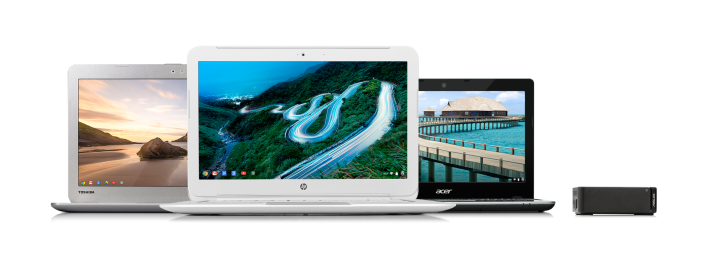
Today in San Francisco, Google and Intel announced a brand new fleet of Chromebooks in various shapes and sizes. While some of these devices will be powered by Intel’s familiar Haswell processors, the big news today is that the chip maker is bringing its newer Bay Trail platform to Mountain View’s take on the notebook. Partners like ASUS, Lenovo, LG, HP and Acer will all be producing Bay Trail-powered Chromebooks.

Google announced on its blog today a big update coming to Google Maps on both Android and iOS including integration with Uber.
Expand
Expanding
Close
Google may be publicly denouncing some of the NSA’s recent tactics, but the search giant might be closer to the agency than it has led people to believe. A chain of emails between Google execs and former NSA director Keith Alexander suggests that the company may have downplayed how closely the two have worked together in the past.
According to a new report out of TechCrunch, Google is working to add Google Wallet functionality to Glass. Citing a “source close to the company”, the report claims that Google is currently testing the feature internally, but that it hopes to make it public in the near future. Currently, Glass users have to be signed in to a computer on Google’s corporate network in order to install the app on their Glass.
Like many features on Glass, Google Wallet will work almost exclusively with voice commands. Users will be able to simply ask Glass to “Send money”, then have the ability to swipe through the interface a view times and your done. One of the most common uses for this would be the ability to send your share of a dinner bill to a friend, much like with the Google Wallet integration in Gmail.
The fees for using Wallet with Glass will be the same as other services, with Google taking a 2.9 percent fee for all transactions. Google is certainly looking to add more practical use cases to Google Glass, and the ability to pay with Wallet will certainly come in handy for users.
Following various leaks and rumors, BGR has obtained a photo of Amazon’s upcoming smartphone. While the device itself is still a month or more away from being officially unveiled, the above image is the first to show off the device without a protective case obscuring the design.
The device itself is similar in appearance to the Nexus 4, which received praise for its understated design. As Amazon’s phone will likely compete on price, it isn’t a surprise that its materials will shy away from the flashy metallic materials of devices like the iPhone or the HTC One M8.
Expand
Expanding
Close
Update: It turns out Google Search/Now on Android is also getting a ton of other new features in addition to the ability to find a parked vehicle (via SearchEngineLand):
Google this afternoon has updated its Search app on Android with several new features. The update bumps the app to version 3.4 and has some pretty useful features within it. First off, it adds a Google Now card that offers the ability to automatically detect where you’ve parked and help you find that spot later, a feature that was rumored earlier this month.
Google just blessed our inbox with an invitation to an Intel- co-sponsored media event in San Francisco where the topic will be Chrome OS. Set to take place on May 6th, the mega-chip maker will have a panel of speakers, which include Google’s VP of product management Caesar Sengupta and Intel’s own VP and general manager of the mobile computing group, Navin Shenoy.
The timing couldn’t be better for the Education-heavy Chromebook market – educators tend to make big buying decisions over the summer so vendors will want to strut their best stuff.
As Microsoft completed its acquisition of Nokia’s smartphone and handheld business this past week, Stephen Elop — the former Microsoft executive turned Nokia CEO — has made various comments about the future of the Android-based Nokia X line. Many, including ourselves, expected Microsoft to cancel the device the moment the acquisition was officially approved, but that doesn’t seem to be the case. Stephen Elop, now the Vice President of Microsoft’s Devices and Services unit, stated the following:
Microsoft acquired the mobile phones business, inclusive of Nokia X, to help connect the next billion people to Microsoft’s services. Nokia X uses the MSFT cloud, not Google’s. This is a great opportunity to connect new customers to Skype, outlook.com and Onedrive for the first time. We’ve already seen tens of thousands of new subscribers on MSFT services.
We are using AOSP to attack a specific market opportunity, but we are being thoughtful to do it in a way that accrues benefit to Microsoft and to Lumia.
The Nokia X is a low-cost device that runs a heavily-modified version of Android. The device is part of Nokia’s strategy to target emerging nations and the low-end device market.
This position makes sense, in light of Microsoft’s most recent strategy of focusing on services but you can’t help but wonder what it says about Windows Phone OS that Microsoft actually needs an Android product.
Expand
Expanding
Close
Over the past few weeks we’ve seen rumor after rumor regarding new features for Android, as well as interface tweaks. And with Google I/O 2014 right around the corner, we don’t expect them to slow down at all. Android Police this evening published a new report detailing some more design changes coming to Android, as well as a new big feature.

Foxconn, best known for manufacturing Apple products, says that it has sold display patents to Google for an undisclosed sum. Details are vague, with the briefest of statements quoted in the WSJ stating only that they were related to “communications technology.”
Foxconn has been seeking to reduce its dependence on Apple, which provides around 40 percent of its business, with its own product lines. Patent sales provide a further form of diversification for the company, which says that it has been granted more than 64,000 patents to date, and applied for a similar number again.

Earlier today longtime Senior Vice President of Engineering and head of Google+ Vic Gundotra made a surprise announcement that he was leaving the company. While there was no hint that anything at Google would be changing other than a possible promotion within the Google+ team to replace Gundotra, TechCrunch is out with a report claiming the executive shift will come alongside big changes for the Google+ service Gundotra helped create.
The report doesn’t offer much in the way of specific changes you can expect, but it does say that Google will be shifting the Google+ team under the Android team and “building “widgets, which take advantage of Google+ as a platform, rather than a focus on G+ as its own integral product.” It also says that Google will no longer require all products have Google+ integration:
Expand
Expanding
Close


Joining the Android camera app fun, Sony has released its “Background defocus” app for Xperia phones on the Google Play Store. The app helps blur the background of an image and simulates greater focus on the subject to create a more professional looking photo. The update requires Android 4.2 or later for compatibility.
Sony on how its Background defocus camera works:
It captures two photos with different focus settings, which you can bring together to create a photo with one object in sharp focus, against a beautifully blurred background.
How to use Background defocus:
1. Start the Camera and select Background defocus as camera mode
2. Tap the object you want to focus on in the viewfinder
3. Tap the camera key to take a photo
4. Change the blur level and blur effect with the controls on the screen
5. Tap the save buttonTips for best photos:To get the best results, please focus on an object 15-45cm (0.5-1.5 feet) away and make sure the background object is 5 meter away from focus target and hold camera steady.
Earlier this month, Google added its own camera app with lens blur functionality to the Play Store. HTC’s new One (M8) also boasts similar features with its camera software and hardware.
According to a report from mobile ad network provider Opera Mediaworks (via ComputerWorld), Android devices received more ad traffic than iPhones and iPads for the first time ever in the first quarter of 2014. The data shows that Android devices, including both phones and tablets, accounted for 42.8 percent of mobile ad impressions, while iOS devices accounted for slightly lies at 38.2 percent.
iOS devices still led in terms of revenue, however, receiving 52 percent of ad revenue. Android devices climbed to 33.5 percent of revenue, up from 27 percent a year ago. In terms of location, the United States still drives the most mobile ad traffic with 50.6 percent. Asia-Pacific countries were second with 23 percent, and European countries came in with 13 percent.
The sheer volume of Android devices obviously helped Google’s operating system take the crown for the most ad traffic. The IDC reported that Android smartphones made up 78% of all smartphones shipped, compared to 17.6% for iPhones. The fact that iOS led in revenue, however, still shows that iOS is still the more enticing operating system for developers and advertisers. For now.
Back on Cyber Monday, Motorola cut the price of its flagship Moto X to just $350, causing a frenzy all across the web and even prompting the company to offer it again just a month later and several times since. As noticed by Android Police, Motorola has dropped the price of the RepublicWireless Moto X to just $349, yet again.
Motorola hasn’t made any official announcements regarding the price drop, but if you head over to the company’s website you can see that the price has dropped with no indication of it being a temporary sale.
On Amazon, the device is also priced the same, but it applies to the unlocked GSM model that will work with AT&T and T-Mobile, not RepublicWireless. That’s even a better deal: $350 for 16GB and $400 for 32GB. The developer edition of the device is still set at its normal $449.99 and it’s unclear if it will receive a price cut.
Nevertheless, if you’ve been waiting for an opportunity to snag Motorola’s darn-good Moto X flagship, now’s your chance.
Google Glass hasn’t always enjoyed the best of public images. There can’t be too many products that have found themselves banned in everywhere from bars to workplaces to cars (that one later reversed), with governments raising privacy concerns and even noted fans wondering whether the product may be doomed.
Forbes staff writer Jeff Bercovici wondered whether early Glass advocate Robert Scoble was right in accusing Google of having botched the PR. Marketing head Ed Sanders, perhaps predictably, says no.
The backlash is a result of the way Google decided to roll out Glass, he says — but it was a deliberate decision to do it that way, with a limited public beta surrounded by a nimbus of hype and curiosity. “Yes, it was an unusual step of doing it so exposed, and risks come with that,” he says. “We knew there would be downsides, but we also knew and know there would be tremendous upside” …
While testifying in the Samsung vs Apple case on Tuesday, it was revealed that Google has agreed to help Samsung defend itself against Apple in its current patent-infringement case. According to a report from Re/Code, citing deposition testimony from Google lawyer James Maccoun, Google has also agreed to partially or fully indemnify Samsung for any loses it may suffer on its claims.
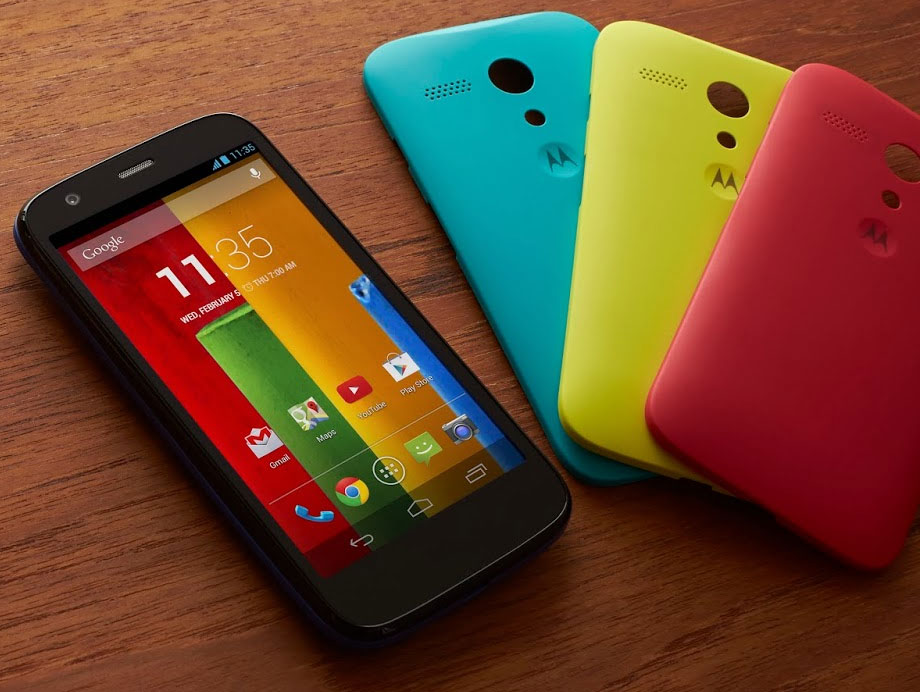
History has taught us that manufacturers typically don’t discuss hardware sales and shipments publicly, but some firms will occasionally issue press releases sharing statistics when boasting about success. However, the folks at Motorola Mobility have taken a much more casual approach to outlining its figures. Today, the soon to be Lenovo-owned company tweeted that it shipped 6.5 million devices globally during Q1 of 2014.
LG is sharing photos of its upcoming Android Wear-powered smartwatch in champagne gold, proving that the gold device fad extends beyond smartphones. Shown in photos published to both LG’s official website and their Facebook page, the images depict a device that hasn’t gone overboard with the color. The band is a tasteful white, while the gold acts more as a highlighting accent on the smartwatch itself.
Android Wear is expected to be a major part of Google I/O 2014. The OS already available to to developers, so it’s a good bet that we’ll see release dates for various devices announced. Besides the LG G Watch, Motorola has already announced the Moto360. Rumors also continue to swirl about a “Nexus” smartwatch, which would likely be the developer device given to attendees of the Google I/O conference and sold on the Google Play Store.
Expand
Expanding
Close