Android

See All Stories

Breaking news for Android. Get the latest on apps, carriers, devices, and more!
Android is Google’s mobile operating system, launched in September 2008, although its history technically began with the release of the Android alpha in November 2007. To this day, Android powers the majority of the world’s smartphones and comes in several different flavors across many phone makers.

What is Android?

Android Inc.

Android, before it was Android, was a company called Android Inc. That company was founded in Palo Alto, California, in 2003 by a crew of four: Andy Rubin, Rich Miner, Nick Sears, and Chris White. The company and its project was acquired by Google in 2005 for a sum of more than $50 million, although the exact number is unknown. The company’s founders joined Google as part of the deal.

In its infancy, Android was an operating system built not for touch screen smartphones like the iPhone, but rather BlackBerry-like devices with physical keyboards. It’s well documented that after Apple shocked the world with the iPhone, ahead of its nearest competition by at least a couple years, Google and Android Inc. had to go back to the drawing board to build something competitive.

Adoption by third-party makers

It didn’t take long after the launch of the iPhone for various manufacturers to enter the market with their alternatives — and Google’s Android immediately became the obvious platform of choice for just about everyone except Microsoft. HTC was the first manufacturer on board, and introduced the T-Mobile G1 running Android in September 2008. Soon after, HTC, Motorola, Samsung, and carriers like Sprint and T-Mobile jumped on board to form the Open Handset Alliance.

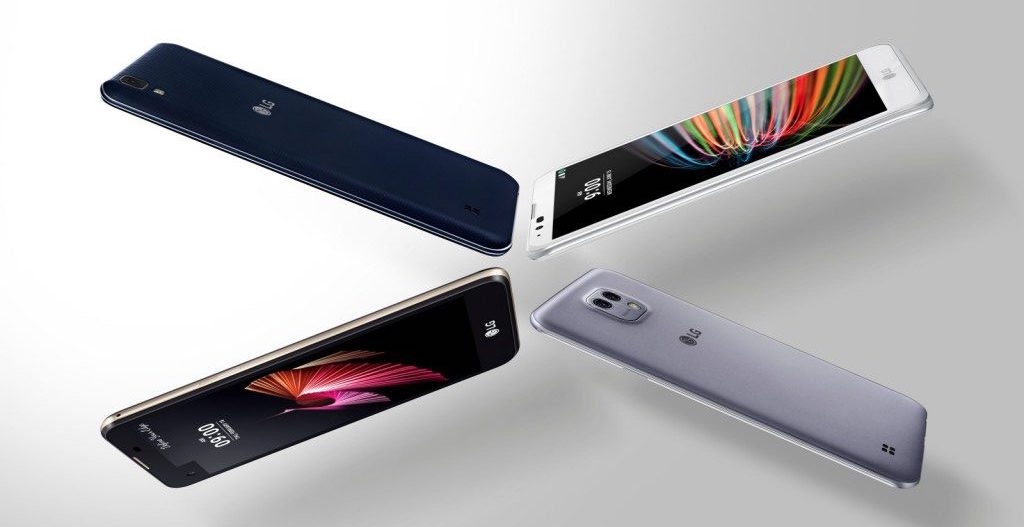
Android makers across the world

Iconic Android handsets

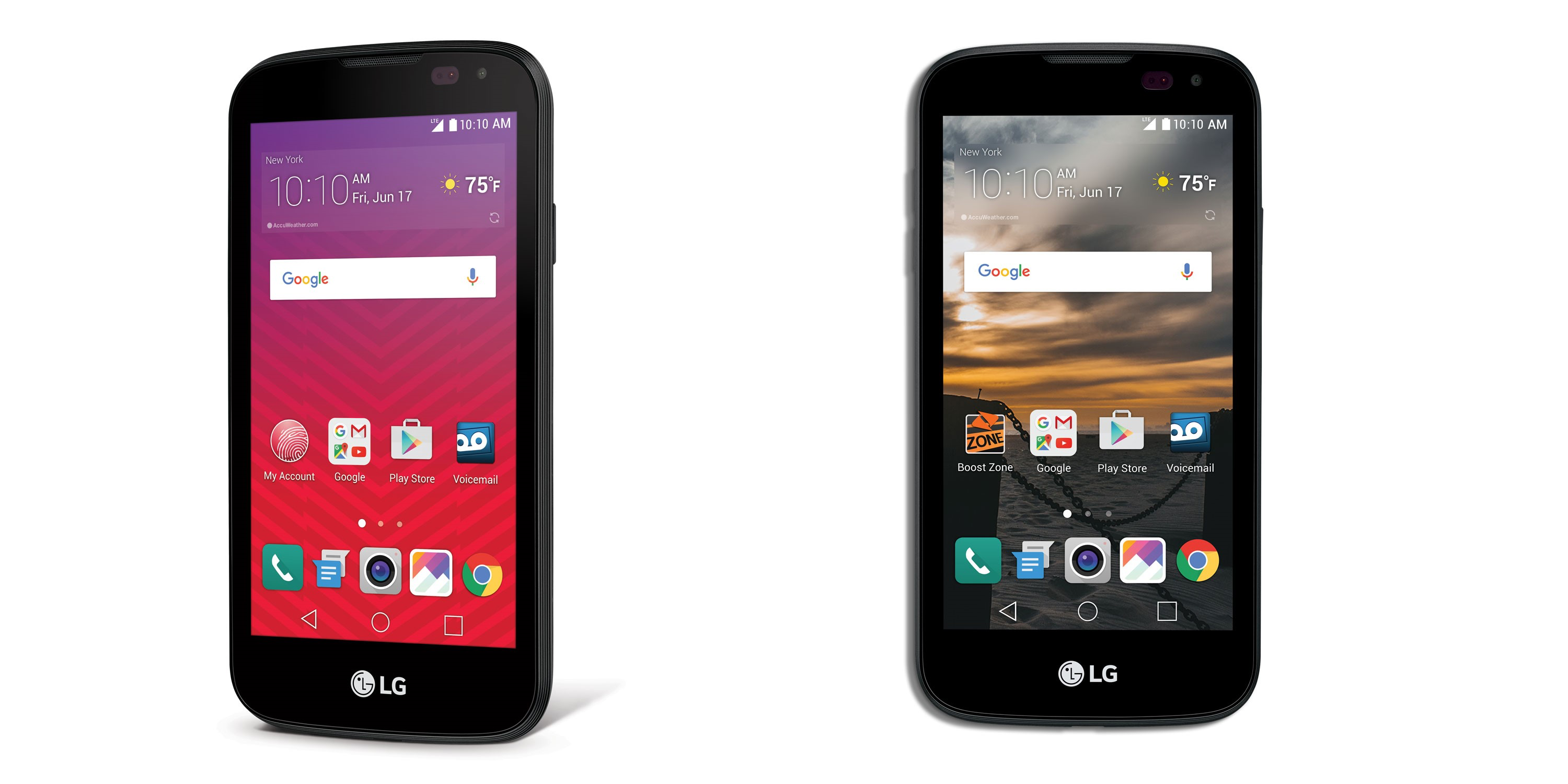
There have been thousands of Android phones released since Android’s inception, but some have been more important to the platform’s history than others. There was the original T-Mobile G1, as mentioned, but there was also the HTC One Google Play Edition, Moto G, Samsung Galaxy S4, and others. Some of the most iconic Android handsets include:

  • HTC G1
  • HTC Nexus One
  • Samsung Galaxy S, S2, S3, S4, and their successors
  • HTC Incredible S
  • Samsung Nexus S
  • Samsung Galaxy Nexus
  • Samsung Galaxy Note
  • Nokia 8
  • BlackBerry KeyOne
  • Google Pixel and its successors

In more modern times, there are several Android smartphones makers that popped up across various niches and in several international markets. Huawei is a dominant Android maker in China and many European markets, while Samsung is by far the most popular maker in the United States by far — effectively creating a duopoly with Apple. Today, there are dozens of major device makers contributing to the Android ecosystem.

Full list of Android OEMs

History of major Android versions

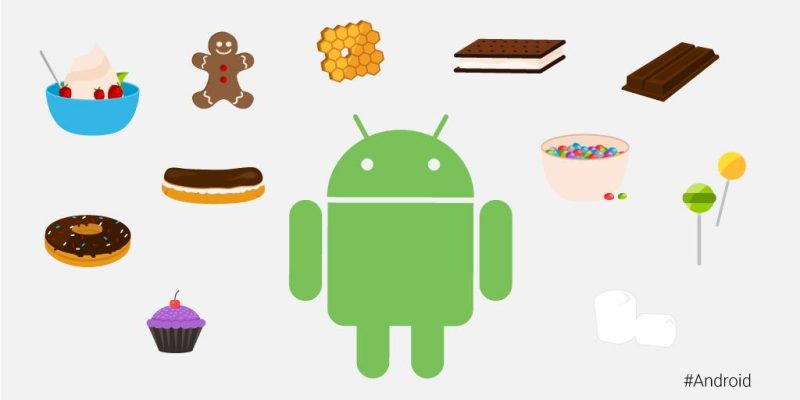
Android has seen countless software revisions over the course of its life, but in modern times the OS usually sees a major release on an annual cadence. In the earlier days, Google famously gave its major software releases dessert-themed codenames, but retired that practice in 2019 with the release of Android 10.

VersionNameReleaseDevices
2.3GingerbreadFebruary 9, 2011Nexus S
4.0Ice Cream SandwichOctober 19, 2011Galaxy Nexus
4.1Jelly BeanJuly 9, 2012Nexus 7
4.2Jelly BeanNovember 13, 2012Nexus 4, 10
4.3Jelly BeanJuly 24, 2013Nexus 7 (2013)
4.4KitKatOctober 31, 2013Nexus 5
5.0LollipopNovember 3, 2014Nexus 6, 9
5.1LollipopMarch 9, 2015Android One
6.0MarshmallowOctober 5, 2015Nexus 5X, 6P
7.0NougatAugust 22, 2016Nexus 5X, 6P
7.1NougatOctober 4, 2016Pixel, Pixel XL
8.0OreoAugust 21, 2017Pixel, Pixel XL
8.1OreoDecember 5, 2017Pixel, Pixel XL
9PieAugust 6, 2018Pixel 2, Pixel 2 XL
1010September 3, 2019Pixel 3, 3a
1111September 8, 2020Pixel 4

List of major Android OS platforms

While Android proper is certainly the most widespread of Google’s Android operating systems, the company has also launched many offshoots of the main OS over the years. There’s Android Auto, Android Wear (now Wear OS), Android TV (now rebranded to Google TV), as well as versions of Android built for tablets and Android Things (now defunct).

Google Text-to-speech can now read aloud highlighted text from any app

The last update to Google Text-to-speech on Android added male and female voices for multiple languages. With version 3.9.6 from the Android N Developer Preview 3 (via Android Police), users on Marshmallow and above can highlight any piece of text and have it read aloud to them.


Expand
Expanding
Close

Pebble 2 + Time 2 w/ built-in HR monitors & bigger screen, all-new 3G wearable Core unveiled

Pebble

Pebble has just unveiled its latest smartwatches, and has done so in the most Pebble-like way possible, by launching a new Kickstarter project. The smartwatch maker has returned to the platform it used so successfully with the original Pebble, and the following iterations, with a true second generation Pebble and a second generation Pebble Time along with an all-new 3G wearable called the Pebble Core.


Expand
Expanding
Close

Report: Google may finally get government’s blessing to test Project Loon in India

Google is finally about to get the go ahead from the Indian government to run a pilot of Project Loon in India according to a report from the Economic Times. According to the sites source, an anonymous “top government official”, the nation is keen to test as many alternative methods of providing internet connectivity as possible. One of which is Google’s high-altitude balloons.


Expand
Expanding
Close

Latest Active leak reveals device with similar specs to regular Galaxy S7 + 4,000 mAh battery

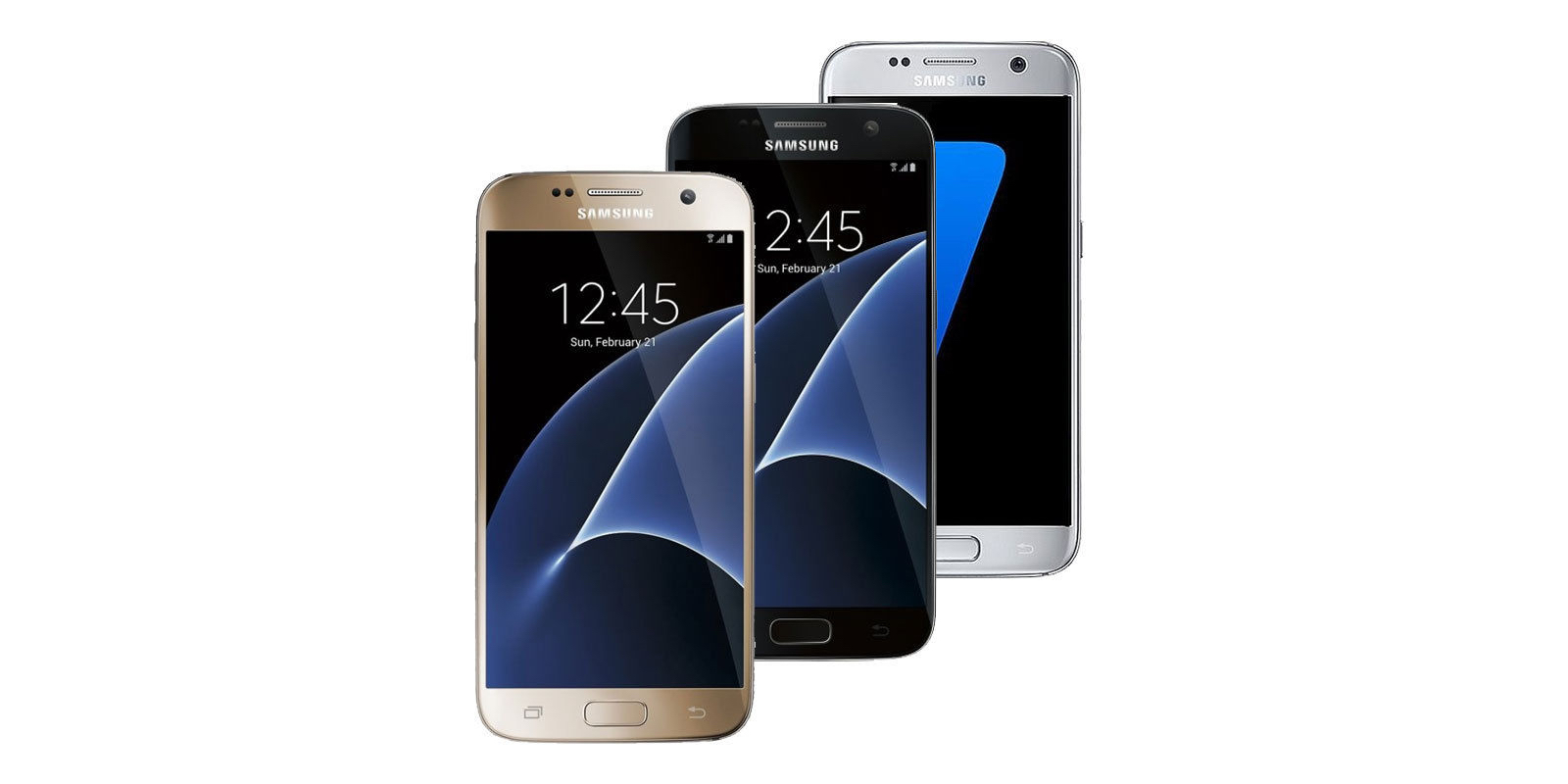
The Samsung Galaxy S7 Active has been well revealed in numerous leaks and photos. Thanks to the latest one (via Venture Beat) we now know the specs of the Active variant. The AT&T exclusive device does not stray too much from the current S7 and maintains the same ruggedness as its predecessor.


Expand
Expanding
Close

Review: iClever folding Bluetooth keyboard is portable, solid and very affordable

Over the past few years, we’ve seen a number of projections and claims that we are now in a ‘Post PC era’. But despite the fact that more people than ever are using mobile devices and tablets for web browsing and gaming, when it comes to getting real work done, you can’t replace a physical keyboard with a virtual one.

While using a Bluetooth keyboard with a smartphone or tablet is never going to make for a compelling laptop replacement, it may just be the accessory that saves you in a pinch, especially if you have little space to store gadgets while on the move. The iClever folding keyboard is a wireless affordable keyboard with sturdy metal construction that you can take anywhere.


Expand
Expanding
Close

OnePlus announces Loop VR headset, says OnePlus 3 will be “the world’s first global shopping experience in VR”

UPDATE: It happened really fast, but the 30,000 Loop VR headsets are already gone. However, as per Carl Pei, some of the orders placed didn’t go through fully, and pending, missed payments will result in cancelled orders.

If there is a big trend going on now in mobile, that’s virtual reality. Last week at Google I/O, we saw the Mountain View company announcing its new VR-dedicated platform, Daydream, which will be compatible with Android N and a lot of the devices that will come throughout the rest of 2016 and beyond.

One of those phones will likely be the OnePlus 3, which the company’s co-founder Carl Pei today announced will repeat its virtual reality launch with, and will do so with its own newly revealed Loop VR headset…


Expand
Expanding
Close

LG G5 is fully USB C compliant despite Quick Charge 3.0 support, research finds

As it often happens with new technologies — especially the ones that aim to replace fundamental, widely used parts of our digital devices — the early implementations are often challenged by a series of missteps and various other problems.

The latest concrete example of this is the promising-yet-troubled USB-C, which led to a few controversies as of late. However, it seems, with its latest G5 flagship, LG may be one of the few manufacturers that got it right (via gtrusted)…


Expand
Expanding
Close

Big Android BBQ Europe 2016 developer event confirmed for 14-16 August

The Big Android BBQ Europe 2016 has been officially announced, and will take place at the CASA400 Conference Hotel in Amsterdam between August 14-16. Developers are invited to register now to take part in the event which promises great grilled foods, and a chance network and build on their coding abilities.

With Android N about to launch, along with Google’s Daydream VR capabilities, this could be one of the most important coding/networking events to date.


Expand
Expanding
Close

Opinion: Google’s Project Soli could solve one of the biggest problems with Android Wear

At Google I/O 2016, the Mountain View company decided — although admittedly not an entirely new theme — that it would be a good idea to spread its announcements across three days. The keynote showed off Google’s vision for the future: virtual reality, its new AI and machine learning initiatives, Google Home hardware to take advantage of them, and a few sprinkles of Android Wear 2.0 goodness. The second day saw the announcement of the Play Store coming to Chrome OS.

But the third day was ATAP day, admittedly my favorite day of Google I/O. Last year the Advanced Technologies and Projects group at Google showed off Project Jacquard, Project Soli, some more details on Project Ara, and more. And then the company went silent. For pretty much an entire year.

Maybe that’s a good thing, as Google tends to show its projects and technologies off a little early in general. It’s not exactly out of Google’s character to show a product or service, say that it’s coming in 6 months, it not arrive for 12 months or 18 months, and then the final product share hardly any resemblance to what was originally announced. Admittedly that’s happening with some of ATAP’s projects either way (I’m looking at you, Ara), but at least it’s not a constant barrage of teases and false hope.

Anyway, Google ATAP finally came out of hiding on the third day of I/O yesterday, and with it came updates on Project Jacquard, Project Soli, Project Ara, and Spotlight Stories. Jacquard brought the announcement of the first retail product based on the tech, Ara brought a little update on how progress is coming including the most current prototype device with new module connectors (and promise of a dev kit coming soon), and the Spotlight Stories mention came with some progress in VR storytelling. All cool stuff.

But Soli is what makes my jaw drop.


Expand
Expanding
Close

This week’s top stories [Google I/O Edition]: Android N Preview 3, Daydream, Play Store on Chrome, Assistant, apps & more

Site default logo image

In this week’s top stories we round up all of our coverage from Google I/O, the company’s annual developer conference where it also took the wraps off a number of upcoming hardware and software products. Android N Developer Preview 3, the Play Store comes to Chrome, Google Assistant, the new Daydream VR platform and much, much more.
Expand
Expanding
Close

Opinion: Google’s future is in AI, but Chrome OS getting the Play Store is a big deal today

This year’s I/O was a big one. Maybe not the largest in terms of new products and services, but definitely not the smallest either. Among other things, the Mountain View, California company announced its Daydream VR platform for Android, an evolution of the Google Now assistant in the form of an AI-powered “Google Assistant,” a couple of new messaging apps and some hardware to play the part of debuting the Assistant, a new version of Android Wear, and more.

The keynote had this overarching theme that Google is no longer just a company that does search and ads. Now, Google is diving head first into artificial intelligence and machine learning, and most of the things that were announced in the keynote fell into that narrative for the most part. This is the stuff that’s not coming out for at least half a year. Most things, from Allo and Duo to Google Home, felt half-baked. It felt like everything was unfinished, and to some degree, that’s true. It’s still early days.

While Google wanted to paint this big picture of what the company envisions for the next few years and beyond, it saved some of the stuff that’s actually really cool today for other events at the conference. The most obvious of these was the press-only event Google hosted on day 2, showing off a huge new feature for Chrome OS: support for the Play Store that has long been tied down to Android. We’ve known this was coming for a long time, but now it’s here — serving as the next move to make Chrome OS and Android more alike than ever…


Expand
Expanding
Close

New Project Ara development kit coming this fall, consumer modular phone next year

After a long wait, Project Ara is now closer to real product with a consumer product finally coming next year. In addition to a new developer kit launching this year, ATAP announced many partnerships with companies to make modules. Google believes that Ara will be the future of computing and is now its own division.


Expand
Expanding
Close

Current phones like Nexus 6P, Galaxy S7 and HTC 10 won’t get Android N’s seamless updates feature

One of the lesser talked about but more important new features in Android N is seamless updates. Essentially, what that means is that future Android devices running the next version of Google’s mobile OS will be able to download and install software updates in the background without interrupting your use of the phone. Sadly, none of the current crop of Android phones will get the feature.


Expand
Expanding
Close

Motorola teases upcoming June 9th event by invoking memories of the RAZR

It was 2006, you were in high school, and everybody had a Motorola RAZR. At least, that’s how Motorola wants you to remember your life ten years ago, in its latest teaser for the upcoming Moto X (or Moto Z) announcement.

Of course, one year later the iPhone was launched and the entire mobile industry was turned on its head. But for that one brief spell, the RAZR was without doubt the most popular phone around, and it turned heads.


Expand
Expanding
Close

Betas will now appear in Play Store search, localized suggestions for Brazil & India, more

The Play Store is adding a few features for both developers and users. Betas are now easier to find and join from the Play Store with Google even highlighting beta apps in a new Early Access section. The store also has new smart collections for tasks that require a combination of apps.


Expand
Expanding
Close

Google gives us a quick peek at the YouTube VR app for Daydream

During the Daydream announcement at yesterday’s I/O Keynote, Clay Bavor spoke of how Google is redesigning several of their in-house apps with an interface suited for virtual reality. One of those was YouTube, and now the group has shown off what the YouTube VR app will look in Daydream headset.


Expand
Expanding
Close

Google Play Store is coming to Chrome OS in mid-June to 3 Chromebooks, more to follow

We spotted the event description yesterday, but Google today finally took the wraps off its plan to bring the Google Play Store to Chrome OS. While the event is just now starting, we’ve spotted a support page on Google’s site that says the feature is coming to three Chromebooks in mid-June, with dozens more devices to follow…


Expand
Expanding
Close

Google’s Awareness API lets devs build context aware apps that intelligently respond to situations

Update 6/27: The Google Awareness API is now available to all developers as part of Play Services 9.2. Using seven types of context, apps can intelligently react to what users are doing. The Snapshot API lets developers request information about the user’s current context, while the Fence API lets an app react to changes in a user’s context.

Google worked closely with several partners, including real estate site Trulia to suggest open houses and SuperPlayer Music to suggest music to match the mood. New developer documentation provides more details on how to implement.


With Assistant, Google wants to build technology that is conversational and helpful. Many of the company’s services are being updated to be more useful and Google wants third-party apps to be the same. With the new Awareness API, developers will be able to build apps that intelligently react to a user’s current situation.


Expand
Expanding
Close