Fitbit Public Preview adds food & water logging, more as app redesign comes to free users


Google today announced two changes to AdSense but doesn’t “expect publishers to see a change in their earnings” and payments. Consistency and “greater transparency” were cited as the reason for these updates.
Expand Expanding Close

Google has been fined $1.69 billion after EU regulators claimed that the tech company abused its own search system to essentially force third-party sites to use the AdSense network over other rival online ad serving companies.

Google has announced today a couple of initiatives to make AdSense more transparent for publishers. Not only is Google announcing a new ‘Policy Center’ today that will serve as a “one-stop shop” for publishers to control policy actions on their site, but the company says that soon policy actions will happen on the page level by default, leaving ads on non-offending parts of a site alone…
Expand
Expanding
Close

As election season comes to a close, many are still looking up information about the results. Earlier today those searches turned up some interesting results are Google surfaced fake election results at the top of the page, even putting those results front and center in Google Assistant. Now the company is making some changes to help prevent fake news from spreading.


Despite its recent foray in the hardware business, Google is first and foremost a company that relies on advertising. And so, in turn, lots of people rely on the company’s own online monetization tool, AdSense, whose website just got a Material Design coat of paint…
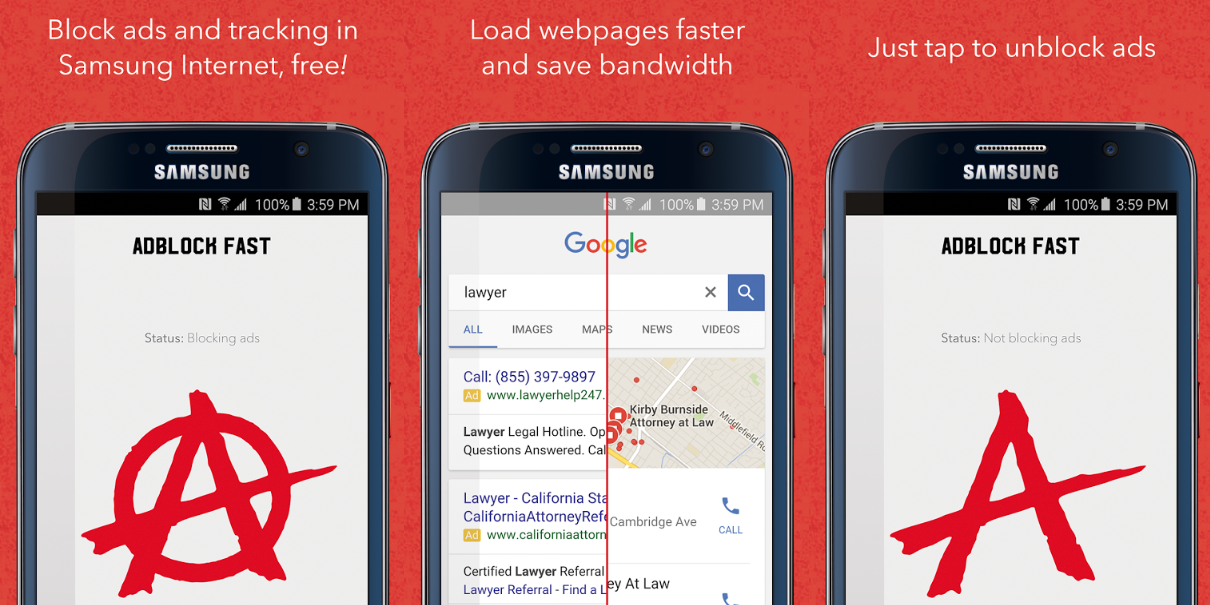
As the default browser on Samsung devices is their own ‘Internet’ app, many people never bother to switch often just end up using it. An update rolling out to the built-in browser will add support for third-party ad blockers, among other new things. While the feature is found in other Android browsers and is a common reason why people root their devices, Samsung’s scale may popularize it…


It’s no secret that Google makes the majority of its money from advertising revenue, and has done for a very long time. So, when a product comes along to threaten that major revenue stream, it has to find ways to combat it. That’s seemingly what it’s done with AdBlock Plus, a relatively well-known Chrome extension used to block out ads across the internet. This includes the ads shown before and during video playback on YouTube…

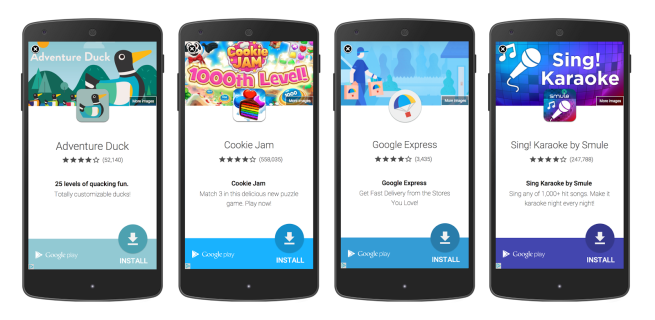
There might not be any topic more heated in today’s digital space than advertising. In most cases, no ads is better than any ads at all. The reality right now is, however, that no ads still also means no money to pay writers at sites like this one. With all that said, Google’s AdWords team has beautified its full-screen in-app ads (don’t worry, we don’t use these).
AdSense, Google’s publisher ad network used by millions of websites across the web, has just seen its Android app brought up to the company’s Material design language standards.
The app itself is mostly read-only, meaning you can quickly see data on your performance like how much money you’ve made from your ad placements over different time periods, but you cannot create new ads to place on your site from within the app. That would be cumbersome from a mobile device, though, as it requires copying and pasting HTML code into your site’s backend.
AdSense 3.0 also brings with it a new logo the company unveiled back in June. It looks like this:
And for the curious, here’s what the app looked like before today’s update:
The update hasn’t propagated completely in Google Play yet, but it’s available as a direct download through APKMirror right now.



You might notice that 9to5Google has changed. Indeed so has the whole network. Long before the page size/speed and advertising controversies, we knew that we needed to rethink how we presented ourselves.
While we were one of the lightest and fastest sites in our field, our feature creep and advertisers were adding complexity and page load times, which is especially crucial on mobile – an ever expanding percentage of our growing audience.
We decided to start over…
Expand
Expanding
Close

The confluence of several different events – the great shift to mobile computing where there’s little screen real-estate, a spurning of display ads, to name just two – is causing content creators and consumers alike to rethink how today’s media gets funded. Sites like Patreon and Kickstarter remove the middle-man from the funding process for projects which require lots of upfront investment and see slow development times by allowing anyone to contribute any amount of money they want to a project’s development.
Google last year threw its own hat into the crowdfunding space with the soft launch of Contributor, a way through which consumers can pay a monthly recurring donation to fund the sites they visit while seeing less ads. Now anyone in the United States can actually use it starting today.
Expand
Expanding
Close


Google announced today that it is updating its AdSense user consent policy to comply with requests from European Union data protection authorities. The updated user consent policy strengthens the requirement that publishes with audiences in the EU obtain permission from readers before collecting usage data and accessing cookies. Google says the updated user consent policy follows its own approach to comply with privacy laws. The company outlines the updated user consent policy for website and app publishers with EU readers and users:
Expand
Expanding
Close

Amongst those who regularly publish content to YouTube, the video site is known for picking favorites and being a black box in terms of the communication it holds with the community when it comes to anyone other than the site’s biggest stars. The company has as of late been trying to change that perception, though, by using the YouTube Creators channel as an outlet to recognize and acknowledge the feedback and concerns of its users. Today it published a new video outlining changes and new features coming soon to the video platform.

Few of us actively like ads, but most of us are smart enough to recognize that if we want free content, advertising is what pays the bills for the people providing it. But publishers face a growing threat from increasingly sophisticated ad-blockers that deprive them of revenue needed to remain in business. Even mobile networks and Apple are getting in on the action.
One former Google exec thinks he has the answer. Ben Barokas, former general manager of marketplace development at the search giant, is working on a new type of adblock-blocker that he thinks may not just help publishers, but also provide their readers with more choices …
Expand
Expanding
Close
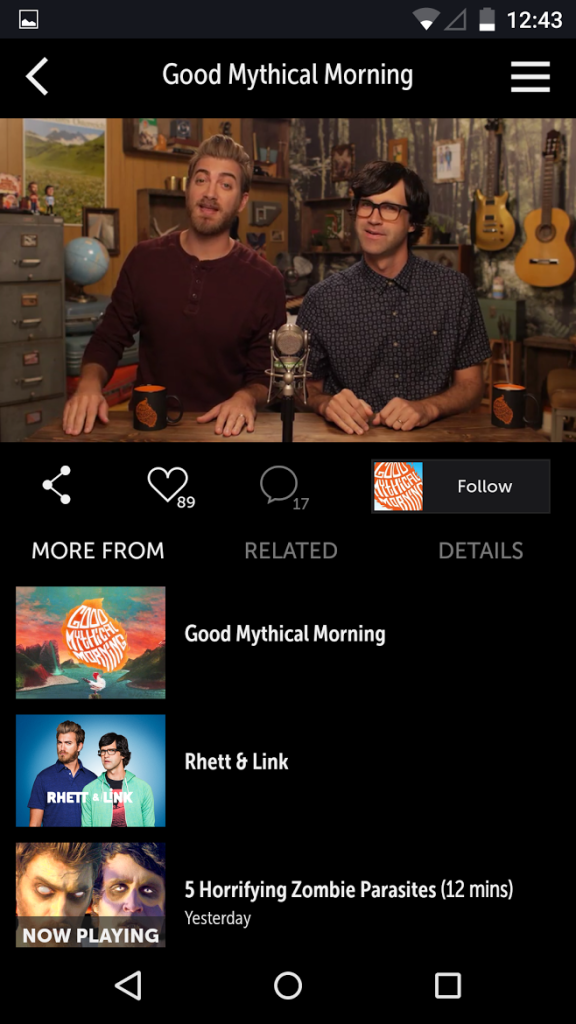 Vessel, the monthly subscription service that provides early-access to content from some of the biggest channels on YouTube, has today released its app for Android under the “beta” moniker.
For the uninitiated, Vessel is part of a trend recently of online content creators seeking out new ways to monetize their content and make money beyond the traditional display and pre-roll video advertisements that you see around videos and other web content. Vessel charges $2.99 per month and in return gives you access to videos from popular YouTube talent including Rhett & Link and Marcus Butler, among others, several days before the videos go live on YouTube. There’s also a free version, but it doesn’t provide these exclusives and there are ads so it’s essentially the same thing as just watching them on YouTube.
The company claims to have over 130 creators uploading to the platform so far, and hopes that releasing an app for Android will expand its subscriber base greatly. Since the app is in beta, the company is hoping users will submit feedback and feature suggestions. It’s available in the Play Store, so no Google+ communities trick necessary here.
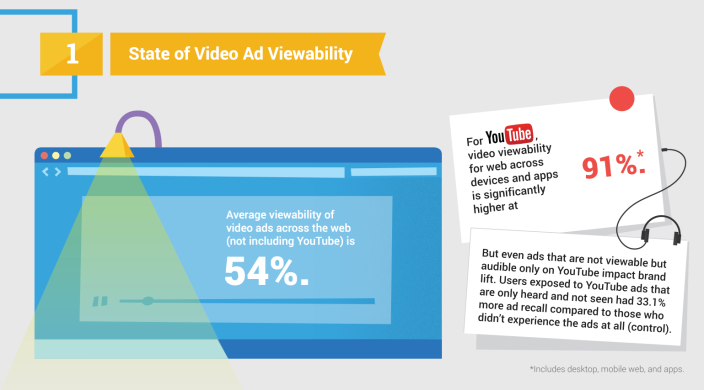
Advertisers want to know that when they pay for a video ad on YouTube or elsewhere across the web, that the advertisement can actually be seen by viewers. A lot can effect an ad being seen, such as the viewer never scrolling to the part of the page where the ad is placed, or users simply scrolling past the ad too quickly to really catch a glimpse. Taking a look into these things, Google recently published the results of a study identifying the “5 factors of viewability,” or, in other words, the things that impact the chance of a video ad being seen.
Unsurprisingly, YouTube and Google’s video ad strategy seems to be strong compared to the rest of the web…
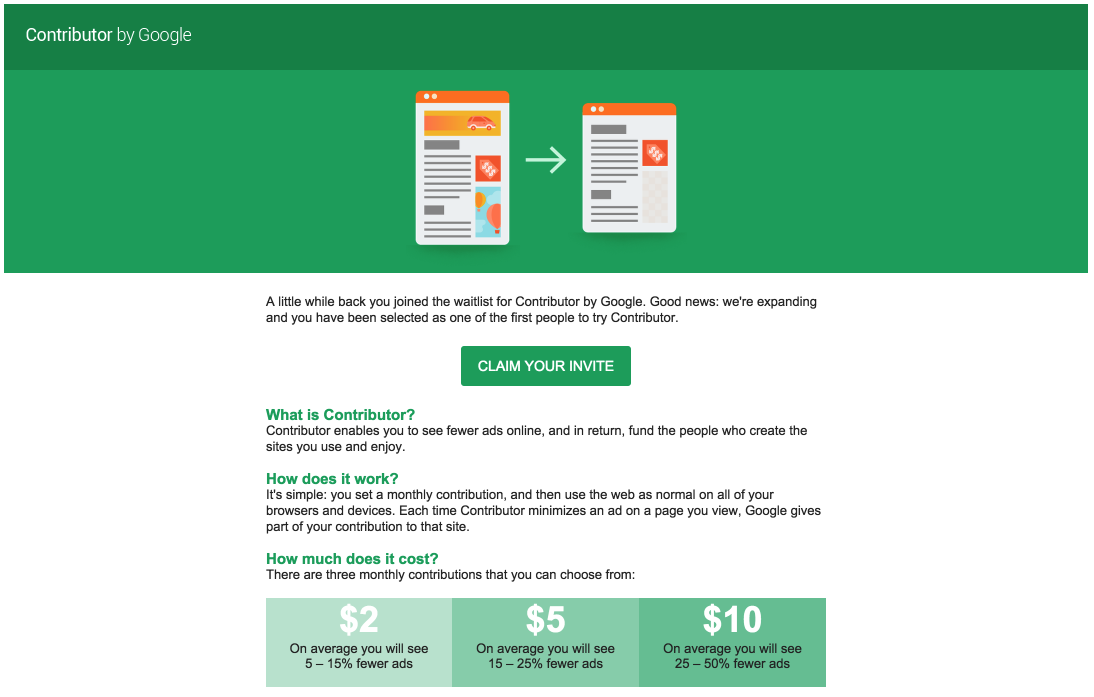
Google has today started sending out a new round of invites for the “Contributor by Google” program it announced in November of last year. The service, which removes AdSense ads from your daily browsing for the price of a $2-10 monthly subscription, also saw some notable changes from when it was first shown to the world. Google has now detailed new tiers which will be available to those who have been invited to try out the expanded program…

[youtube=https://www.youtube.com/watch?v=pVYtzF5SemU]
Google along with other tech companies including Amazon, Microsoft, and Taboola, have reportedly reached a deal with AdBlock Plus to prevent the service from blocking ads on their websites. Financial Times reports:
Expand
Expanding
Close
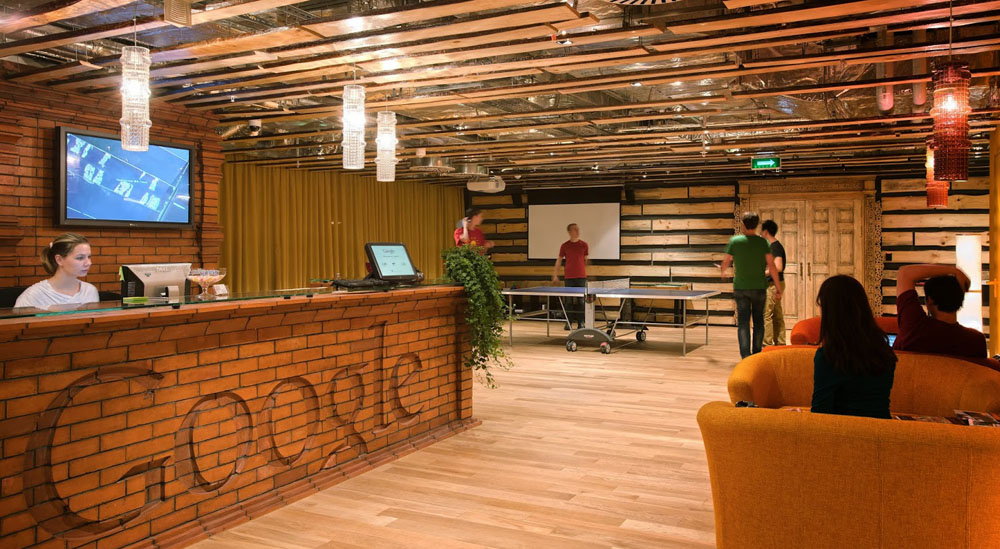
Google’s Moscow offices
Google has started to block AdSense and Adwords accounts in Crimea, and Google Play services will cease on 1st February, reports TechCrunch. The moves are being made in order to comply with sanctions on the Crimea region of the Ukraine imposed by the US Government.
Free services, like search, maps and gmail are all expected to remain unaffected, but all services involving payment to or from Google will cease, said Russian site Lenta.ru.
“Google’s prohibited from providing paid services in the Crimea,” a source at Google told Lenta.ru. “In addition, Google cannot make payments to anyone in the Crimea. It is now technically impossible, as almost all international banks have ceased to make payments.”
The US joined the EU in imposing economic sanctions in protest at Russia’s annexation of the Crimean peninsula, which legally remains part of the Ukraine. TechCrunch notes that the political conflict could escalate, with the possibility that Russian government may retaliate by blocking the sale of US imports into Russia–an important market for many US companies, including Google.
Apple terminated its own agreements with app developers in the region earlier this week, and has announced that all sales of Apple products and services will cease as of 1st February. Other companies are similarly ceasing business in the region, including both Steam and PayPal.

Google notified publishers on Wednesday that AdSense Direct will be closing on February 10th, just days after the one-year anniversary of the direct ad sales service. There will no longer be support for any campaigns created with the feature, while access to the Direct Campaigns page will be removed. Outstanding account balances will be settled when the service shuts down.
Expand
Expanding
Close
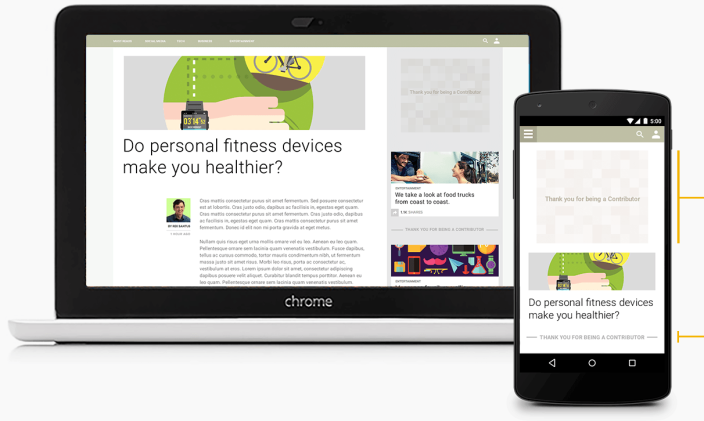
Google has today launched a new platform that aims to reinvent how content creators on the Internet make money. It’s called Contributor, and it involves readers committing to a certain monthly payment of $1-3, which will in turn give visitors an ad-free browsing experience on some sites. This could potentially be a full-blown alternative to Google’s AdSense, giving publications like this one and others a new form of monetization.


Today, Google announced a new product search tool for its AdSense for Shopping platform that helps retailers monetize their websites. Walmart.com is among the early participants in the fairly new program, which displays sponsored ads across the discount mega-chain’s site that are relevant to a visitor’s product search results.
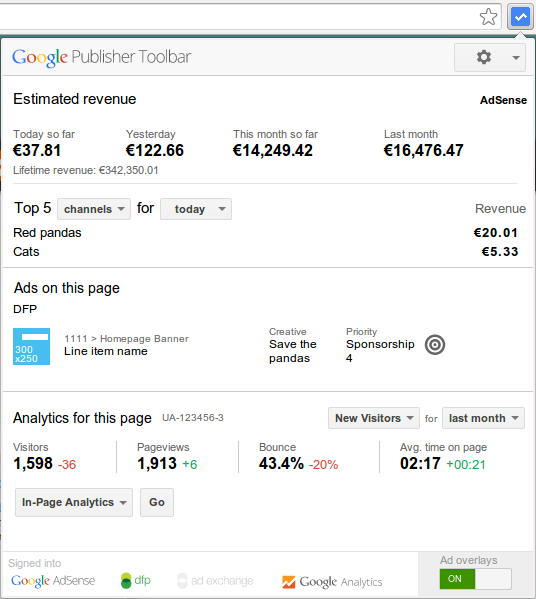
Today, Google announced that it has integrated Google Analytics statistics into its Publisher Toolbar. This gives website administrators fast access to performance statistics, making it easier for them to gauge trends and other data related to their web properties. Available to download from the Chrome Web Store, the Publisher Toolbar also lets you quickly monitor individual ad stats and block inappropriate content from your website.

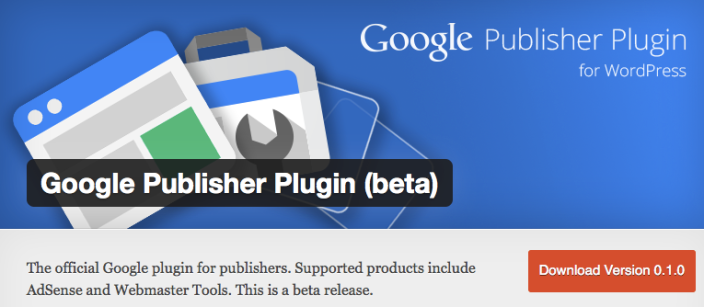
On its Inside AdSense blog, Google has announced a new plugin for WordPress users that will further ingrate Google’s publisher products with the service. The Publisher Plugin adds easy access to both Google Webmaster Tools and AdSense from within WordPress. Google hopes to add more services to the plugin soon, and as the product is still in beta, some final tweaks are still being made to it.
The Publisher Plugin allows webmasters to more easily place ads on their sites with AdSense, in addition to providing detailed reports about their sites with Webmaster Tools.
The Publisher Plugin is available now in the WordPress.org plugin directory.


