Abner Li has worked at 9to5Google since 2015 and in late 2020 took on the role of editor-in-chief. He is keenly focused on tracking what happens at Google, and is often the first to spot new features in Google’s ever-growing family of applications that are updated on a daily basis, including Search, Assistant, Maps, Workspace, Android, Chrome/OS, Wear OS, and YouTube Music.
To him, what Google does greatly impacts the technology space and modern life. Inside the company, he is particularly interested in the key products mentioned above, as well as services like Google Podcasts and Google Lens. Each are massive platforms that can be unwieldy to grasp, with Abner keenly bent on understanding their philosophy and future direction. He is most excited about Google’s plans for augmented reality glasses.
Abner spearheads the APK Insight program at 9to5Google to chronicle all changes in the company’s Android apps, often finding new features before they are officially announced. This includes redesigns and revamps, launches, and new products.
With iOS 14, Apple is requiring app developers to tell users about and have them opt-in to tracking. Google announced today that its first-party iOS apps will stop using certain tracking methods to avoid having to show the upcoming permission prompt. Meanwhile, the company also provided guidance to developers and advertisers ahead of Apple’s App Tracking Transparency initiative.
With the Pixel 5 and 4a 5G, Google introduced Auto Night Sight so that the signature feature can be accessed without having to explicitly enter the low-light mode. Some people found the automatic nature frustrating, and a new version of Google Camera this week addresses it.
Since opening its first location in 2006, Google’s presence in Taiwan has grown significantly. To mark the 15th anniversary, Google has opened a new Taiwan campus that will be home to Pixel, Nest, and Chromecast hardware development.
Over the past year, Google has been making a big push for web content presented using the tappable carousel format popularized by Snapchat and Instagram. However, Google is now issuing a warning against using Web Stories as a “teaser.”
Following the desktop update last week, Chrome OS 88 is beginning to roll out today. There are a handful of usability enhancements in this release, which will be available over the coming days.
In the early days of VR, Tilt Brush was widely regarded as a premier application that helped sell the platform’s immersiveness. Google acquired the painting app in 2015 amid their big, multi-pronged push into the space. Tilt Brush is no longer being actively developed, and Google announced today that it’s now open sourced.
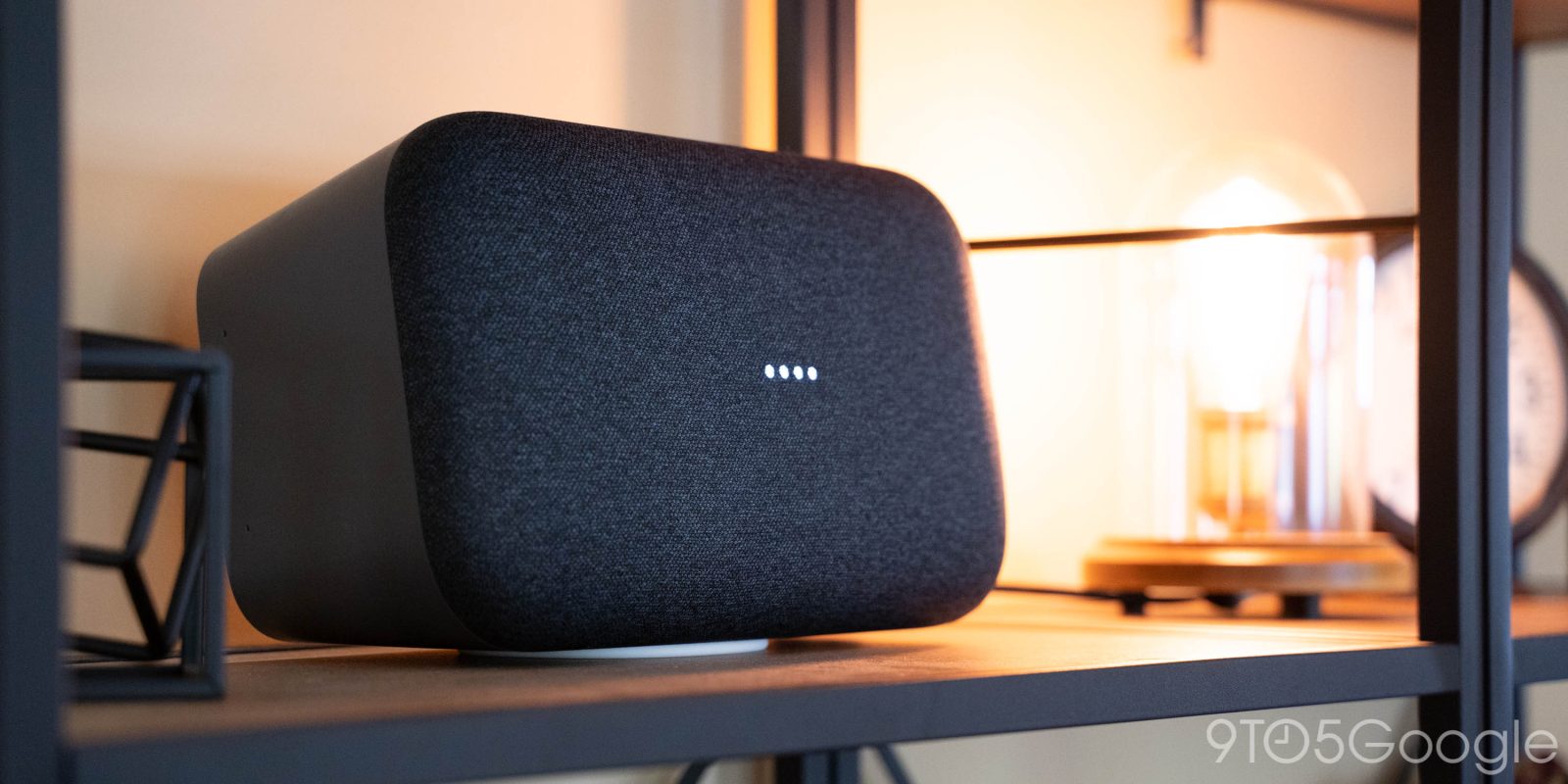
The Home Max, and Mini, launched in 2017 as the first expansion of Google’s smart speaker lineup. After three years, Google has officially discontinued the Home Max as inventory is depleted.
Since last year, Google has been working on letting you perform translations in its visual search tool without an internet connection. Google Lens is now rolling out offline translate on Android.
Almost a month into the new year, YouTube Music has yet to see any major changes. There have been a handful of tweaks, and the latest today involves YouTube Music switching to grid views when displaying albums and singles on artist profiles.
The rise of remote work has also led to an uptick in screen sharing during video calls. One occupational hazard involved with this is having web notifications — often with private information — appear for anyone on the call to read as you present. Chrome is now addressing this by hiding notifications when you’re screen sharing.
While prolific among first-party Android and iOS apps, night modes on Google websites are few and far between. The Google My Activity page is now the latest to feature a dark theme.
In announcing the big UI revamp for Assistant Smart Displays last October, Google also teased the addition of Sunrise Alarms. That Android feature is now beginning to roll out as part of a new alarms experience for the Nest Hub.
Back in 2019, Google announced an initiative to build a more private web through open standards. The most ambitious aspect of the Privacy Sandbox is phasing out support for third-party cookies, with the Google Chrome team providing a road map for 2021 today.
CEO Sundar Pichai on Monday detailed a handful of initiatives to help boost vaccine distribution amid the ongoing pandemic. One physical effort involves offering Google offices as COVID-19 vaccination sites.
Google today announced several efforts to aid COVID-19 vaccine distribution in the US. CEO Sundar Pichai announced $150 million in ad grants, while various Google products will soon display local information.
A handful of Google services today are available as Progressive Web Apps. Following Music and TV, the main YouTube site can now be installed as a PWA for quick dedicated access.
Back in June, Google thoroughly redesigned Photos with simpler navigation and a long-awaited map view. The revamp was most apparent on phones, but the website also saw some tweaks. Google Photos has now been optimized for Android tablets with an interface that takes better advantage of large screens.
Since the November launch of Apple Silicon-powered Macs, third-party developers have been steadily updating their apps with native support. Google now plans to update Drive File Stream in April with M1 support.
Drive File Stream is a Mac and Windows app that lets enterprise users access files stored in Google’s cloud on demand, and it’s now being renamed to “Google Drive for desktop.”
Lens closed out last year with a Pixel Camera-inspired redesign and more shortcuts in other apps to launch the visual search tool. Google is now testing a new Lens icon that better communicates its functionality.
Last month, Gboard started testing an updated theme and “enhanced voice typing” for Pixel phones with the new Google Assistant. Gboard 10.2 rolled out to beta users last night with work on expanding themes, as well as a handful of other features.
As the company’s flagship product, major changes to Google Search take some time to develop and are heavily tested. Google today announced a significant redesign of how Search looks on mobile that is focused on simplicity.
Chrome Custom Tabs are a widely adopted — with one notable exception — staple on Android that allows third-party apps to use the default Google browser when opening links. With Chrome 88 released earlier this week, Custom Tabs are gaining an experimental share button.