Google Assistant

Assistant is Google’s personal assistant that is capable of answering questions, performing automated tasks, and more.
Assistant is Google’s personal assistant that is capable of answering questions, performing automated tasks, and more.

Two weeks ago, we revealed that the Google app was working on a bottom bar redesign. The latest version 7.14 shows Google refining that interface, while revamping the “Explore” page for Assistant apps, adding “Hey Google” on phones, and other tweaks.


Before the announcement of the Google Home Mini, we got our eyes on the TicHome Mini. This small speaker has Google Assistant built-in and runs on a battery, allowing it to be carried and used around your house. After an extremely long wait, Mobvoi is finally opening up pre-orders starting today. What’s better is that if you pre-order the TicHome Mini right now, you’ll save a few dollars…


I love listening to music as I fall asleep, but for obvious reasons, it’s not a good thing to leave on all night. Google Home is a very convenient way to fire up a playlist, but until recently, it just kept playing all night long. Now, Google has finally brought a sleep timer to its smart speaker.
The latest beta version of the Google app rolled out this evening and hints at Assistant finally being available on tablets, as well as other features possibly coming to more devices. Version 7.14 also includes some user-facing changes, while there are some mentions about the upcoming Pixel Buds.
Google Assistant has expanded to a lot of devices this year, and that means there’s probably lots of devices you own that are always listening for the “OK Google” hotword. When the Google Home landed, Google added “Hey Google”, which had the side effect of helping avoid setting off other devices. Now, it appears that Google could be bringing that hotword to smartphones.
Android TV is a great platform, but it’s overlooked by many. Hulu’s Android TV app has always felt neglected to me, but it’s slowly getting better. Most recently, Hulu’s Android TV app has picked up the ability to work with Google Assistant for finding shows and movies.
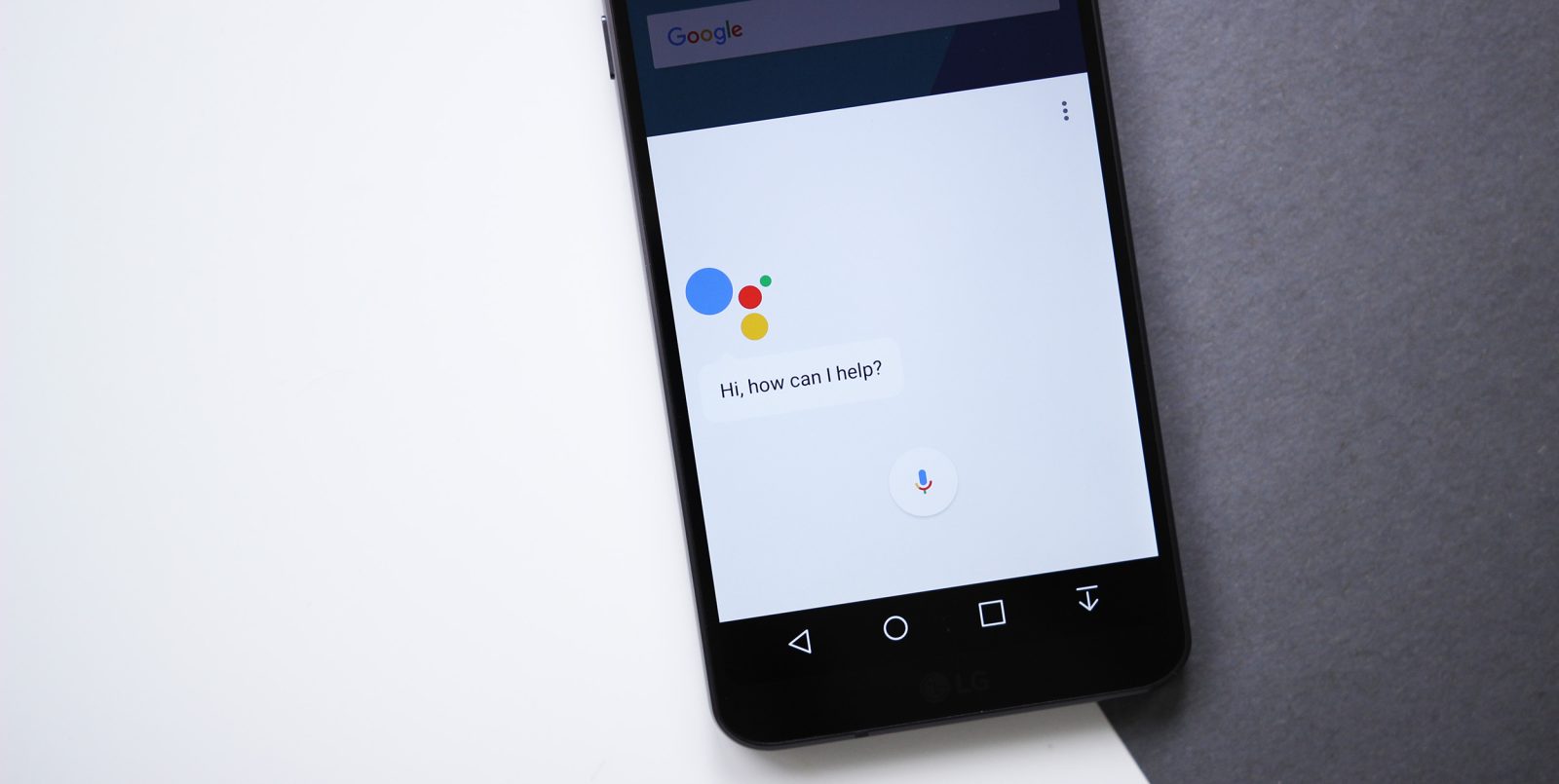
Google Assistant’s features are definitely fragmented throughout its various platforms. Home can do one thing, Android Wear can’t. Android phones can do one thing, Android TV can’t — you get the picture. Recently, Google finally flipped the switch on one of Home’s best features to enable it on phones — Chromecast integration.
Google’s shopping service, Google Express, has been expanding quite a bit recently, and today that includes the launch of a partnership with Target.
The Google Home Mini was announced at Google’s big hardware event last week, and it’s an awesome little product. However, it seems that at least some early units have shipped with a pretty major defect that brings our worst fears with these always-listening assistant to reality.

Last year I said that the first Google Home was a great start, but not yet functionally up to par with the comparable offerings from Amazon. Google has all but caught up since then. The feature set of the original Google Home is fleshed out — it works with just about as many third-party services as you could want — and now Google has introduced a smaller, cheaper Home to take on the Echo Dot.
The short version is this: The new Google Home Mini joins the Chromecast as another impulse buy in Google’s hardware lineup.
Google Assistant is a ridiculously powerful piece of software, but it’s more useful when developers take the time to integrate its capabilities into their applications. Today, Google is detailing how developers on Android can integrate their media apps with Google Assistant.
Truly wireless headphones are the latest craze in the “wearable” industry, and the top player right now, for good reason, is Apple’s AirPods. The $159 wireless earbuds are perfect for iPhone users, but they also work pretty well with Android. Now an Android developer has taken that to the next level by giving AirPods the ability to summon Google Assistant.
Ahead of last week’s October 4th hardware event, Google rolled out male and female voice options for Assistant in English. A nice customization, the new voices also sound more realistic. This is due to work done by Alphabet’s DeepMind division and the new deep neural network being leveraged for sound synthesis.
Google Home and other Assistant-enabled smart speakers are great out of the box, but they’ve just been getting better and better lately. Today, it’s been discovered that Google Home has a few extra tricks hidden up its sleeve…
Google Assistant is a really powerful AI, but it’s definitely not perfect or complete. Some super simple features that Google had working in the past simply don’t work with the Assistant, and one of the most puzzling has been the missing ability to identify songs. Thankfully, that’s finally on its way back.
Google Assistant first made its debut on Android about a year ago on the original Pixel phones, and since then, it’s expanded to quite a lot of other platforms and devices, including basically every Android smartphone. Today, Google has made Assistant available in Google Play, but it doesn’t really seem to do anything…
Google’s new Bluetooth headphones, the Pixel Buds, use Google Assistant to do some pretty incredible things such as translating languages on the fly. However, there’s one thing (aside the from the cable) that we thought would set them back from Apple’s AirPods, and that was pairing. Thankfully, Google has worked out a solution.
After announcing the first “headphones optimized for the Google Assistant” last month, Google unveiled their own pair today. Instead of an over-the-design, the Google Pixel Buds are Bluetooth earbuds attached via a wire.
Much like how Google Assistant was announced at I/O 16 and initially premiered with the Pixel last year, Google Lens is seeing a similar release schedule. These “set of vision based computing capabilities” for performing tasks like visual search is launching first on the Pixel 2 and Pixel 2 XL.


In addition to promising Google Assistant support next year, Sonos has unveiled its latest wireless speaker: the Sonos One. The new model replaces the Sonos Play:1 in the lineup at the $199 level with models available in both white and now black. Sonos One is the company’s first wireless speaker with built-in voice control.
Google has made quite a few moves with smart speaker devices in the past few weeks, and that’s undoubtedly because the company is preparing to bring a lot of new hardware to the table on its own and with partners. To help users better manage their various Assistant speakers, Google is now allowing the ability to assign those devices to specific rooms.
Several days ago we did a teardown of version 7.12 of the Google app and were able to activate a second voice for Google Assistant. This voice was male, but it was not yet live for users to select. Sometime since then, Google pushed out an update enabling users to switch between the female voice (Voice I) and the male voice (Voice II). Here’s how to do it…
Google, just like Amazon, is working hard to get its virtual assistant on almost every physical platform that it possibly can. This includes phones, speakers, security cameras, appliances, TVs, and more. But as someone who spends close to 80 to 90 percent of my time on a computer, I want an official Google Assistant app that is accessible from both my Apple laptop and Windows desktop.
While we know Google is working to bring Assistant to Chromebooks, and there are ways to build your own Assistant app for Mac and PC, there isn’t an official option that packs with it all of the functionality found elsewhere.
The latest beta of the Google app is rolling out this morning and features a number of strings related to Assistant. Version 7.13 notes new features in the works for Assistant-enabled headphones, as well as what is possibly a new device: “Google Earphones.”