Kyle Bradshaw joined 9to5Google in 2018 with a special interest in Google’s Fuchsia OS, rooted in his experience of being the first to offer a visual preview of the revolutionary design of the in-development operating system. Since then, his attention has broadened to include the secrets hidden within other areas of Google’s public codebases.
By reading the public Fuchsia code, Kyle was able to prove the existence of the Nest Mini and the Nest Hub Max months ahead of their respective announcements. With evidence from Chromium, he reported on Google’s since-canceled efforts to create an offshoot of Android designed for “touchless” feature phones.
In 2018, Kyle reported on three distinct Made by Google Chromebooks in development, the Pixel Slate, the Pixelbook Go — a full year before its release — and “Meowth,” the original version of the Pixel Slate that was canceled due to Intel’s delays that year. For ChromeOS itself, Kyle was the first to demonstrate the upcoming light theme redesign in action.
Looking at the early evidence of the Pixel 5’s specs, Kyle accurately predicted in February 2020 that the Pixel 5 might not be a traditional “flagship” phone. In 2021, he reported that Google’s next headset would be the “Pixel Buds A.”
Kyle was the first to report that the Pixel 6 would mark the debut of Google’s in-house processors, later revealed to be the Tensor chips.
He can be reached for tips or just friendly chat by Threads, Mastodon, Bluesky, or email. If you’re looking for his other works or side projects, head over to Kyle’s personal portfolio.
Over the past few years, we’ve closely watched Fuchsia, Google’s forthcoming OS for devices of all kinds, develop and pick up all sorts of devices and prototypes, including the Google Home Hub and the Pixelbook. In that time, we’ve wondered when we would see support arrive for a Google Pixel series phone. Today may be that day, as Fuchsia is picking up support for “Crosshatch” aka the Google Pixel 3 XL, via an indie developer.
Since last week’s leak, it’s been clear that Android Q is going to include some positive changes for Android going forward, like system-wide dark mode and new permissions settings. Unfortunately, it’s not all good things coming in Android Q, as new code changes show that network carriers will have more ability to lock your phone down to specific networks via your SIM card.
In this week’s top stories: we got an early, leaked look at Android Q with system-wide dark mode, saw Android Pie arrive for the Samsung Galaxy Note 8, and witnessed a surprise early review of the Google Pixel 3 Lite.
With CES 2019 now in the rear-view, we’re reflecting on the innovations that were on display, including new ways to interact with the Google Assistant. One of these, the Lenovo Smart Clock, may hold unexpected answers for Google’s hardware plans for Fuchsia.
If you’ve kept up with Chrome OS in the past six months or so, you’ll know that one of the more interesting new features to launch is Linux apps support. While this has potential to introduce all sorts of new applications to Chrome OS, there are some features missing that hold it back, in this early stage. One of the most anticipated features, graphics acceleration (or GPU support), necessary for running Linux games and some other apps, will be available to test soon on Chrome OS.
For almost as long as the web (and particularly Chrome) has been with us, it’s had a subtle flaw that most of us overlook. When changing from one page to another, often you’ll briefly see what web developers call a “white flash.” Google is now looking to tackle the “white flash” directly in Chrome, according to an upcoming flag.
With more and more manufacturers creating “gaming” phones, and heavy hitters like Fortnite arriving on Android, it makes sense that Google would want to support developers any way they can. To that end, it seems Google is working on its own “Android Game SDK” based on Vulkan and the Android NDK.
Google, like many tech companies, is always looking for more ways to move computing to their cloud. Google Cloud Functions, for example, lets developers use their Python and Node.js code “serverlessly” in the cloud. Google Cloud Functions has now picked up beta support for Google’s own Go programming language.
If you stop and think about it, the number of banks and other financial institutions in the United States alone is almost uncountable, yet Google Pay seems committed to supporting them all. For the month of January, Google Pay has gained compatibility with 17 new US banks.
Chrome OS is rapidly becoming a serious player in the Linux field. Now, Google seems to be further integrating the Linux app support with the existing Android app support by allowing the Chrome OS Linux apps to access files from the separated ‘Play files’.
As both Google Home and Google Assistant devices become more ubiquitous in our lives, making new Actions for the Assistant becomes an almost necessary step for developers. To make it easier for Android developers (among others) to make the leap, today, Google has released a Java & Kotlin library for Actions on Google.
Today, the American Civil Liberties Union (ACLU) published an open letter calling on Google to commit to never sell any facial recognition technology to the government.
Not too long ago, I was able to treat the Google Assistant with a level of respect due to the entity that fits comfortably between “faceless voice” and “future robot overlord.” Something happened over the holidays though. With the launch of Pretty Please, being nice to the Google Assistant suddenly became an annoyance.
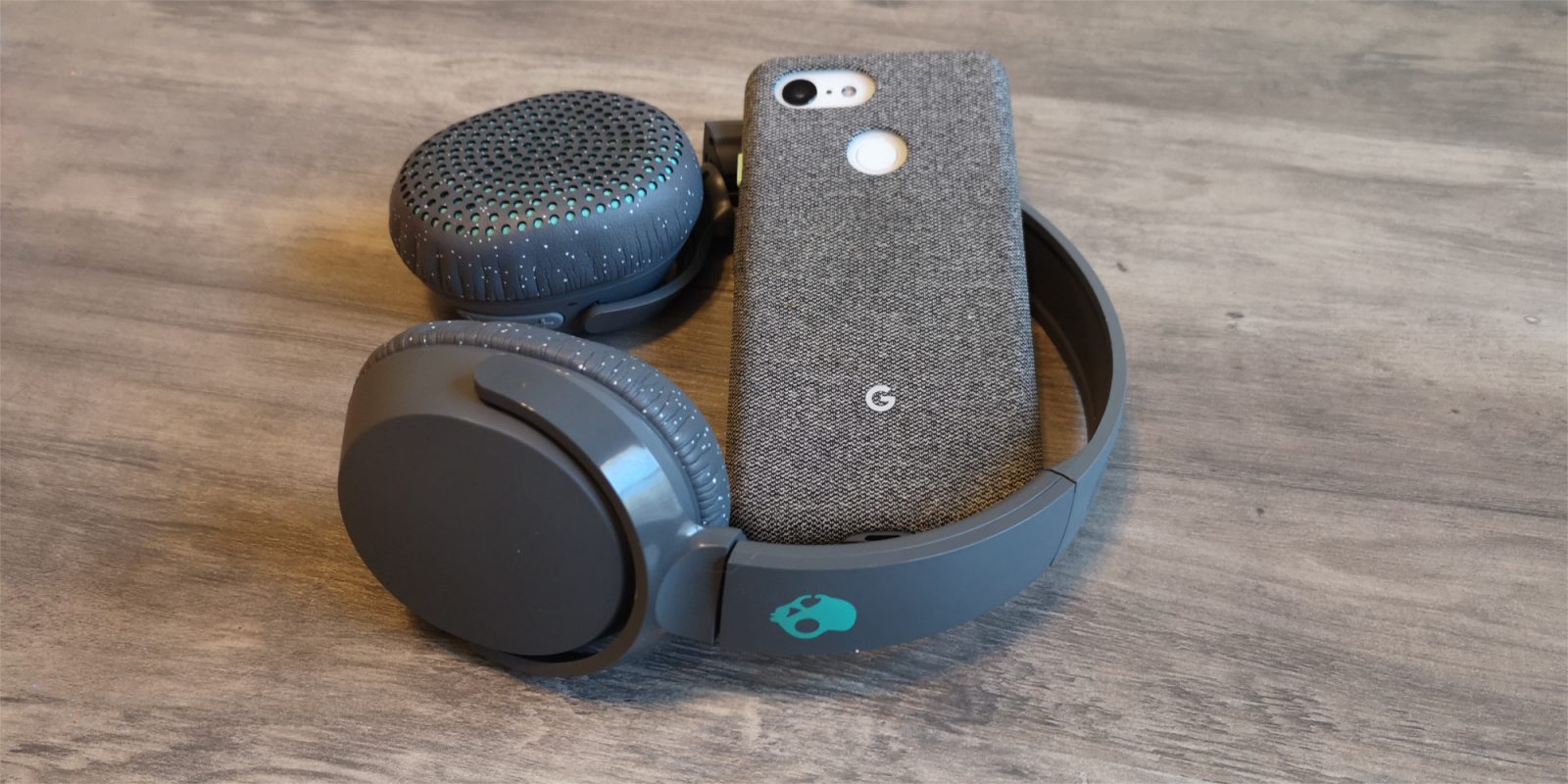
Like it or not, the headphone jack is (more or less) dying. Considering myself firmly in the “not” category, I’ve delayed in getting Bluetooth headphones for years. The Made for Google lineup for 2018 features a decent variety of Bluetooth headphones. Of these, the Skullcandy Riff Wireless, which we’re reviewing today, are the most accessible at just under $50.
Chrome OS has always been based on Linux, but with its new beta support for Linux apps, the system has been opened to a wealth of powerful new applications otherwise inaccessible. The problem is, unless you’re already a Linux guru, you likely have no idea what those Linux apps are. Google is looking to fix this by making Linux apps you can install discoverable from the Chrome OS app launcher.
In this week’s top stories: we learned from Ring that smart home security is not something to be taken lightly, said “so long” to two beloved LG phones, and hope for the future with Doodle for Google 2019.
As far as ways to integrate with the Google Home ecosystem, the Chromecast Audio has always been the most affordable. As of today, however, Google says it is discontinuing the Chromecast Audio altogether.
It’s barely been an hour since we got confirmation that Samsung will be announcing their Galaxy S10 lineup at a Galaxy Unpacked event in San Francisco next month. Now reports are already suggesting that there may be other devices on display, including Samsung’s often-teased foldable phone.
Do you remember having an Etch-A-Sketch as a kid? Developers in the Google Chrome Labs sure do. Calling back to this nostalgic toy, Google Chrome Labs has released a free, online, open source recreation called Web-A-Skeb.
Midway through last year, Google launched one of my favorite features of Chrome OS, Linux app support. As it stands, this support works through a virtualized Linux, based on Debian. However, there’s many, many flavors of Linux out there, each with their own pros and cons. Google seems to be accounting for that with the ability for companies to choose their own Linux distro for Chrome OS’s Linux apps support.
Square is moving into the world of in-app purchases with a new SDK for Android, iOS, and Flutter that will allow app developers to easily accept payments in a secure and consistent way.
Sonos spent most of last year promising that their otherwise acclaimed Sonos One smart speaker would be getting Google Assistant support. Today, at CES 2019, Google has announced that the Assistant is finally arriving on not only the Sonos One, but also the Sonos Beam smart soundbar.
Google will soon be testing a dark mode in Chrome for Android, continuing the effort to conform their browser to the recent trend toward darker, sleeker apps, and saving battery life along the way.
Last year, Google Chrome launched picture-in-picture support for videos, allowing users to watch YouTube videos and more while doing other tasks. However, we all know that many, if not most, videos online have ads attached. In Chrome’s current version of picture-in-picture, the usual “Skip ad” is unavailable, making these ads unskippable without going back to the video’s main tab. A new commit shows that this will not be the case for much longer.