Wear OS

See All Stories

Wear OS is Google's wearable platform which is designed to run on watches. It's based on a modified version of Android, designed by Google, and used on many third-party smartwatches.
Android 11 Wear OS

What is Wear OS?

Wear OS is Google’s wearable platform which is designed to run on watches. It’s based on a modified version of Android, designed by Google, and used on many third-party smartwatches from companies including Fossil, Mobvoi, and more.

The platform is designed to pair with a smartphone – best with Android but compatible with iPhones – and mirror notifications. Developers can also create apps for Wear OS and submit them to the Google Play Store for users to download. Google Assistant is a key feature of the platform, enabling voice controls and smart home integration. Google Fit is also a core part of all watches using Google’s platform, with most supporting a heart rate monitor for fitness tracking.

In recent years, Google’s focus on Wear OS has allowed the platform to function more on its own compared to in years past. LTE watches have been released, and better specifications have also helped fix performance complaints. Pricing on watches varies from model to model, but some models cost under $200, with most of our favorites being around $300.

Google has teased the next “platform update” as coming later in 2021 with some notable changes, including Tiles from third-party apps. You can read more on that here.

In 2021, Google successfully completed its acquisition of Fitbit. When the deal was first announced, Google teased that it would present a chance to “invest more in Wear OS,” but nothing else has come of that announcement yet.
Site default logo image

When did Wear OS release?

Google first announced this platform in 2014 under the name Android Wear.

In 2017, the platform released its “2.0” update, which was an overhaul to the UI and experience with apps being split from the phone and installed independently from the Play Store. In March of the following year, Google officially rebranded Android Wear as Wear OS to better appeal to more customers.

Who uses Wear OS?

You can find Wear OS on many smartwatches, as Google makes the platform available to many OEMs as an alternative to building their own operating system from scratch. Most smartwatches using the platform are powered by Qualcomm chipsets, with the company’s Snapdragon Wear series optimized for smartwatches.

Fossil is the biggest brand in the space, with its own models for sale around $200-$300. The company’s sub-brands including Skagen, Misfit, Diesel, and many others also use the platform for varying price points, but they all generally have the same feature set.

Mobvoi is another notable contender in the space. Google has previously invested in the Chinese company, and Wear OS powers its TicWatch lineup. Notably, Mobvoi’s TicWatch 3 Pro was the first to use the Snapdragon Wear 4100 chip.

Other brands who have been associated with the platform include Casio, Montblanc, Louis Vuitton, Tag Heuer, and countless others. Despite the wide variety of brands, though, market share for Google’s platform has long remained minimal and stagnant. In 2020, the smartwatch market saw gains amid the pandemic, but Google’s platform had less share than Fitbit, which was at 6.2% and shrinking at the time.

What’s next for Wear OS?

At Google I/O 2021, the company announced a complete overhaul that’s coming to Wear OS. In the “biggest update ever” for the platform, Google is joining forces with Samsung to create a “unified platform.”

Much of what’s coming with this “Wear 3.0” update remains to be seen, but there are a few things we do know for certain. Google has said that the platform will focus on better battery life as well as better health features, both areas in which previous iterations have lacked. The renewed focus on health will be primarily powered by the newly acquired Fitbit, and based on early looks, it’ll be a near-complete copy from what’s on current Fitbit smartwatches such as Versa 3 and Sense. The new version is based on Android 11.

As for new hardware running the revamped Wear, there’s a lot that’s not known. Fitbit has committed to making “premium” smartwatches on Wear, and Samsung has pretty much confirmed the Galaxy Watch 4 series will be running the update as well.


You can read the latest news about the platform and its apps below.
Advertisement for ‘Huawei Watch’ Android Wear device spotted in the Barcelona Airport

It looks like Huawei is about to enter the Android Wear race with a new device called the “Huawei Watch,” as has been spotted by Android Central in a Barcelona Airport advertisement. Touting a “Timeless design. Smart within.” tagline, the device looks to be a classy circular smartwatch coming in gold, silver, and black variants and a few different band styles. In the reflection of the silver device, there looks to be some kind of fitness feature.

The device looks to sport an aesthetic similar to the Moto 360, but this watch seems to have a singular button that’s placed at an angle on the right side. The model of the device that’s silver seems to sport a band similar to the milanese loop that Apple showed off earlier this year alongside the Apple Watch. There’s no word yet on details like pricing and release date, but we’re at MWC in Barcelona this week and we’ll keep you updated.

Google’s Ingress augmented reality game is on its way to Android Wear

Ingress was launched on Android in 2012, but after its introduction made its way to a few other platforms. The app has been available on iOS for a while and had a port made for Google Glass, but now the Mountain View company’s augmented reality game is officially coming to Android Wear (via Engadget) at some point next month. You’ll still need an Android phone—as is the case with most Android Wear apps—but it won’t be long before you’ll be able to play Ingress without taking that phone out of your pocket.

It makes sense considering the nature of the game, as the basic premise is that you’re exploring the real world while creating virtual missions, and defending and attacking portals. While using the smartphone works fine, it makes a lot more sense that users would be able to simply glance down on their wrists to play the game—hence why a Google Glass version of the game was put together as well (although that version is no longer available). Head over to the Google Play store to get the latest version of Ingress.


Motorola is bringing Moto Maker to the Moto 360

If you’ve ever purchased a Moto X from Motorola’s website, you probably know a lot about the company’s Moto Maker customization tool. You can build your phone any way you want it, and there are an almost endless number of combinations to choose from. Now, Motorola is preparing to launch its Moto Maker interface for the Moto 360, allowing you to customize your smartwatch much the same way (via Wired).


Expand
Expanding
Close

LG debuts Urbane LTE, the world’s first 4G-capable smartwatch, with proprietary WebOS-based software

Site default logo image

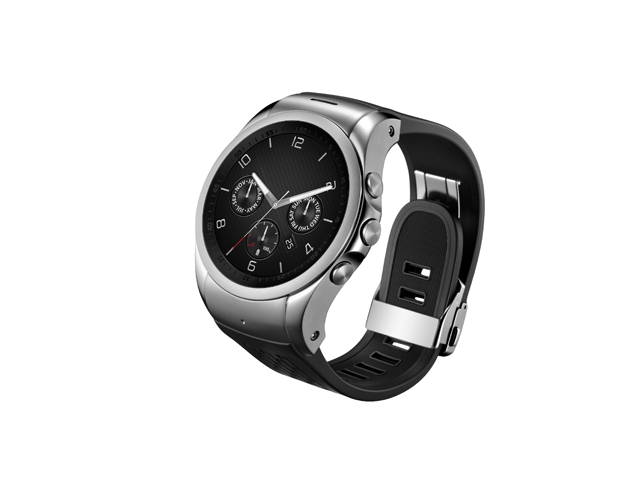
LG today unveiled the world’s first LTE-equipped smartwatch, dubbed the LG Watch Urbane LTE. Unlike other recent smartwatches, the Urbane LTE doesn’t run Google’s Android Wear operating system, with the maker opting to install its own proprietary software that, according to CNET, is based on the defunct WebOS. The non-LTE Urbane, revealed earlier this month, still runs Google’s OS.

The metal watch features three buttons to control the interface and sports what LG says is the “world’s first NFC-based Wallet,” allowing users to make payments with the Urbane LTE at NFC-compatible retailers. A heart rate monitor is also built-in, along with a barometer, compass, gyroscope, and GPS. Voice recognition software provides a handy auto-translation feature.


Expand
Expanding
Close

Site default logo image

Gorgeous design of the LG Watch Urbane shown off in new promo (Video)

LG announced the LG Watch Urbane earlier this month, and the first impression of many was that it was entering the market to compete with the to-be-released Apple Watch. But whether or not that was the Korean company’s intention with this device, it’s undeniably classy and gorgeous. Now LG has given us a better look at the upcoming Android Wear watch, showing all its edges from dozens of angles in a new promotional video…

The device is basically a G Watch R in a different body, sporting IP67 dust and water resistance, a thinner bezel, and either a gold or silver trim. LG says that the details you’re probably interested in—like its price and release date—will be unveiled next week at the Mobile World Congress in Barcelona, Spain. We’ll be on the ground to keep you in the loop, so stay tuned for more information on this beautiful watch.

Developer hacks Android Wear to show iPhone notifications (Video)

Android Wear is great, but if you’re an iOS user, it looks like the Apple Watch is going to be your only option for a while. Google has yet to make any of Android Wear’s functionality compatible with Apple’s operating system, and it doesn’t look like they plan to do so any time soon. But that’s not stopping one developer, Mohammad Abu-Garbeyyeh, from hacking Android Wear to at least support notifications from iOS devices.


Expand
Expanding
Close

Site default logo image

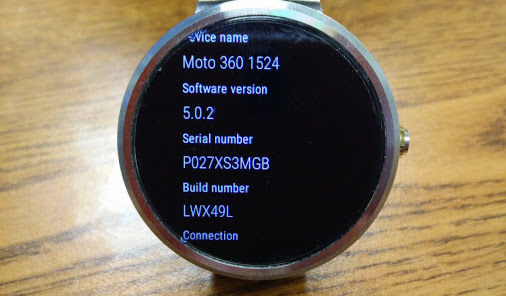
Moto 360 update to Android Wear 5.0.2 begins rolling out (Update: All the watches!)


Update: It looks like 5.0.2 is now rolling out to most Android Wear devices.

Motorola has pushed out a Android Wear update for the Moto 360 smartwatch. The update sports “a variety of system optimizations and security updates to improve performance and stability” and includes an updated version of Google’s Play Services software.

The update is built on Android Wear 5.0.2, making the Moto 360 one of the first devices (if not the first) to run this version of the operating system.

The update is being rolled out to users over the next few days. Users who have access to the update will be alerted to its availability and prompted to install it using your smartphone’s internet connection.

ASUS reportedly working on a non-Android Wear smartwatch w/ better battery life

ASUS ZenWatch, the company’s current Android Wear offering

Leaked details last week of a purported HTC smartwatch in the works suggested that the Taiwanese company would be ditching Android Wear in at least one future device, and now it appears that ASUS—another Taiwanese company—is doing the same. According to a report this morning from Focus Taiwan, ASUS is working a wrist-worn device with much better battery life—and they’re going to achieve that by leaving behind Google’s operating system.
Expand
Expanding
Close

Stainless steel version of Sony’s SmartWatch 3 goes on sale this week, no word yet on price

Site default logo image

The stainless steel version of Sony’s SmartWatch 3 will go on sale around the world “from this week,”says Sony in a blog post.

The new model has the same innards as the original silicon-cased version launched last September, with the same 1.6-inch 320×320 display, 1.2GHz quad-core Qualcomm processor and 512MB of RAM. The steel model will also retain the same IP68-standard waterproofing, making it safe even against complete immersion in water for up to 30 minutes … 
Expand
Expanding
Close

Canalys: Android Wear is off to a walking start w/ 720,000 devices shipped in 2014

Site default logo image

The latest numbers from Canalys suggest that Android Wear is definitely not taking off as fast as many would have hoped, and that devices running Google’s smartwatch operating system haven’t exactly sold like hotcakes. Over the entirety of 2014, somewhere in the realm of just over 720,000 Android Wear device were grabbed up by consumers, making up almost 1/6 of the total 4.6 million smart wearable bands shipped.


Expand
Expanding
Close

Purported HTC smartwatch details suggest it won’t run Android Wear

Site default logo image

A new leak from Upleaks indicates that HTC’s upcoming smartwatch, which was previously rumored to be coming in early 2015, is codenamed “PETRA” and will sport a 3-day battery along with support for both Android and iOS devices.

The device will reportedly feature a custom operating system built by HTC, not Google’s wearable-focused version its own mobile OS, Android Wear. The software will allow the watch to operate with both Android and iOS devices, targeting a broader market than most Android-only smartwatches.


Expand
Expanding
Close

Swatch planning to introduce Android-compatible smartwatch and mobile payment service, CEO says

Site default logo image

Late Swatch co-founder Nicolas Hayek

While Swatch certainly won’t be partnering with Apple on the iPhone maker’s upcoming Watch despite an ill-fated rumor that surfaced last year, the watchmaker does plan to go toe-to-toe with Apple promising its own version of a smartwatch due out soon. Bloomberg reports that Swatch plans to bring its answer to the Apple Watch to market in the next 90 days, and unlike the Apple Watch, it will work with Android phones.

The device will communicate via the Internet “without having to be charged,” Chief Executive Officer Nick Hayek said in an interview. The Swatch smartwatch will also let consumers make mobile payments and work with Windows and Android software, he said.

It’s unclear if Swatch intends for its own smartwatch to also be compatible with iPhones like the Apple Watch or if the company is only targeting competing platforms, but Swatch CEO Nick Hayek’s claim that its Internet-connected watch won’t need to be charged will be interesting if the company does indeed deliver with functionality that competes with an Apple Watch or even Android Wear smartwatch.
Expand
Expanding
Close

HTC’s next flagship preparing for launch on March 1 at Mobile World Congress

Rumors have been swirling for a long time about what HTC might have planned for us this year, and while the Taiwanese company isn’t telling us just yet, they’re at least giving us some kind of idea of when exactly they’ll be making some big announcements. To no one’s surprise, HTC is today sending out invites for a press event being held at the Mobile World Congress in Barcelona this upcoming March.


Expand
Expanding
Close

Hyundai cancelled its Google Glass Blue Link app in favor of Android Wear

A little more than a year ago, Hyundai told the world that it was working on a Google Glass counterpart for its Blue Link platform. The app was supposed to launch with the 2015 Hyundai Genesis, but the car’s first availability came and went without any mention of Google’s head-worn computer. And while Hyundai did recently announce that it plans to release an app compatible with Android Wear devices very soon, it’s now official that the company’s Google Glass app won’t likely be getting the same treatment.


Expand
Expanding
Close

Startups like kiddoEMR could change lives using Google tech, but this one desperately needs Google Glass 2.0

Site default logo image

Dr. Joseph “Joe” Cohen has been a pediatrician for 15 years, and he saw a need in the medical workplace. Current EMR (electronic medical record) solutions are ridiculously expensive, antiquated, offer little support for pediatrics, and require hours of rigorous training before doctors can use them to efficiently document and organize patient information. Seeing this, Dr. Joe (as his young patients call him) developed a pediatric solution of his own, and deployed an early version in his own practice, Cedar Park Pediatrics, with the added bonus of bringing down the average cost of processing patients from $58 to around $20 per visit.

And while the system is of course platform-agnostic for the most part, Google technologies like Chrome and Glass are a key players in the kiddoEMR product despite downfalls that Dr. Joe says make the current generation of the latter completely impractical for the workplace. The system of course will mostly be interacted with via an in-browser interface on a desktop computer, but Glass provides some robust functionality that would make it a no-brainer for pediatricians. Doctors like Joe, though, need to be able to use their hands, and the old saying that “a picture is worth a thousand words” is especially true when diagnosing patients.


Expand
Expanding
Close

Site default logo image

BlackBerry says Android Wear support for BBM coming in early 2015

BlackBerry, today at CES 2015, has announced that its BBM service is coming to Android Wear in early 2015. BlackBerry hopes that its Android Wear client will bring nearly the full capabilities of the messaging service to smartwatches. With BBM, users will be able to receive push notifications for new messages, read full messages, respond to messages with Google Now, and accept BBM invites.


Expand
Expanding
Close

Sony unveils refreshed SmartWatch 3 with a stainless steel design

Site default logo image

Sony just kicked off its press conference at CES 2015, and one thing for the company will be showing off during the event is a new stainless steel designed SmartWatch 3. The SmartWatch 3 was originally released in October of 2014, but Sony has taken the opportunity at CES to give it an updated, more high-end design.


Expand
Expanding
Close

Hyundai’s upcoming Android Wear app lets you start, lock, and locate your car from your wrist

Hyundai has announced today that it’s working on an Android Wear app, marking another advancement in the next-generation of the company’s Blue Link system for monitoring and controlling your car remotely. The company says the the Blue Link Android app will be updated with Android Wear support at some point in “early 2015” and that it will be showcasing the app at its CES booth on January 5th.


Expand
Expanding
Close

What we expect to see from Google in 2015

It has been a pretty exciting year for Google in a lot of ways. Android Wear has started to ignite excitement behind the future of wearable technology, the best version of Android ever—dubbed Lollipop—was released, a couple of brand new Nexus devices (one of which we leaked) came to fruition, and the Mountain View corporation’s new Material Design language has taken the Play Store by storm. Everything that was already great was made better in 2014, and the company has been sprinkling a bunch of exciting innovations in along the way to keep things interesting—like the self-driving car, for example.

In 2015, Google is probably going to do much the same. Android “M” (milkshake, maybe?) will likely be unveiled at Google I/O this upcoming summer, we’ll probably see a round of new Nexus hardware come later in the year, Google will likely keep pushing Chromebooks in the affordable segment of the PC market, and Android Wear devices from countless manufacturers will continue to get thinner and have better and better battery life. But Google surely has some drastic innovation planned in a variety of areas, as well, with the potential return of Google Glass on the horizon and the second spiral of Project Ara to be unveiled in a couple of weeks.


Expand
Expanding
Close

How to update Android Wear devices manually using OTA downloads

Last week Google released the latest version of Android Wear, 5.0.1 Lollipop. The latest update entails many enhancements and refinements, but most notable is the long awaited official watch face API support and new notification, brightness, and alert settings. If you’re anxious to try out the new features of Android Wear’s latest (whether it be Lollipop or some future release), but haven’t received the OTA update yet, you can try to manually install it with ADB tools.


Expand
Expanding
Close

Inbox for Android updated w/ enhanced support for tablets and Android Wear

Site default logo image

Google, as part of its Update Wednesday regiment, has started rolling out a new version of its Inbox app on Android. Inbox is Google’s latest attempt at making it easier to manage email. The app initially launched back in October and is still accessible by invite-only. Today’s update to Inbox adds a handful of notable features:


Expand
Expanding
Close

IP Cam Viewer update lets you monitor your security cameras from Android Wear

IP Cam Viewer is well known in the Android community as being one of the best solutions for keeping an eye on IP cameras in live time, but the app is also known for having a really bad user interface. Today, while IP Cam Viewer’s UI is still as ugly as ever, a slew of really useful new features have been introduced, including the ability to monitor cameras on your wrist via Android Wear.


Expand
Expanding
Close

Moto 360 5.0.1 update delayed, some devices now receiving LWX48T build

Motorola may have originally planned to roll out the Android Wear 5.0.1 update to all Moto 360 devices by the end of the day yesterday, but it looks like the company is facing some kind of delay in the rollout. Now, some users are seeing yet another build of 5.0.1 hitting their devices, and Motorola is saying everyone should be up to date by the end of the week.

The forum page that we cited in our post from yesterday originally listed the 15th as the last day of the rollout, but today, some users on Google+ and elsewhere—even those that already had the update—are now reporting that a second build, dubbed LWX48T, is rolling out. This is probably just to fix some last minute bugs, and Motorola has since said that the new rollout schedule is that Moto 360 users should receive the update “by the end of this week.”

Have you received the Android Wear Lollipop update on your Moto 360? If so, have you received the new release also?

Upcoming 2.3 Pebble update brings actionable Android Wear notifications and more

Pebble users have been left in the dust this year as Android Wear has taken hold over the smartwatch market–and offered some functionality that Pebble and other companies haven’t yet implemented. Today, Pebble has announced that they’re taking a step toward bringing their smartwatch offerings up to par with Wear, showing off a new upcoming software update that’s going to add actionable notifications and slew of other great features.


Expand
Expanding
Close