Android

See All Stories

Breaking news for Android. Get the latest on apps, carriers, devices, and more!
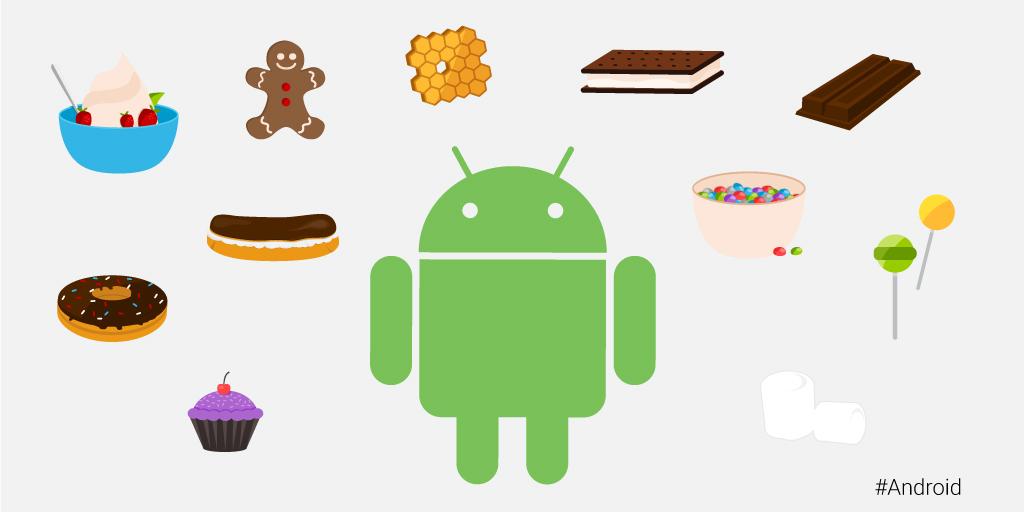
Android is Google’s mobile operating system, launched in September 2008, although its history technically began with the release of the Android alpha in November 2007. To this day, Android powers the majority of the world’s smartphones and comes in several different flavors across many phone makers.

What is Android?

Android Inc.

Android, before it was Android, was a company called Android Inc. That company was founded in Palo Alto, California, in 2003 by a crew of four: Andy Rubin, Rich Miner, Nick Sears, and Chris White. The company and its project was acquired by Google in 2005 for a sum of more than $50 million, although the exact number is unknown. The company’s founders joined Google as part of the deal.

In its infancy, Android was an operating system built not for touch screen smartphones like the iPhone, but rather BlackBerry-like devices with physical keyboards. It’s well documented that after Apple shocked the world with the iPhone, ahead of its nearest competition by at least a couple years, Google and Android Inc. had to go back to the drawing board to build something competitive.

Adoption by third-party makers

It didn’t take long after the launch of the iPhone for various manufacturers to enter the market with their alternatives — and Google’s Android immediately became the obvious platform of choice for just about everyone except Microsoft. HTC was the first manufacturer on board, and introduced the T-Mobile G1 running Android in September 2008. Soon after, HTC, Motorola, Samsung, and carriers like Sprint and T-Mobile jumped on board to form the Open Handset Alliance.

Android makers across the world

Iconic Android handsets

There have been thousands of Android phones released since Android’s inception, but some have been more important to the platform’s history than others. There was the original T-Mobile G1, as mentioned, but there was also the HTC One Google Play Edition, Moto G, Samsung Galaxy S4, and others. Some of the most iconic Android handsets include:

  • HTC G1
  • HTC Nexus One
  • Samsung Galaxy S, S2, S3, S4, and their successors
  • HTC Incredible S
  • Samsung Nexus S
  • Samsung Galaxy Nexus
  • Samsung Galaxy Note
  • Nokia 8
  • BlackBerry KeyOne
  • Google Pixel and its successors

In more modern times, there are several Android smartphones makers that popped up across various niches and in several international markets. Huawei is a dominant Android maker in China and many European markets, while Samsung is by far the most popular maker in the United States by far — effectively creating a duopoly with Apple. Today, there are dozens of major device makers contributing to the Android ecosystem.

Full list of Android OEMs

History of major Android versions

Android has seen countless software revisions over the course of its life, but in modern times the OS usually sees a major release on an annual cadence. In the earlier days, Google famously gave its major software releases dessert-themed codenames, but retired that practice in 2019 with the release of Android 10.

VersionNameReleaseDevices
2.3GingerbreadFebruary 9, 2011Nexus S
4.0Ice Cream SandwichOctober 19, 2011Galaxy Nexus
4.1Jelly BeanJuly 9, 2012Nexus 7
4.2Jelly BeanNovember 13, 2012Nexus 4, 10
4.3Jelly BeanJuly 24, 2013Nexus 7 (2013)
4.4KitKatOctober 31, 2013Nexus 5
5.0LollipopNovember 3, 2014Nexus 6, 9
5.1LollipopMarch 9, 2015Android One
6.0MarshmallowOctober 5, 2015Nexus 5X, 6P
7.0NougatAugust 22, 2016Nexus 5X, 6P
7.1NougatOctober 4, 2016Pixel, Pixel XL
8.0OreoAugust 21, 2017Pixel, Pixel XL
8.1OreoDecember 5, 2017Pixel, Pixel XL
9PieAugust 6, 2018Pixel 2, Pixel 2 XL
1010September 3, 2019Pixel 3, 3a
1111September 8, 2020Pixel 4

List of major Android OS platforms

While Android proper is certainly the most widespread of Google’s Android operating systems, the company has also launched many offshoots of the main OS over the years. There’s Android Auto, Android Wear (now Wear OS), Android TV (now rebranded to Google TV), as well as versions of Android built for tablets and Android Things (now defunct).

Amazon Alexa can control Sony’s Android TVs before Google Home can

One of Google Home’s best features is the ability to throw content from Netflix and YouTube to Google Cast devices, and Amazon is finally catching up in this department. After introducing Alexa control for the Fire TV last week, Sony has revealed that users will be able to use their Amazon Alexa devices to control the company’s Android TVs, something Google Home cannot yet do.


Expand
Expanding
Close

Is the lack of a fingerprint sensor a deal breaker when purchasing a new smartphone? [Poll]

We published our full review of the Sony Xperia XZ Premium this morning (you can go check it out here) and one of the handset’s biggest flaws is the fact that the device, just like pretty much any Sony smartphone in the U.S., doesn’t come with the fingerprint sensor activated.

When it comes to purchasing a new smartphone, especially in 2017, do you expect it to come with a fingerprint sensor?


Expand
Expanding
Close

Qualcomm’s aptX Bluetooth streaming won’t work on Nexus 5X and 6P, Google confirms

nexus 6p lawsuit

As we mentioned back in March, the forthcoming major release of Android (that being O, or 8.0) is bringing support for Qualcomm’s aptX and aptX HD Bluetooth streaming protocols. It’s still not clear exactly which devices will be supporting the feature, but now we have a couple (made by Google, no less) that are confirmed to be missing out: Nexus 5X and 6P…


Expand
Expanding
Close

Google Play Music making New Release Radio available to all

Google Play Music New Release Radio

When the Galaxy S8 and S8+ were unveiled, Samsung and Google announced a partnership that would give new owners of the handsets several exclusive Play Music features. One of which was a new radio station called New Release that was updated daily with new songs, curated by your music tastes. Starting this week, anyone can listen to New Release Radio without having Galaxy S8…


Expand
Expanding
Close

Review: Sony Xperia XZ Premium has a display as crisp as the bills it’ll cost you [Video]

Sony has never had a strong presence in the Western smartphone market, but that doesn’t mean its phones aren’t worth your time. The Japanese company was one of the first to introduce water resistance on a smartphone, as well as a two-stage camera button (at least on the Android front), and now it’s the first and only manufacturer with a 4K phone.

These days, 1080p is still perfectly fine for the vast majority of users, and a lot of people can’t even tell the difference between 1080p and QHD on such a small screen anyway. So why is Sony cramming even more pixels into its latest superphone? Well, simply put, because it can.


Expand
Expanding
Close

Would you buy a smartphone or tablet with microUSB in 2017? [Poll]

Back at CES in January, Honor announced their latest smartphone called the Honor 6X. To keep the mid-tier phone’s price low, the company unveiled that the handset would be sticking with the outgoing microUSB port instead of USB-C. This was met with complaints, mainly because almost every other phone being announced at the show was no longer using the “outdated” port.

Now that it’s 2017, would you ever purchase a smartphone or tablet that still used microUSB?


Expand
Expanding
Close

Based on today’s leaks, what Pixel XL 2 feature are you looking forward to most? [Poll]

This morning images leaked that showed what were supposedly cases for the upcoming Google Pixel 2 and Pixel XL 2. While it is possible that they are real, there were more than a few aspects that made it seem otherwise. Then, several hours later, a render of the Pixel XL 2 leaked, and with it, the confirmation of some the smartphone’s rumored details.

Now that we have seen the cases and the leaked render, what feature of the Pixel XL 2 are you most excited for?


Expand
Expanding
Close

Android has a hidden ‘panic detection mode’ designed to protect users from rogue apps

Android is a pretty secure OS for the most part which Google is constantly working to make more secure, but it still faces issues with malware. Even applications downloaded from the Play Store can go rogue, taking over a user’s entire device. In the background, Google has quietly introduced a “panic mode” that helps protect users from situations like these.


Expand
Expanding
Close

BlackBerry says it has already put measures in place to fix the Keyone’s display

I’ll be the first to admit that the BlackBerry Keyone isn’t for everyone, but it’s a phone I quite enjoy using. It’s not without flaws, though. The hardware may be stellar, but it was recently discovered that TCL wasn’t applying proper adhesives behind the display. The other day, BlackBerry confirmed that measures have been put in place to fix that.


Expand
Expanding
Close