Abner Li has worked at 9to5Google since 2015 and in late 2020 took on the role of editor-in-chief. He is keenly focused on tracking what happens at Google, and is often the first to spot new features in Google’s ever-growing family of applications that are updated on a daily basis, including Search, Assistant, Maps, Workspace, Android, Chrome/OS, Wear OS, and YouTube Music.
To him, what Google does greatly impacts the technology space and modern life. Inside the company, he is particularly interested in the key products mentioned above, as well as services like Google Podcasts and Google Lens. Each are massive platforms that can be unwieldy to grasp, with Abner keenly bent on understanding their philosophy and future direction. He is most excited about Google’s plans for augmented reality glasses.
Abner spearheads the APK Insight program at 9to5Google to chronicle all changes in the company’s Android apps, often finding new features before they are officially announced. This includes redesigns and revamps, launches, and new products.
Google Clock 7.6 fully rolled out with Pixel Watch alarm sync this week, and now the weather integration is seeing wider — but not full — availability on the Pixel 8 series and Android 14 QPR1.
We’ve been tracking a big redesign of the voice recorder UI in Google Messages over the past few months, and it now appears to be rolling out for the first users.
Google today detailed its research into audioplethysmography (APG) that adds heart rate sensing capabilities to active noise canceling (ANC) headphones and earbuds “with a simple software upgrade.”
Large language models (LLMs) aren’t instantaneous, so there’s a delay between prompt and answer. Google is now making Bard feel faster with a “respond in real time” option.
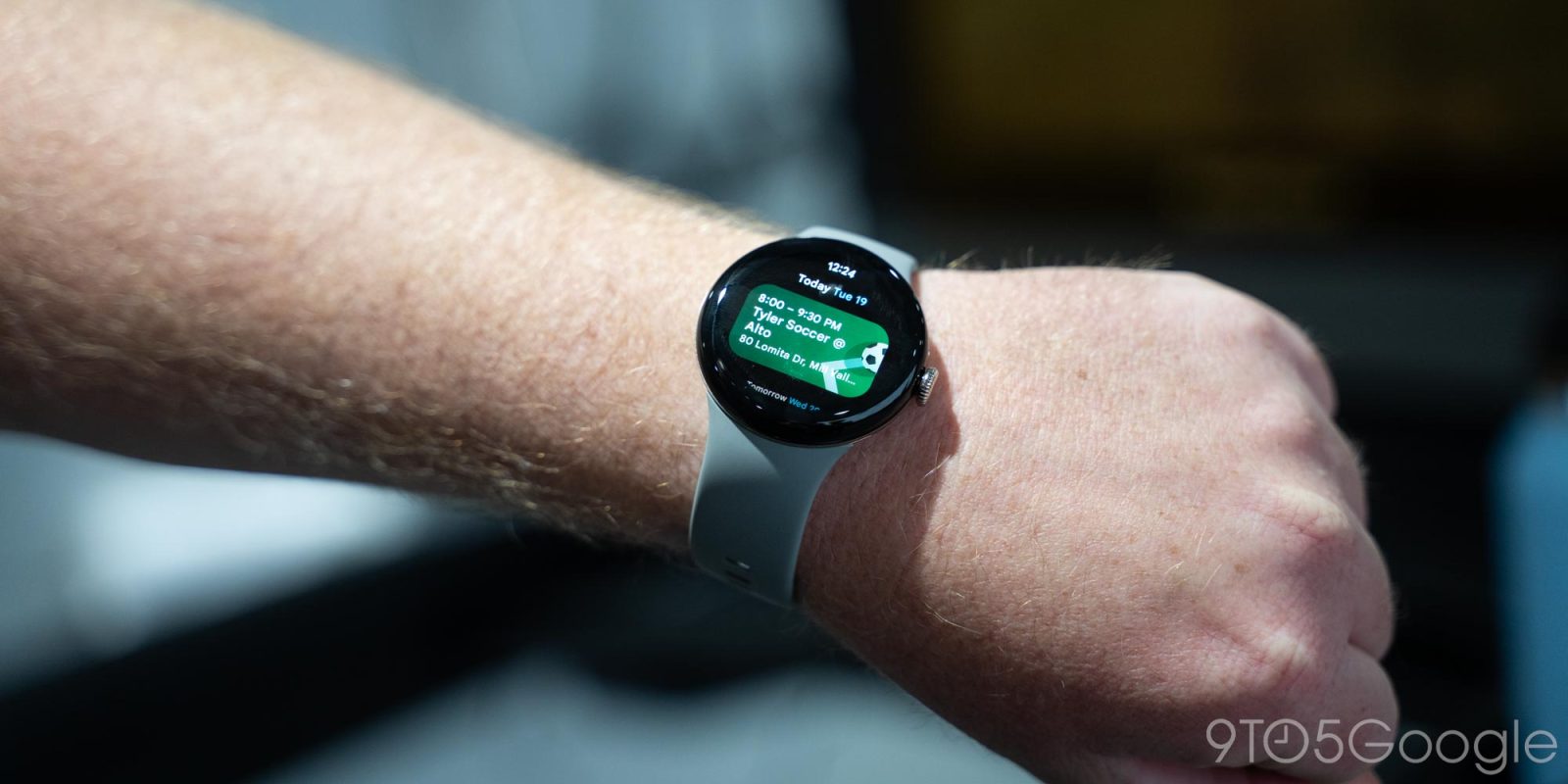
Since the addition of Gmail and Google Calendar, I’ve been using my Pixel Watch (2) so much more to triage and take other quick actions, such as marking off completed Tasks. I’m finding that my biggest entry point into the apps are their excellent Tiles. There are a good number of first-party apps available today, but I believe a few more should come over to Wear OS sooner than later.
Recognizing the increase in open-loop payment systems that let you pay for transit with any card, Google Wallet is getting updated to better support this approach.
Back in May, Uber announced a multiyear strategic partnership to make Waymo robotaxis available in its app, and that’s now happening in Phoenix, Arizona.
One of the buttons in the toolbar of Gmail’s compose window opens an emoji picker that Google is now modernizing with a “more complete emoji selection.”
Google is updating its Search Generative Experience (SGE) with an AI image generator, as well as text generation. The idea is to let you get things done right from Google Search.
Google Fiber previously said that it wanted to eventually offer 100 Gig internet, and it’s now working towards that with residential 20 Gig + Wi-Fi 7 by year’s end.
Recently, I’ve been using Google News a bit more because of the customizable Following tab that feels like a cross between Google Reader of old and today’s Google Discover.
Today, Qualcomm announced the Snapdragon 8 Gen 3 with a big on-device generative AI focus for the upcoming generation of Android phones. The company also shared “Snapdragon Seamless” as a means to build more cross-device experiences.
Gmail for Android and iOS is changing how you initiate Duet AI’s “Help me write” capability, while Google might be expanding it with “voice compose” in the future.
Google Photos is using AI to let you quickly create topical “Highlight videos” on Android and iOS. It’s meant to replace the previous “Movie” maker functionality.
YouTube Music announced today that it’s adding generative AI to let users create custom playlist art, while it made official the “Speed dial” redesign.