Stay up to date on news from Google headquarters. Be the first to learn about plans for Android, Google Plus, Google Apps, and more!
Stay up to date on news from Google headquarters. Be the first to learn about plans for Android, Google Plus, Google Apps, and more!

The companion app to Google’s $35 Chromecast dongle received an update today with a handful of improvements and changes. Bumping the app to version 1.11.4116, the update brings several interface tweaks. First off, the devices view of the app has been redesigned with a card-like interface. The devices screen also now lists what backdrop is currently being displayed along with casting status.

Following the recent rebrand of Google’s Webmaster Tools to “Search Console,” the Mountain View company has now announced that it is introducing new reports to help app developers get better insight into how their indexed Android app is performing in search…
Expand
Expanding
Close
While Google’s ad business is definitely in a transition phase, largely due to the shift away from personal computers towards mobile handsets, Google’s Senior Vice President of Ads & Commerce Sridhar Ramaswamy says that the company is handling this move well. Selling ads to advertisers may be harder with more of those ads ending up on mobile devices with smaller screens than notebooks and desktops, meaning more difficulty for customers to complete purchases, but Google is definitely taking steps toward slowing the rapid decline in ad prices.
According to a recent report from The Wall Street Journal, while Google is making several moves to make advertising more valuable, the market’s more recent move to larger-screened devices has helped significantly…
Expand
Expanding
Close
Earlier this month, Google began sending the first invites to users for its Project Fi wireless carrier initiative. Users receiving invites have been rare so far and this evening Google sent an update email to those who requested an invite at launch. Unfortunately, the email being sent to users today doesn’t include an invite, but rather only an update on the process of the rollout.
Google today updated its Hangouts Chrome app with an entirely new interface. Perhaps more notably than that, the app has support for Mac OS X users in addition to the trio of Windows, Linux, and Chrome OS. The UI has been refreshed to be more similar to the Android version of the app, a trend that has been increasingly common for Google services over the past few months.
Earlier this week, users discovered an issue with Google Maps that centered around typing in a racial slur and being directed to The White House. This evening, Google has issued an apology on its official Maps blog. The company says that it is “deeply upset” by the issue and is currently in the process of fixing it.

Have you ever seen a product or service in a YouTube video ad and wished it were easier to learn more or purchase it? Me neither, but Google believes its new TrueView for shopping ad format will result in stronger results for advertisers looking to drive increased interest and sales.
Expand
Expanding
Close


Gartner today released the results of a report finding that Chromebooks in 2015 have continued to see double-digit year-over-year growth for Google with education still as the primary market for browser-based computers. 7.3 million Chromebook units are expected to be sold in 2015, a 27 percent increase over 2014, while 72 percent of those sales are expected to be from the education sector.
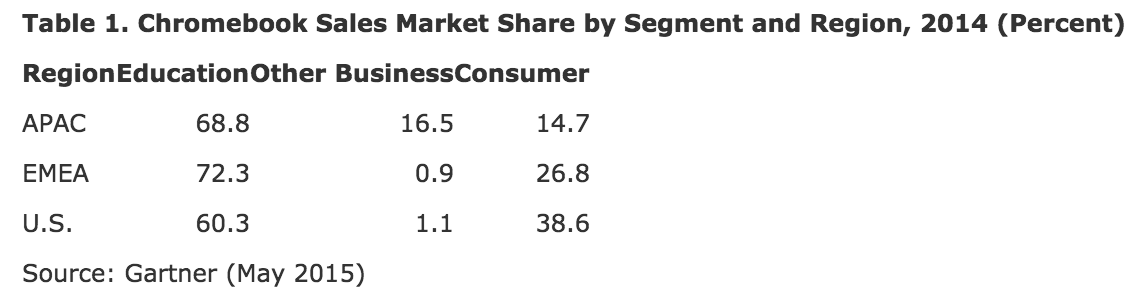
In the above chart breaking down Chromebook sales for 2014 by region and segment, you can see education held the lion’s share in all the major markets Google sells to, with consumer sales coming in second, and sales to the business segment trailing far behind – save for in Asia Pacific, where those latter two are reversed.
Expand
Expanding
Close

A multinational government group known as the Five Eyes intelligence alliance – the spy group comprising Canada, the U.S., Britain, Australia and New Zealand – planned to hack Android phones by compromising both Google and Samsung app stores. The plan was revealed in newly-released Snowden files dating back to 2012, reports CBC News.
Five Eyes specifically sought ways to find and hijack data links to servers used by Google and Samsung’s mobile app stores [trying] to find ways to implant spyware on smartphones by intercepting the transmissions sent when downloading or updating apps.
The alliance planned to begin by analyzing traffic to the stores to identify the Internet usage habits of targets (such as which apps they used), but the ultimate goal was to plant spyware that would enable them to extract data from targeted smartphones, or even to take control of them …
Expand
Expanding
Close
Google announced today in a blog post that it is renaming its popular Google Webmaster Tools service to Google Search Console after nearly 10 years of existence. Aside from the different name, no other changes are being made to Google Search Console. Google, of course, updates the service with new features on a regular basis, though.
“Adblockers,” browser tools which work to hide ads from the web browsing experience, are a controversial topic of discussion among those in the media industry. And for good reason, as the media industry as a whole is in the midst of a large shift from creating content for – and earning a vast majority of revenue from – the print and desktop mediums, where large boxy ads have long reigned king. But when we talk about adblockers, the one tool we’re all probably referring to, the one which has become synonymous with the term, is Adblock Plus (ABP), and the company behind it has released a dedicated browser for Android…
Marissa Mayer, current CEO of Yahoo and former executive at Google, received some important advice from Google founder Sergey Brin as she walked out the door to join the Sunnyvale, California company in July, 2012.
While she tends to be more iterative and careful when it comes to making decisions, long-time friend and colleague Sergey wanted to remind her that there’s also value in being bold.
“As an engineer, my tendency is to be more conservative—to be more iterative. Even on innovation, I would rather bring out an early product and slowly make it better,” she told Fortune in a recent interview.
“Right as I left, I had my hand on the door. I said “Sergey, it’s time for me to go. I gotta go.” And I had my hand on the door, and he said “Marissa, wait.” And I turned around, and he looked at me and said, “Don’t forget to be bold.””
Mayer says that this encounter has helped her make what she hopes will be truly transformational decisions at Yahoo. Especially in those big decision moments, like deciding to acquire Tumblr, she said that she hears these words replaying in her head every day.
Watch the full video interview below:
[protected-iframe id=”e62d55c2007b14be4756a10914299018-22427743-37434152″ info=”http://c.brightcove.com/services/viewer/federated_f9?isVid=1&isUI=1″ width=”480″ height=”270″]
According to sources for Bloomberg, Google is set to announce an “an online picture sharing and storage service” separate of Google+. This isn’t exactly groundbreaking news, but it’s further confirmation of something we’ve been hearing about since as far back as August of last year.
Google Inc. is set to reveal an online picture sharing and storage service that will no longer be part of the Google+ social network, people familiar with the plans said.
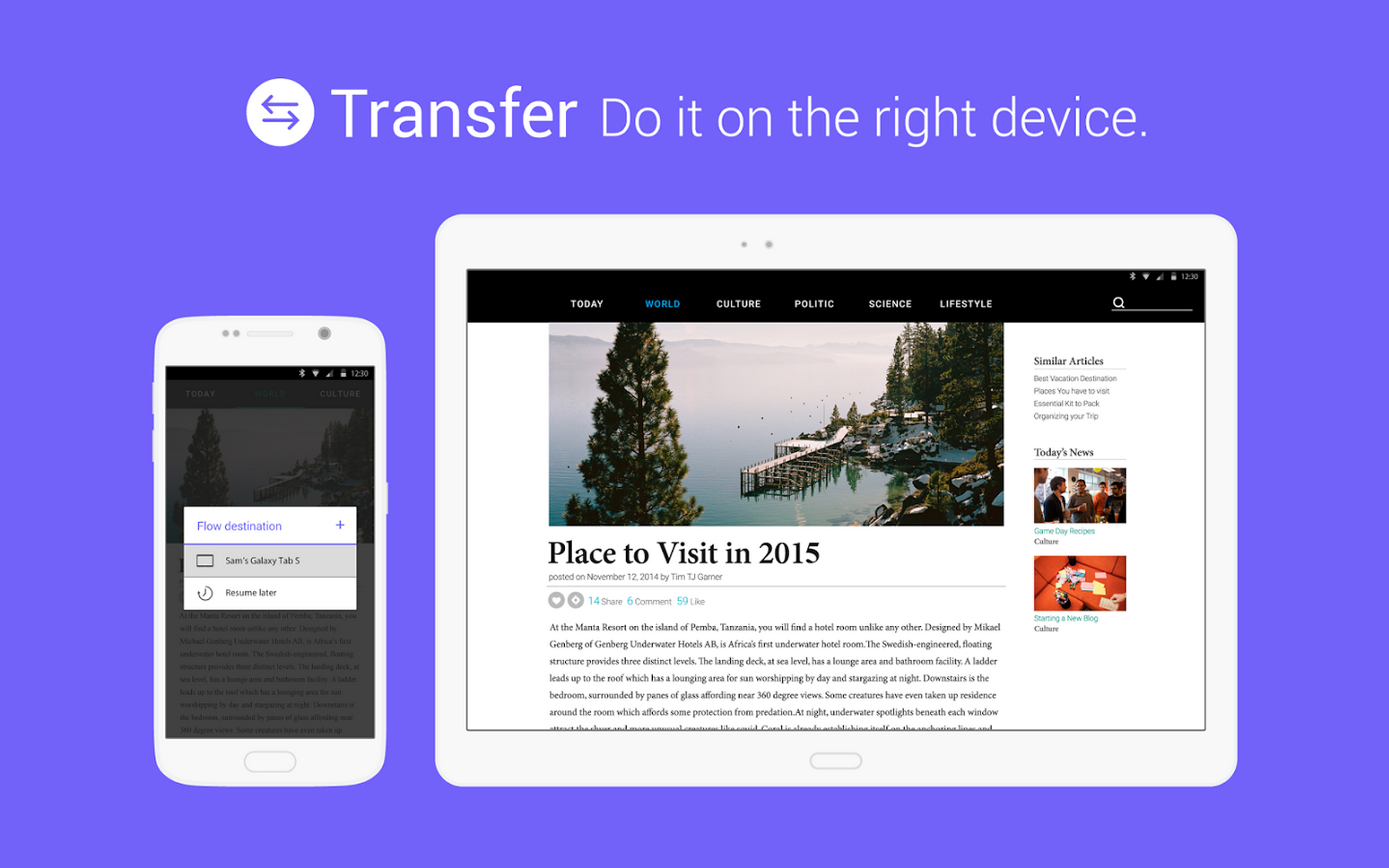
Late last year Samsung used a punchy video on YouTube to introduce a new platform “that allows users to seamlessly transition their activities across their devices.” They called it Samsung Flow, and today it has finally become available in the Google Play Store with the “beta” moniker slapped to the end of its name.
Google’s family-friendly YouTube Kids app has been hit with a second complaint to the Federal Trade Commission, this time accusing it of containing inappropriate content, including sexually-explicit language and “jokes about pedophilia.” This follows a complaint last month that the app was “deceptive to children” in the way it mixed ads into the programming.
The WSJ reports that the complaint was sent by the Campaign for a Commercial-Free Childhood and the Center for Digital Democracy.
Examples of what the non-profit groups found include: explicit sexual language in cartoons; jokes about pedophilia and drug use; activities such as juggling knives, tasting battery acid, and making a noose; and adult discussions about family violence, pornography, and child suicide.
The group created a video (below) illustrating the inappropriate content found …
Expand
Expanding
Close
Rumors that Google has big plans for virtual reality seem to be gathering pace. After yesterday learning that the lead designer of Google Search is now heading up Google Cardboard, another engineer believed to be working on the projected has hinted at an announcement at Google I/O …
Expand
Expanding
Close
Google and Apple have co-signed a letter calling on President Obama to reject any government proposal to allow the government backdoor access to encrypted data on smartphones and other devices. The Washington Post says the letter, due to be delivered today, is signed by more than 140 tech companies, prominent technologists and civil society groups.
The signatories urge Obama to follow the group’s unanimous recommendation that the government should “fully support and not undermine efforts to create encryption standards” and not “in any way subvert, undermine, weaken or make vulnerable” commercial software.
The FBI has been pushing increasingly hard to require tech companies to build in backdoor access to their encryption systems to allow access by law enforcement, even going so far as to say that Apple could be responsible for the death of a child. a NY District Attorney has also cited public safety as justification for demanding access to encrypted data.
The letter calling on Obama to reject this argument is also signed by five members of a presidential review group appointed by Obama in 2013 to assess technology policies in the wake of leaks by former intelligence contractor Edward Snowden.
Many in the tech industry have pointed out that, aside from the obvious concerns over government intrusion into the private lives of its citizens, any backdoor used by the government could potentially be discovered and exploited by hackers and foreign governments.
via <a href="http://www.androidpolice.com/2015/05/18/google-app-v4-6-enables-translucent-status-and-navigation-bars-for-google-now-screen-on-custom-launchers-apk-download/">Android Police</a>
With Google I/O right around the corner, the company is prepping its apps with minor updates ahead of the expected larger changes to come later this month. This evening, the Google App on Android received a minor update with a few visual changes. For users of custom launchers, the update enables full screen mode for Google Now.
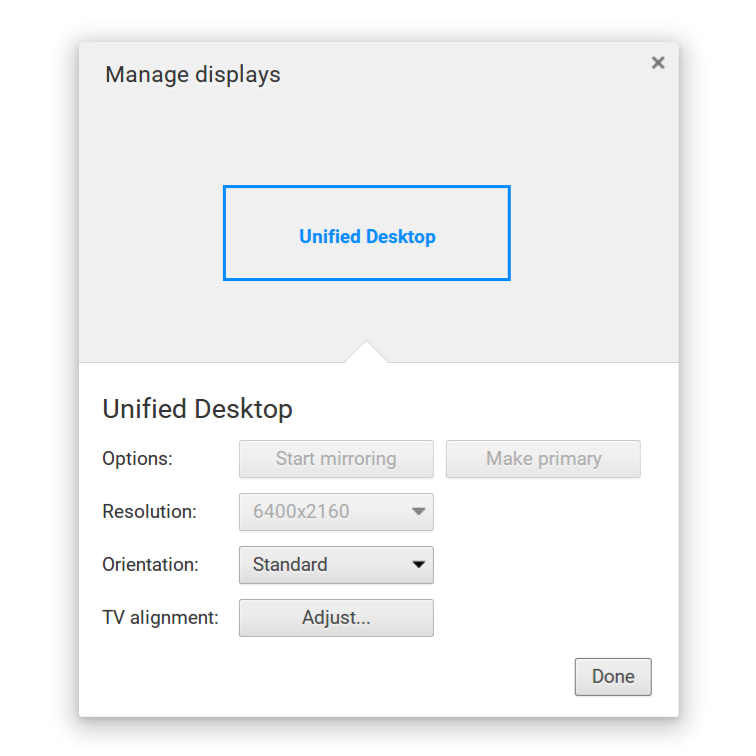
In a Google+ post today by François Beaufort of the Chrome team, Beaufort mentioned the introduction of a long-needed feature to the Chrome OS development channel which allows a window to span multiple displays. The new feature is called “Unified desktop mode” and can be enabled by simply visiting chrome://flags/#ash-enable-unified-desktop if you’re running the newest dev channel version of the browser-based OS.
One example he provides for how this might be useful is that those using Citrix Receiver for Chrome—which allows its users to create and use virtual machines of Windows over the Internet—can now run a multi-display setup of Windows right from their Chromebook. For those who want a simple, easy-to-use computer but might need to use Windows periodically for one or two specific applications, this will be a huge boon and make the Chromebook that much more versatile.
Head over to Google’s Chrome OS channel support page to learn how to switch your instance of Chrome OS to the Dev channel. Bugs and issues with Unified desktop mode can be reported to the Chrome team by pressing <Alt> + <Shift> + i.
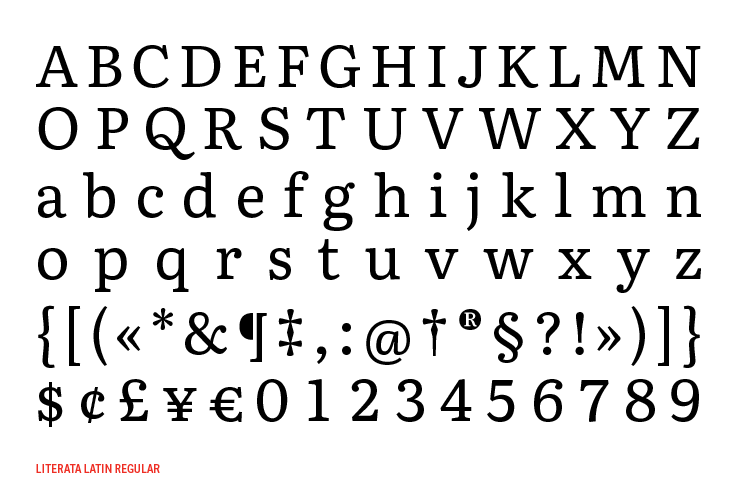
Google today introduced its new default font family for Google Play Books, tweeting to show off the new typeface and saying that it’s “perfect for long reads on all devices.”
Introducing Google Play Books' new font, Literata. Perfect for long reads on all devices. https://t.co/VQfT6oZvVU pic.twitter.com/eF3B1MJpkX
— Google Play (@GooglePlay) May 18, 2015
The new typeface default was actually included in Play Books version 3.4.5, released May 6th, alongside a new card-based interface for text translation and the ability to create notes in book samples. This, however, is the first time that Google has drawn any attention to the new font which replaces Droid Serif as the default.
The company commissioned the font from Type Together, a firm focused on creating new type designs tailored for corporate use. The group often works alongside companies like Google, and here’s what the design firm said about the challenge designing for digital books:
A new book typeface was needed that would provide an outstanding reading experience on a whole range of devices and high resolution screens running different rendering technologies. Additionally, the new Play Books type is meant to establish a recognisable visual identity for Google’s native eBook App and stylistically distinguish itself from other eReader competitors.
The electronic or digital book represents one of the most important challenge designers and developers face today. The technical limitations of devices regarding rendering of type, together with their variety of physical sizes, are only two of the main obstacles eBooks have to tackle. These facts contribute to an unfair yet appropriate comparison with their analog counterpart, where typography plays a leading role. The Play Books project offered an opportunity to approach some of these problems from a new perspective.
And further, how they arrived at the style they chose:
TypeTogether’s counterpart team at Google, lead by senior UX designer Addy Lee Beavers, agreed that the desired typeface should have a more interesting and varied texture than other fonts being used in eBooks or ones generally developed for on-screen use. This could be achieved by means of slanted stress, less mechanic letter structure and varied horizontal proportions of characters. Based on these premises and on an intensive iterative process, TypeTogether arrived at a solution of hybridisation taking inspiration from both Scotch and old-style Roman types. The resulting letterforms create a pleasant organic texture that helps to deliver very good results for ease of reading and comfort.
Literata most notably has a lower x-height and higher ascenders than Droid Serif, and features two different weights and matching italics. It includes PanEuropean language support—meaning that Western, Central, and Eastern European languages are all included—as well as type for full Latin extended, Polytonic Greek, and Cyrillic.
Type Together has made more pictures of the typeface available on Flickr.
Google’s initial play with virtual reality couldn’t possibly have been any more basic: the company’s first headset was quite literally made from cardboard. But suggestions that the company is more serious about VR than Google Cardboard have been backed by a high-profile exec change within the company spotted by Fast Company.
Jon Wiley, the lead designer of Google Search, has transitioned to become lead designer of Google Cardboard […] Wiley’s Twitter profile reflects his new position, and Google confirmed the move, but declined to share details as to when or why it occurred, or who will replace Wiley in his former role. What’s clear is that Google has invested a major design talent in VR.
The WSJ reported in March that Google was working on a new project to build a VR platform based on the Android operating system which would be free for hardware manufacturers, and Google last month announced a ‘Works with Google Cardboard‘ program to unify third-party viewers …
Expand
Expanding
Close
Google has today announced big price drops for all Google Compute Engine Instance types, following the Moore’s law pricing philosophy that the company committed to last year. Effective today, the prices of virtual machines through Google Cloud Platform are dropping up to 30%, and Google is also introducing a new class of preemptible virtual machines that could bring prices even lower in some cases…
Google may have grown increasingly corporate over the years, but I love the fact that it still sets out to do cool things just because it can. Working with the University of Washington, the team found a way to create fully automated timelapse photos of both landscapes and cityscapes using photos pulled in from popular photo-sharing sites like Yahoo’s Flickr and its own Picasa.
First, we cluster 86 million photos into landmarks and popular viewpoints. Then, we sort the photos by date and warp each photo onto a common viewpoint. Finally, we stabilize the appearance of the sequence to compensate for lighting effects and minimize flicker.
The team says that the results are not just fun to watch, but also serve a useful purpose …
Expand
Expanding
Close
Old on the left, new on the right
It appears that Google is testing a new design for the header of its mobile search website, featuring a much more spread-out interface including a larger text entry box, navigation tabs, and Google logo. The size and placement of the actual search results seem to be identical, however…