Chrome OS testing a smaller, more compact shelf design [Gallery]

In the latest Chrome OS Canary, Google is testing a smaller design for the Chrome OS shelf and its app icons, currently hidden behind a new flag.

Kyle Bradshaw joined 9to5Google in 2018 with a special interest in Google’s Fuchsia OS, rooted in his experience of being the first to offer a visual preview of the revolutionary design of the in-development operating system. Since then, his attention has broadened to include the secrets hidden within other areas of Google’s public codebases.
By reading the public Fuchsia code, Kyle was able to prove the existence of the Nest Mini and the Nest Hub Max months ahead of their respective announcements. With evidence from Chromium, he reported on Google’s since-canceled efforts to create an offshoot of Android designed for “touchless” feature phones.
In 2018, Kyle reported on three distinct Made by Google Chromebooks in development, the Pixel Slate, the Pixelbook Go — a full year before its release — and “Meowth,” the original version of the Pixel Slate that was canceled due to Intel’s delays that year. For ChromeOS itself, Kyle was the first to demonstrate the upcoming light theme redesign in action.
Looking at the early evidence of the Pixel 5’s specs, Kyle accurately predicted in February 2020 that the Pixel 5 might not be a traditional “flagship” phone. In 2021, he reported that Google’s next headset would be the “Pixel Buds A.”
Kyle was the first to report that the Pixel 6 would mark the debut of Google’s in-house processors, later revealed to be the Tensor chips.
Kyle contributes to the APK Insight column at 9to5Google, discovering the hidden changes in Google’s apps. These efforts have revealed hotly anticipated features, details about upcoming devices, and unexpected connections between companies.
He can be reached for tips or just friendly chat by Threads, Mastodon, Bluesky, or email. If you’re looking for his other works or side projects, head over to Kyle’s personal portfolio.

In the latest Chrome OS Canary, Google is testing a smaller design for the Chrome OS shelf and its app icons, currently hidden behind a new flag.

Over the past few weeks, details have slowly been leaking out about a Chromebook codenamed “Atlas,” which we believe to be the next iteration of Made by Google Chrome OS hardware. We’ve now uncovered Geekbench benchmarks for Atlas, showing that the Pixelbook 2 candidate’s underlying hardware will be almost identical to that of the Pixel Slate.
Since the advent of Linux apps on Chrome OS, what makes a device one of the best Chromebooks on the market has been changing. Now, more than ever, performance matters, and OEMs like Acer are beginning to meet the demand by bumping up specs across the board. Today, Acer has posted specs for a souped-up version of their Chromebook Spin 13 with a top-of-the-line Intel i7 processor.
A new device has been submitted for FCC certification today, having many of the hallmarks of a Made by Google Chromebook, further hinting at the arrival of a Pixelbook successor this year.
When Google rolled out Android Q beta to the first — and so far only — wave of non-Pixel phones, there were companies who were left out of the action. General Mobile, an OEM based out of Turkey, was among these, but they decided to take matters into their own hands by using an Android Q build from the developer community.
For years, it was possible for web developers to use a simple trick to detect whether someone was browsing from Chrome’s Incognito Mode. As of Chrome version 76, Google has made this detection method cease to function, providing better anonymity to Incognito Mode. Before Chrome 76 could even release, however, a security researcher has discovered another way to reliably detect Incognito Mode.
As Chromebooks and Chrome OS tablets have become more popular, there’s been a higher demand for accessories that are specific to the keyboard layouts on these devices. Following the lead of Brydge and Belkin, Logitech is reportedly joining in the Chrome OS keyboard game with the yet-to-be-announced K580 keyboard.
In this week’s top stories: the Google Pixel 4 is spotted on the London Underground, Google Fi takes a steep discount off the Pixel 3, Google intends to kill the AdSense app on Android and iOS, and more.
Earlier this week, a redditor reported, as spotted by Android Police, that the Android Auto app disappeared from their app drawer since updating to Android Q Beta 5. Realizing that something was up, our APK Insight team dug in a little deeper and learned why.
We’ve all known since the phone launched that the Pixel 3a can take pictures almost exactly as well as the Pixel 3, but sometimes it’s nice to numerically measure and confirm that fact. This morning, DxOMark released their review of the Google Pixel 3a’s camera, allowing us to directly compare the two devices.
While Google shared a great deal about their upcoming game streaming service at the Stadia Connect last month, many still had outstanding queries. Earlier today, Google Stadia’s director of product, Andrey Doronichev, took to Reddit to answer all of our burning questions. Thanks to this rapid-fire Q&A session, we now know a good bit more about the nitty-gritty details of Google Stadia, such as how Stadia Pro’s free games actually work — it’s not like Netflix — and when we should expect the next Stadia Connect.
For the past few months, we’ve been tracking developments in Chrome that point to Android becoming a competitor to KaiOS by entering the feature phone market. Today, the first purported image of an Android feature phone has come to light, with Nokia stylings.
Mobile payment is one of today’s best modern conveniences. But before services like Google Pay can support your credit or debit card, they need to come to an agreement with your bank or credit union. For the month of July, Google Pay has introduced support for cards from a new set of 26 banks in the United States.
Google Chrome has long offered a variety of customization options, but now they’re pushing to make it easier than ever. The latest Google Chrome Canary adds twenty built-in themes and some customization options for the New Tab Page.
Google has slowly been improving its Digital Wellbeing initiative by adding new features and rolling it out to non-Pixel devices. The latest improvement, seen in the beta version of the app, connects Digital Wellbeing to Family Link parental controls.
Yesterday, Qualcomm made some waves by announcing the Snapdragon 855 Plus, a decent performance upgrade to the chip found in most of this year’s flagship phones. With the announcement of the Samsung Galaxy Note 10 on the horizon, some had suspected that Samsung’s latest would feature the Snapdragon 855 Plus. However, it appears this will not be the case.
Google took the lid off their Stadia game streaming service last month at the first Stadia Connect, just before E3. However, many were still left with unanswered questions. This week, Google is hosting a Stadia AMA (Ask Me Anything) on Reddit to help satisfy our curiosity.
Since the original Pixel, Google’s phones have been exclusive to Verizon, but as you would expect, unlocked devices typically work just fine on other carriers. Now, months after the launch of the Google Pixel 3 and Pixel 3 XL, users who brought their phones to AT&T are beginning to have issues staying connected to the carrier’s LTE network.
Android Q is poised to bring a vast swath of smaller quality-of-life changes to our phones. The latest change discovered in a leaked release of Android Q is that Google Translate is being directly integrated with the Recents view, via the Pixel Launcher.
In this week’s top stories: Google launches a beta version of their Messages app on Android, the Pixel 3 gets a steep discount from the Google Store, Nest discontinues its Wear OS and Apple Watch support, and more.
In the past few months, especially during Google I/O, we’ve learned a great deal about Google’s Fuchsia OS and the types of devices it’s currently expected to run on. While Hiroshi Lockheimer urged fans to consider the possibility that Fuchsia may not necessarily be for smartphones, new evidence has come to light indicating that the Fuchsia team is working to support the Snapdragon 835 processor, found in phones like the Google Pixel 2.
Android Q Beta 5 rolled out to devices today via OTA updates on beta-enrolled Pixel phones. It seems an issue has cropped up for a number of users, and Google has subsequently announced that the OTA update rollout of Android Q Beta 5 has been temporarily stopped.
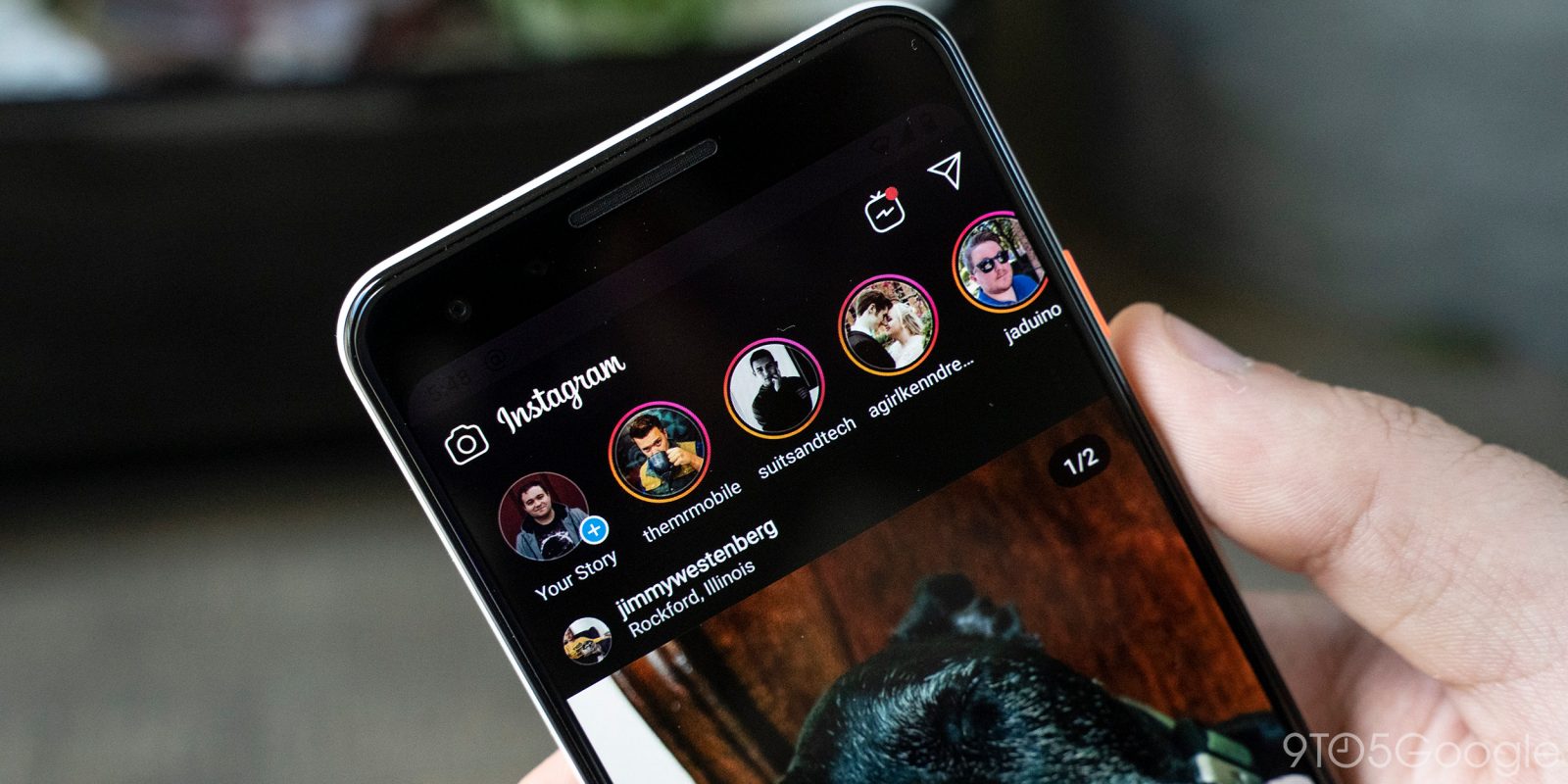
The two largest goals of Android Q are to bring gesture navigation to Android and make dark mode more prominent. One way that early Android Q betas let you make things easier on the eyes was to “force” apps into using dark mode, and now Beta 5 is bringing back the dark mode override.
Expand Expanding Close
After four fairly eventful releases, Android Q Beta 5 primarily consists of smaller, iterative changes. One of these, instead of adding a new feature, actually turns an older feature off by default. As of Android Q Beta 5, notification snoozing has a new toggle in the Settings app that defaults to “off.”