Android

See All Stories

Breaking news for Android. Get the latest on apps, carriers, devices, and more!
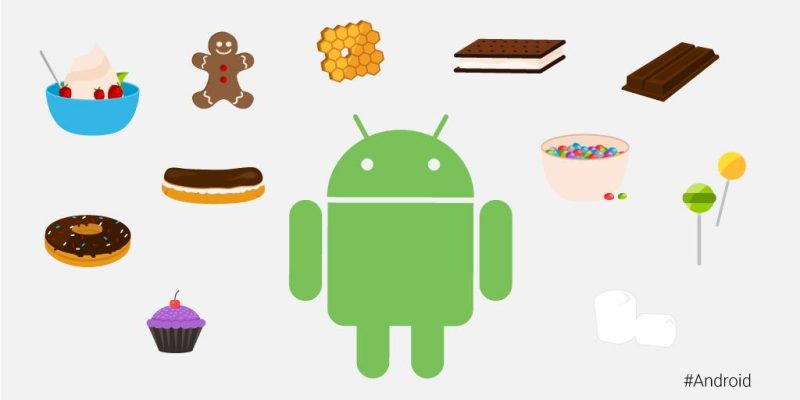
Android is Google’s mobile operating system, launched in September 2008, although its history technically began with the release of the Android alpha in November 2007. To this day, Android powers the majority of the world’s smartphones and comes in several different flavors across many phone makers.

What is Android?

Android Inc.

Android, before it was Android, was a company called Android Inc. That company was founded in Palo Alto, California, in 2003 by a crew of four: Andy Rubin, Rich Miner, Nick Sears, and Chris White. The company and its project was acquired by Google in 2005 for a sum of more than $50 million, although the exact number is unknown. The company’s founders joined Google as part of the deal.

In its infancy, Android was an operating system built not for touch screen smartphones like the iPhone, but rather BlackBerry-like devices with physical keyboards. It’s well documented that after Apple shocked the world with the iPhone, ahead of its nearest competition by at least a couple years, Google and Android Inc. had to go back to the drawing board to build something competitive.

Adoption by third-party makers

It didn’t take long after the launch of the iPhone for various manufacturers to enter the market with their alternatives — and Google’s Android immediately became the obvious platform of choice for just about everyone except Microsoft. HTC was the first manufacturer on board, and introduced the T-Mobile G1 running Android in September 2008. Soon after, HTC, Motorola, Samsung, and carriers like Sprint and T-Mobile jumped on board to form the Open Handset Alliance.

Android makers across the world

Iconic Android handsets

There have been thousands of Android phones released since Android’s inception, but some have been more important to the platform’s history than others. There was the original T-Mobile G1, as mentioned, but there was also the HTC One Google Play Edition, Moto G, Samsung Galaxy S4, and others. Some of the most iconic Android handsets include:

  • HTC G1
  • HTC Nexus One
  • Samsung Galaxy S, S2, S3, S4, and their successors
  • HTC Incredible S
  • Samsung Nexus S
  • Samsung Galaxy Nexus
  • Samsung Galaxy Note
  • Nokia 8
  • BlackBerry KeyOne
  • Google Pixel and its successors

In more modern times, there are several Android smartphones makers that popped up across various niches and in several international markets. Huawei is a dominant Android maker in China and many European markets, while Samsung is by far the most popular maker in the United States by far — effectively creating a duopoly with Apple. Today, there are dozens of major device makers contributing to the Android ecosystem.

Full list of Android OEMs

History of major Android versions

Android has seen countless software revisions over the course of its life, but in modern times the OS usually sees a major release on an annual cadence. In the earlier days, Google famously gave its major software releases dessert-themed codenames, but retired that practice in 2019 with the release of Android 10.

VersionNameReleaseDevices
2.3GingerbreadFebruary 9, 2011Nexus S
4.0Ice Cream SandwichOctober 19, 2011Galaxy Nexus
4.1Jelly BeanJuly 9, 2012Nexus 7
4.2Jelly BeanNovember 13, 2012Nexus 4, 10
4.3Jelly BeanJuly 24, 2013Nexus 7 (2013)
4.4KitKatOctober 31, 2013Nexus 5
5.0LollipopNovember 3, 2014Nexus 6, 9
5.1LollipopMarch 9, 2015Android One
6.0MarshmallowOctober 5, 2015Nexus 5X, 6P
7.0NougatAugust 22, 2016Nexus 5X, 6P
7.1NougatOctober 4, 2016Pixel, Pixel XL
8.0OreoAugust 21, 2017Pixel, Pixel XL
8.1OreoDecember 5, 2017Pixel, Pixel XL
9PieAugust 6, 2018Pixel 2, Pixel 2 XL
1010September 3, 2019Pixel 3, 3a
1111September 8, 2020Pixel 4

List of major Android OS platforms

While Android proper is certainly the most widespread of Google’s Android operating systems, the company has also launched many offshoots of the main OS over the years. There’s Android Auto, Android Wear (now Wear OS), Android TV (now rebranded to Google TV), as well as versions of Android built for tablets and Android Things (now defunct).

Yes, that Huawei-made ‘Nexus’ tablet was cancelled, and that’s probably a good thing

Last year we reported that Google was planning to launch an Android offshoot internally dubbed Andromeda on a Huawei-made Nexus tablet. The device was indeed prototyped in-house, and we weren’t the only ones to hear about it. At this point, though, we’re told “Andromeda” is shelved, and that the tablet will die without ever being seen by the public.

But we couldn’t help but try to dig up some more details before we close the book entirely on this one…


Expand
Expanding
Close

Comment: Google needs to start giving users more control over Android backups

Today, a story from an Android user is making the rounds about how Google unexpectedly killed their device backup with no warning. To be clear, the functionality here is nothing new; Google has had the two-month expiration in place for quite some time.

However, given the backlash by customers who didn’t know it was there is proof enough that it’s time for the company to give us better control over backups.


Expand
Expanding
Close

Exclusive: Bose’s upcoming ‘QuietComfort 35 II’ are a pair of Google Assistant-enabled ‘bisto’ headphones

Update: The video that offered a clear look at the QuietComfort II with Google Assistant was removed from YouTube earlier today.


We’ve learned a great deal about Google’s plans for smart headphones over the last several months through app teardowns, and Google itself slipped-up recently by adding Headphones to its support website (and then quickly removed it). Today, we can confirm that the rumored successor to the Bose QuietComfort 35 will be one of the first pair of headphones to feature the Google Assistant.


Expand
Expanding
Close

Opinion: Apple’s take on the ‘bezel-less’ UI is unintuitive, and Android is far better suited for it

Yesterday Apple announced its latest crop of products, and as has been rumored for quite a while, that included the debut of the iPhone X. The X is the biggest step forward in iPhone design in a long time, but it certainly comes with its fair share of compromises.

One of those is the lack of a fingerprint sensor which, speaking truthfully, is already an absolute deal breaker for me. But there’s also a new way of navigating the phone — mostly through gestures. So far, I think that this may actually end up being the more infuriating move, especially considering what we’ve seen on Android devices using similar designs.


Expand
Expanding
Close

Return of the blobs: Issue tracker response suggests beloved emoji could return… maybe?

Android Oreo brings a lot of good changes to the operating system as a whole, but not everything is a positive change for everyone. Google’s decision to ditch the “blobs” and create a new collection of round emojis saw a lot of backlash from users and the media alike.

Now, some users are requesting that Google gives users the choice to change emojis, and the company is kind of not completely ignoring them… for now.


Expand
Expanding
Close

Which of today’s Apple announcements do you wish would reach Google and Android? [Poll]

Apple wrapped up its annual fall event earlier today and introduced new hardware products, software features, and promotions for some of its services. While some things like wireless charging in the smartphones and 4K streaming boxes aren’t new when compared to the world of Android and Google, Apple did introduce new items that might make outsiders jealous.

What things introduced by Apple today do you wish would either come to Android or Google?


Expand
Expanding
Close

How to unlock your Android device with camera-based face recognition

One of the headlining new features Apple is touting with the announcement of the iPhone X is the facial recognition tech used to unlock the handset. If you’re an Android user and you’re jealous of this feature, you shouldn’t be. While it’s not nearly as advanced (or secure) as the Face ID feature built-in to the iPhone X, Android has had facial recognition technology for some time now…


Expand
Expanding
Close

Apple’s latest iPhone chipset blows away every Android device, and that’s a little depressing

In case you somehow missed it, Apple today took the wraps off of its latest generation of iPhones, including the kind of bezel-less iPhone X. You can find out more about the launch over at 9to5Mac, but there was one interesting thing to note in both the iPhone X and iPhone 8 — their chipset.

Apple’s latest chipset isn’t just beating out the Android competition, but it’s blowing them out of the water, by a lot. At least in benchmarks, that is…


Expand
Expanding
Close

Google confirms Allo and Duo will get proper adaptive icons soon

A few days ago a thread popped up on Reddit regarding app icons, specifically Android Oreo’s ability to put a custom mask on all icons which, in some cases, can result in an adaptive icon that fits the shape it’s given. It’s a cool idea, but it relies on developer support, and Google isn’t doing a great job of setting an example. Now, the lead of Allo and Duo has said they’re taking steps to improve that.


Expand
Expanding
Close

Android Oreo appears to be disabling mobile data on some Pixel and Nexus devices, fix in the works

As with the release of any major operating system upgrade, there are sure to be bugs that pop up from time to time. With Oreo, we’ve already seen an issue that has enabled mobile data use while on Wi-Fi. The latest bug to be reported is one that disables all mobile data usage when a user has reached the end of their data limit, despite some apps’ data being prorated by the carrier…


Expand
Expanding
Close

Qualcomm posts a list of all of the ‘firsts’ Android beat Apple to, but with a hilarious number of mistakes

Google Android

The Android ecosystem includes many devices, so to stand out, companies often take risks with new technologies to get a leg up on the competition — including Apple. Today, just a day before the reveal of Apple’s next generation of iPhones, Qualcomm has posted about Android’s various “firsts,” all “brought to you by Qualcomm.”


Expand
Expanding
Close

Google Play Protect broke Bluetooth on some Motorola devices, but there’s an easy fix

Bluetooth is an important part of just about any phone today with many using it for connecting headphones, syncing with their cars, and using wearables. Needless to say, it’s frustrating when it doesn’t work properly, but even more so when it just stops working. Recently, a few Moto G4 owners discovered an interesting issue with Google Play Protect — it was disabling their Bluetooth functionality.


Expand
Expanding
Close

Essential Phone drop test reveals a shockingly strong ceramic back, but you should definitely buy a screen protector [Video]

Dropping your phone is no fun, especially if it’s vulnerable to breaking, and today’s bezel-less devices are a bit more prone to this than others. However, Essential has been pretty confident in its titanium frame and use of Gorilla Glass 5, to the point that it offers no options for protecting the PH-1. Today one of the first Essential drop tests has been performed, and the results weren’t all that pretty.


Expand
Expanding
Close