Kyle Bradshaw joined 9to5Google in 2018 with a special interest in Google’s Fuchsia OS, rooted in his experience of being the first to offer a visual preview of the revolutionary design of the in-development operating system. Since then, his attention has broadened to include the secrets hidden within other areas of Google’s public codebases.
By reading the public Fuchsia code, Kyle was able to prove the existence of the Nest Mini and the Nest Hub Max months ahead of their respective announcements. With evidence from Chromium, he reported on Google’s since-canceled efforts to create an offshoot of Android designed for “touchless” feature phones.
In 2018, Kyle reported on three distinct Made by Google Chromebooks in development, the Pixel Slate, the Pixelbook Go — a full year before its release — and “Meowth,” the original version of the Pixel Slate that was canceled due to Intel’s delays that year. For ChromeOS itself, Kyle was the first to demonstrate the upcoming light theme redesign in action.
Looking at the early evidence of the Pixel 5’s specs, Kyle accurately predicted in February 2020 that the Pixel 5 might not be a traditional “flagship” phone. In 2021, he reported that Google’s next headset would be the “Pixel Buds A.”
Kyle was the first to report that the Pixel 6 would mark the debut of Google’s in-house processors, later revealed to be the Tensor chips.
He can be reached for tips or just friendly chat by Threads, Mastodon, Bluesky, or email. If you’re looking for his other works or side projects, head over to Kyle’s personal portfolio.
The major theme of Android Q has been crafting dark themed experiences that are easier on the eye than blazing white light. The latest build of Android Q, Beta 5, dropped today and brings dark theme to a new, unexpected location, the Pixel 3 boot animation.
For the last year or so, we’ve been following the development of a Chromebook, codenamed “Atlas,” which has all the normal traits of a Made by Google device. A new image has surfaced of the “Atlas” Chromebook, giving us another preview of what Google may have in store for us later this year.
The Nest Hello doorbell already offers a wide variety of security monitoring tools, but now Google is bringing in more of its camera software prowess. Version 5.37 of the Nest app for Android indicates that the Hello doorbell cam will be getting package delivery and pickup detection.
Over the past few years, Chrome and our Google Accounts have become something of a central storage for secure information like passwords and, most recently, payment info. While it’s fairly easy to add and edit payment information, this hasn’t been the case for passwords saved in Chrome, but that may be changing soon.
In this week’s top stories: a leaked update to the Google Camera app reveals upcoming features and possible features of the Pixel 4, we uncover “Fast Share” an easy way to share things between devices, we get hands-on with RCS as provided by Google Messages, and more.
Since the initial leak of a new version of the Google Camera app, the floodgates have opened, revealing the app’s numerous new features. The latest discovery in the Google Camera app is the possibility that the Pixel 4 may have a rear telephoto lens.
Yesterday, we took a broad strokes look at the new features and changes visible in a build of the Google Camera app we were exclusively able to get our hands on. Under the surface, however, there’s much more to be learned from Google Camera 6.3 about what the company is developing next, including a new “McFly” mode.
Since early this year, we’ve been tracking the development of what appears to be a KaiOS competitor being built within Google using Android and Chrome. We were able to get hands-on with an early build of this “touchless” Chrome to explore Google’s vision for Android-powered feature phones.
In this week’s top stories: Huawei begins rolling out EMUI 9.1 to their phones, RCS arrives in Google Messages for UK and France residents, Chrome OS unveils its upcoming “Release Notes” app, and more.
Chromium development work has commenced on a second Chromebook powered by one of Qualcomm’s Snapdragon processors, under the dragon-related codename “Trogdor.”
As was repeatedly made plain to see during this year’s Google I/O, developers are eager to learn more about Google’s Fuchsia OS. Today, those appetites are beginning to be satisfied thanks to the quiet launch of the official Fuchsia OS developer website, Fuchsia.dev.
When a new phone goes on sale, it’s common practice for the company to offer an incentive for people who pre-order. This same thing is happening for the Sony’s latest flagship the Xperia 1, and Sony is packing a wallop of a pre-order bonus, with their $350 WH1000XM3 headphones.
If you’re a Chromebook fan, you know that Chrome OS is constantly getting updates, but unless you follow a site like ours, you’d be hard pressed to figure out what actually is new in an update. In the near future, Google will provide a useful ‘Release Notes’ web app to better explain what’s new on your Chrome OS device. We’ve got a sneak peek at what it currently looks like.
For the past year, Verizon has been running Visible, an MVNO that offers unlimited calls, texts, and data for a flat monthly rate. The main downside of Visible’s mobile plan—the hard limit on data speed—is being “uncapped,” while also gaining support for the Google Pixel 3a.
If you’ve even casually been keeping up with the news over the past month or so, you’ve likely heard about the troubles Huawei has been facing thanks to sanctions placed on the company by the US government. The latest complication to bubble out of this is a report that FedEx refused to deliver a Huawei phone from the UK to the United States.
In this week’s top stories: early signs of Gmail’s dark theme appear on Android, the Google Pixel 3a is an Amazon Best Seller, the rebrand of Google Home devices to Google Nest begins, and more.
Most of the best Chromebooks on the market today are powered by Intel processors. However, it seems Chrome OS will not be supporting the upcoming next-generation of Intel Core processors, Ice Lake.
Just a few weeks ago, Motorola launched its latest device, the Moto Z4, complete with the Z series signature Moto Mods support. Now the company has stated that the Moto Z4 is currently only intended to be updated to Android Q, with no current plans for Android R.
Google Earth has been available on the web for just over two years now, but only for Google Chrome. This is because Google built it using Chrome-only technology. As of today, Google Earth is now available in all major web browsers, including Firefox and the new Microsoft Edge, having been completely rewritten.
Last October, we discovered that Google intended for the new Google Assistant experience on Chrome OS to arrive on “all Chromebooks.” Eight months later, we’re finally seeing the fruit of this, as Google is enabling Assistant for all devices starting with Chrome OS 77.
If you’ve been around the internet long enough, surely you’ve seen someone ask a question online that can easily be answered with a Google search. The latest Google app beta for Android now offers a convenient way for you to share your current Google Search with others.
Chrome OS has become one of the best operating systems on the market today by its ability to seamlessly combine traditional web browser experiences with progressive web apps, Android apps and Linux apps. Now, Google is looking at shaking up the Chrome OS experience, for better or worse, by sometimes preferring Android apps over web apps.
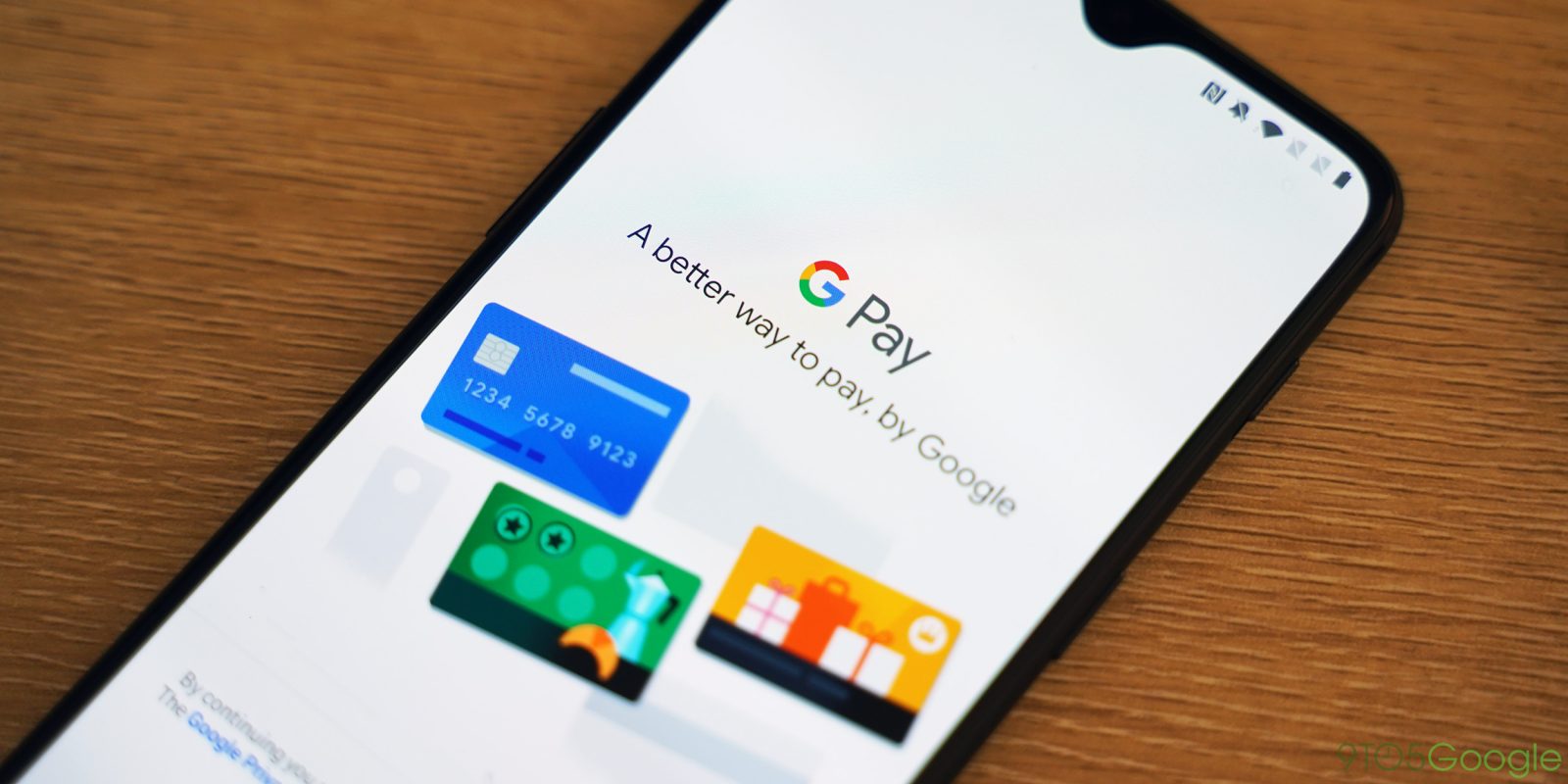
With the hot weather beginning to arrive, Google Pay is getting ready for your summer shopping trips this June by adding twenty-one more US banks and credit unions to their ever-increasing list of supported financial institutions.
If you use Google Calendar to track your crazy busy schedule, you may have trouble doing so from your computer this morning. Users from around the world are reporting that Google Calendar on the web is currently down, strangely returning a 404 error.