Kyle Bradshaw joined 9to5Google in 2018 with a special interest in Google’s Fuchsia OS, rooted in his experience of being the first to offer a visual preview of the revolutionary design of the in-development operating system. Since then, his attention has broadened to include the secrets hidden within other areas of Google’s public codebases.
By reading the public Fuchsia code, Kyle was able to prove the existence of the Nest Mini and the Nest Hub Max months ahead of their respective announcements. With evidence from Chromium, he reported on Google’s since-canceled efforts to create an offshoot of Android designed for “touchless” feature phones.
In 2018, Kyle reported on three distinct Made by Google Chromebooks in development, the Pixel Slate, the Pixelbook Go — a full year before its release — and “Meowth,” the original version of the Pixel Slate that was canceled due to Intel’s delays that year. For ChromeOS itself, Kyle was the first to demonstrate the upcoming light theme redesign in action.
Looking at the early evidence of the Pixel 5’s specs, Kyle accurately predicted in February 2020 that the Pixel 5 might not be a traditional “flagship” phone. In 2021, he reported that Google’s next headset would be the “Pixel Buds A.”
Kyle was the first to report that the Pixel 6 would mark the debut of Google’s in-house processors, later revealed to be the Tensor chips.
He can be reached for tips or just friendly chat by Threads, Mastodon, Bluesky, or email. If you’re looking for his other works or side projects, head over to Kyle’s personal portfolio.
Samsung’s Unpacked 2019 event occurred today, with the company unveiling all of its latest phones, wearables, and accessories. Their latest and most affordable smart watch, the Galaxy Watch Active, didn’t get quite the full amount of attention it deserved on stage today. So here are some extras you may have missed.
Samsung is no stranger to the trend of truly wireless earbuds, having released two editions of the Samsung Gear IconX, but have yet to reach the level of greatness seemingly achieved by Apple’s AirPods. At Unpacked 2019, Samsung announced their latest attempt, the Galaxy Buds.
Many companies are eyeing the market for more budget-friendly devices and releasing slightly lesser versions of their premium flagship phones. At Unpacked 2019, Samsung is the latest to try and tap into the success found by the iPhone XR, with the Galaxy S10e, the first budget-friendly phone in the Galaxy S series.
Google’s Digital Wellbeing app, currently an exclusive to Pixel phones, allows you to set usage timers for your apps, which block you out of the app when they expire. A similar usage timer feature is coming for Android Q devices in Google Chrome’s first Digital Wellbeing integration.
An “experiment” in Chrome 72 is causing a bug that breaks certain extensions, including ad blockers, extensions that integrate with Gmail, and some VPNs. Thankfully it’s easy to fix, and get your extensions back to working as expected.
Chrome OS 72 Stable has been available for almost two weeks now, bringing Android Pie to a few devices, but in the past few days, some users have noticed a serious slowdown issue. Thankfully, there’s a few ways to avoid it entirely.
In this week’s top stories: Google Assistant’s built-in list of features gets a visual redesign, Nikkei reports the Made by Google 2019 lineup, an ad for the Pixel’s Childish Gambino Playmoji airs during the Grammys, and more.
Just in time for all the recent excitement around Google’s Playmoji, including Childish Gambino exclusive to Google Pixel phones and yesterday’s Valentines-themed stickers, the underlying ARCore is welcoming eight new phones to the ever-growing device roster, including all four phones in the Moto G7 series and its first dual-display phone.
As many websites make their money from tracking and advertising, especially advertising targeted to individuals based on their web activity, Google Chrome’s Incognito Mode can help give users a sense of privacy by temporarily disconnecting from their Google, Facebook, and Amazon accounts. For those who use Incognito this way, you may be shocked to know that Chrome has long had a flaw that can be abused by web developers to detect whether you’re using Incognito Mode. According to a set of new code changes, Google is finally looking to fix this issue.
Many times, when working with documents, you may find yourself doing the same things over and over again, whether that’s copying pieces of information from one document to another or filling out forms at work. Whatever the case may be, Google is now ready to help automate your workflow with the new Google Docs API.
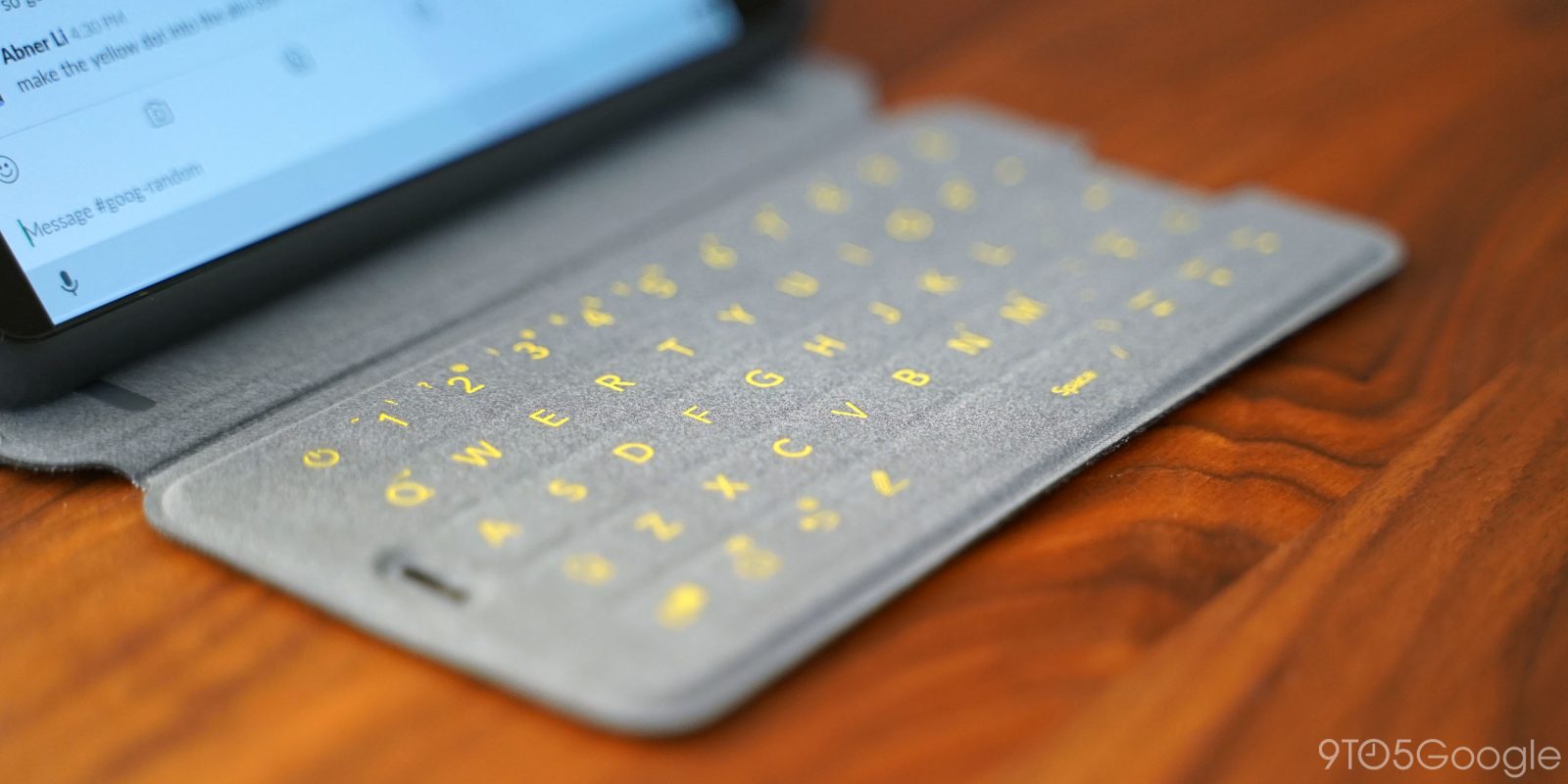
In this week’s top stories: Tech21 offers up the most unique Pixel 3 XL case to date with a built-in keyboard, we see how the Samsung Galaxy Note 9 holds up 6 months after release, Childish Gambino dances his way into Google Pixel phones, and more.
Our avid readers know that we follow Fuchsia, Google’s in-development operating system, closely here at 9to5Google, for both its software and the various device prototypes that Google adds support for. This week on Fuchsia Friday, more details have come to light about Fuchsia’s “Sherlock” prototype, which strongly associate it with the Google Home Hub and suggest a Home Hub “Max” could be in the works. Expand Expanding Close
Thanks to improvements Google has launched over the years, Chrome OS is now capable of running four different kinds of apps — Chrome apps and extensions, Web apps (including PWAs), Android apps, and Linux apps — each of which is managed differently. This has made app management on Chrome OS into something of a mess, but Google is looking to unify the platform with a project called the “App Service.”
For the past few months, we have been tracking leaks of Google’s budget-friendly “Pixel 3 Lite” and “Pixel 3 XL Lite” phones, which are beginning to follow in the leaky footsteps of the standard Pixel 3. The latest info drop claims to reveal the model numbers for both “Pixel 3 Lite” devices.
We learned last year that at least one Chromebase, the official name for an all-in-one style Chrome OS device, was in development from Chromium source code. Acer is the first to unveil their next generation of Chromebase hardware with the Acer Chromebase for Meetings 24V2 and Acer Chromebase 24I2.
In this week’s top stories: Google labels the iPhone XS as “Phone X” in a Pixel 3 ad, the Google Material Theme arrives for both Gmail and Google Voice, and we get a more official look at the Galaxy S10 from press renders.
Since the Pixel 3 and Pixel 3 XL launched in October, getting one serviced if your screen or back glass got damaged has not been the fastest or most straightforward task. Now, almost four months after launch, that’s changing, thanks to uBreakiFix beginning to offer same-day repair service for Pixel 3 and Pixel 3 XL.
Last week, Google unveiled the first draft of a collection of changes to the Chrome extensions platform, known as Manifest V3, which received almost immediate backlash from the developers of ad blocking extensions. The developer of Tampermonkey is now joining in on the Manifest V3 conversation, detailing how it would stop the popular extension from working altogether on Chrome.
If you use a Chromebook, one of the best reasons to own a Pixel phone was for its compatibility with Chrome OS’s Instant Tethering. With Instant Tethering, any time your Chromebook isn’t on WiFi, it would initiate a hotspot from your Pixel (or Nexus). Reports are now coming in that Android phones other than Pixel and Nexus devices are beginning to get Instant Tethering.
In this week’s topstories: leaked prototypes give us our best look at the Galaxy S10 & S10 Plus yet, we show off one of the best Pixel 3 cases, celebrate the arrival of Android Pie beta on the Galaxy S8 and Note 8, and more.
Yesterday, it was uncovered that Google is proposing a new set of rules and APIs for Chrome extensions to use, called Manifest V3, which, among other things, would severely hamper the capabilities of ad blocking extensions like uBlock Origin. The extension developer community is lashing back in a large way, with the developers of well-known Chrome extension Ghostery even considering an anti-trust complaint should the proposed change go through.
Google Chrome has supported some virtual reality headsets like Oculus Rift on Windows for almost a year now, through Google’s WebVR program, but Windows Mixed Reality headsets were notably incompatible. This is soon to change, as a new flag coming to Chrome will enable early testing of Windows Mixed Reality headsets with WebVR.
Over the years, Google Chrome has changed in many ways, some good, some not so much. Google is proposing a new change to Chrome that arguably falls into the latter category as it will adversely affect the functionality of ad blocker extensions like uBlock Origin and AdGuard.
Last night, a Redditor from Toronto posted a claim that his brand new Pixel 3 XL overheated while on the charger, before it finally released “smoke, started to glow red, and spewed flames.” Some circumstances leading up to this issue, including potential charger misuse, may have been the culprit.