Abner Li has worked at 9to5Google since 2015 and in late 2020 took on the role of editor-in-chief. He is keenly focused on tracking what happens at Google, and is often the first to spot new features in Google’s ever-growing family of applications that are updated on a daily basis, including Search, Assistant, Maps, Workspace, Android, Chrome/OS, Wear OS, and YouTube Music.
To him, what Google does greatly impacts the technology space and modern life. Inside the company, he is particularly interested in the key products mentioned above, as well as services like Google Podcasts and Google Lens. Each are massive platforms that can be unwieldy to grasp, with Abner keenly bent on understanding their philosophy and future direction. He is most excited about Google’s plans for augmented reality glasses.
Abner spearheads the APK Insight program at 9to5Google to chronicle all changes in the company’s Android apps, often finding new features before they are officially announced. This includes redesigns and revamps, launches, and new products.
Android 12 brings a renewed focus on widgets with Google Photos and Clock — just this week — serving as key examples. YouTube Music is working on a Material You widget, and we’ve enabled a preview of it.
A year ago, Google streamlined Assistant preferences by switching to one unified list showing all features in alphabetical order. The latest step to simplify Google Assistant settings involves splitting Voice Match and other options by device type.
In May of last year, Google officially rolled out a night mode for the Search apps on Android and iOS. Google.com on desktop web is now officially getting its dark theme.
Video effects are useful for both personal and work calls. Google Meet is now making it easier to set visual effects on the web with a new settings panel.
Following the Gmail redesign last week, Google today showed off Material You for the key Workspace apps on Android 12. This includes Google Calendar, Drive, Docs, Gmail, Meet, Sheets, and Slides.
After initial testing in May, Google today has widely rolled out a redesign of Android’s default Weather app. Part of Google Search, the experience was overdue for a modernization.
With Android 12, Google announced the “Private Compute Core” to allow for “new technologies that are private by design.” The company shared more details today about Android’s Private Compute Services.
Google’s next environmental goal after committing to being carbon-free 24/7 worldwide by 2030 is focused on water and replenishing more of it than its offices and data centers use.
Just over a month after the first preview, Google this evening released the first Pixel 6 ad. With a “For All You Are” tagline, this 30-second video provides our first real, non-rendered glimpse of the hardware.
With the launch of Wear OS 3 on Samsung’s Galaxy Watch 4, Google announced a wearable redesign of Pay as well as expanded international availability. Google Pay on Wear OS is now coming to 10 more countries.
Besides a slew of Material You additions and other enhancements, Android 12 Beta 5 today expands — as we’ve been expecting — Nearby Share with an “Everyone” visibility option, redesigned QS pane, and multi-device sharing.
Beta 5 of Android 12 is here as the final update before the public launch in the coming weeks. The Android 12 Easter egg was introduced last month, but it’s gotten more elaborate today with a homescreen widget that tells you the Dynamic Color palette Material You is using.
Google today released the final update to Android 12 before the public launch in the next few weeks. Over the coming hours, we’ll dive into Android 12 Beta 5 to chronicle all the new features.
Nearly seven months have passed since Google released the first developer preview of its next major mobile OS release. Android 12 Beta 5 is available today as the final update (and release candidate) before the public launch.
Soft and hardcover photo books were the first Google Photos print product, and the lineup has since expanded to several other offerings. Google Photos is now letting you get prints in more sizes and as a delivery instead of having to pick them up in a store.
Back in June, with the announcement that Workspace is available “for everyone,” Google revealed that “Rooms” in Chat would soon be renamed to “Spaces” and gain a slew of new features. That rebrand is now underway.
While text chatting with classic Hangouts is still possible today, Google has killed most of the legacy service’s video calling features. Google will soon restore a familiar capability that lets you make direct calls using Meet without having to generate a link ahead of time.
Back in September, Google announced a more integrated video conferencing kit created in partnership with Lenovo. The latest in the “Series One” Google Meet hardware family are all-in-one touchscreens that are essentially Jamboards with better cameras and two sizes.
Wallpaper-based theming is the main highlight of Android 12 and Material You. However, Dynamic Color did not initially work with the Pixel Live Wallpaper collection/category, and an app update rolling out this week remedies that.
With Beta 4.1, Android 12 is almost ready to launch, but until then Android 11 with the September security patch is now available for the Pixel 3, Pixel 3a, Pixel 4, Pixel 4a, Pixel 4a (5G), Pixel 5, and Pixel 5a.
Back in 2018, the Renault–Nissan–Mitsubishi Alliance announced that it would adopt Google’s native car operating system to offer built-in Assistant, Maps, and Play Store. Renault today announced the Mégane E-Tech Electric with Android Automotive and a Qualcomm Snapdragon chipset.
Google’s chip ambitions have always been rumored to go beyond the smartphone and eventually be used for Chromebooks. A report last week pegged 2023 as when we’ll see such a computer. There are many open questions about what the resulting Chrome OS device(s) will look like, but Tensor will undoubtedly be Google’s best chance to reboot the Pixelbook and offer a broader lineup.
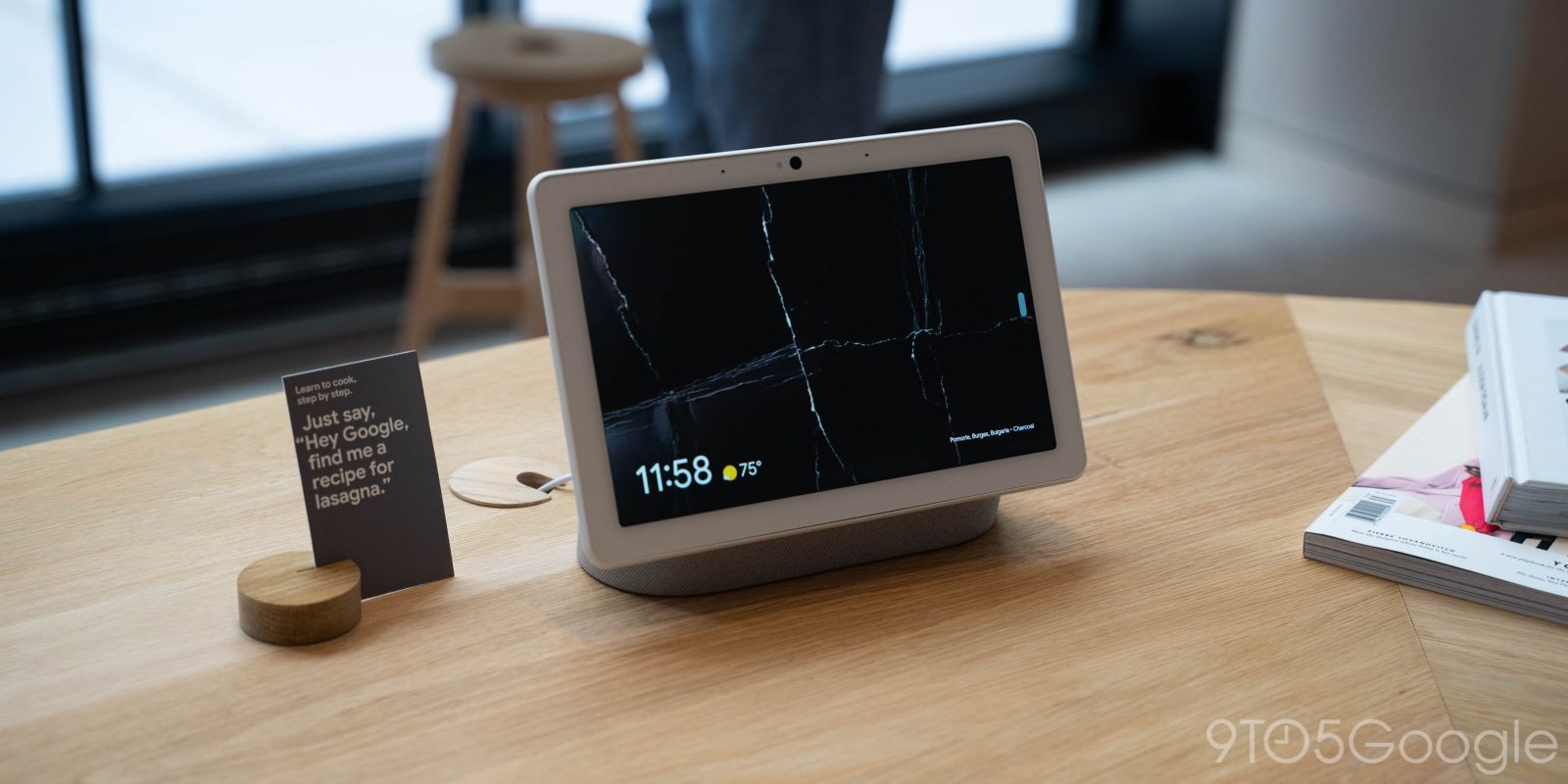
Last month, Google announced that the Nest Hub would start showing Air Quality (AQI) information in the US. Many are now seeing a new setting in the Google Home app, though the actual reading is not yet widely rolled out on Smart Displays.