Abner Li has worked at 9to5Google since 2015 and in late 2020 took on the role of editor-in-chief. He is keenly focused on tracking what happens at Google, and is often the first to spot new features in Google’s ever-growing family of applications that are updated on a daily basis, including Search, Assistant, Maps, Workspace, Android, Chrome/OS, Wear OS, and YouTube Music.
To him, what Google does greatly impacts the technology space and modern life. Inside the company, he is particularly interested in the key products mentioned above, as well as services like Google Podcasts and Google Lens. Each are massive platforms that can be unwieldy to grasp, with Abner keenly bent on understanding their philosophy and future direction. He is most excited about Google’s plans for augmented reality glasses.
Abner spearheads the APK Insight program at 9to5Google to chronicle all changes in the company’s Android apps, often finding new features before they are officially announced. This includes redesigns and revamps, launches, and new products.
Google Assistant is available on a slew of platforms from cars to TVs and wearables. However, the place where it has really taken off is inside the home on Smart Displays and speakers to control household fixtures. Google now wants to bring Assistant’s ubiquity to Android apps.
Google Lens has long been tied to Assistant on Android, while iOS users have access to it as part of Search. The Google app on Android is now testing a prominent Lens shortcut.
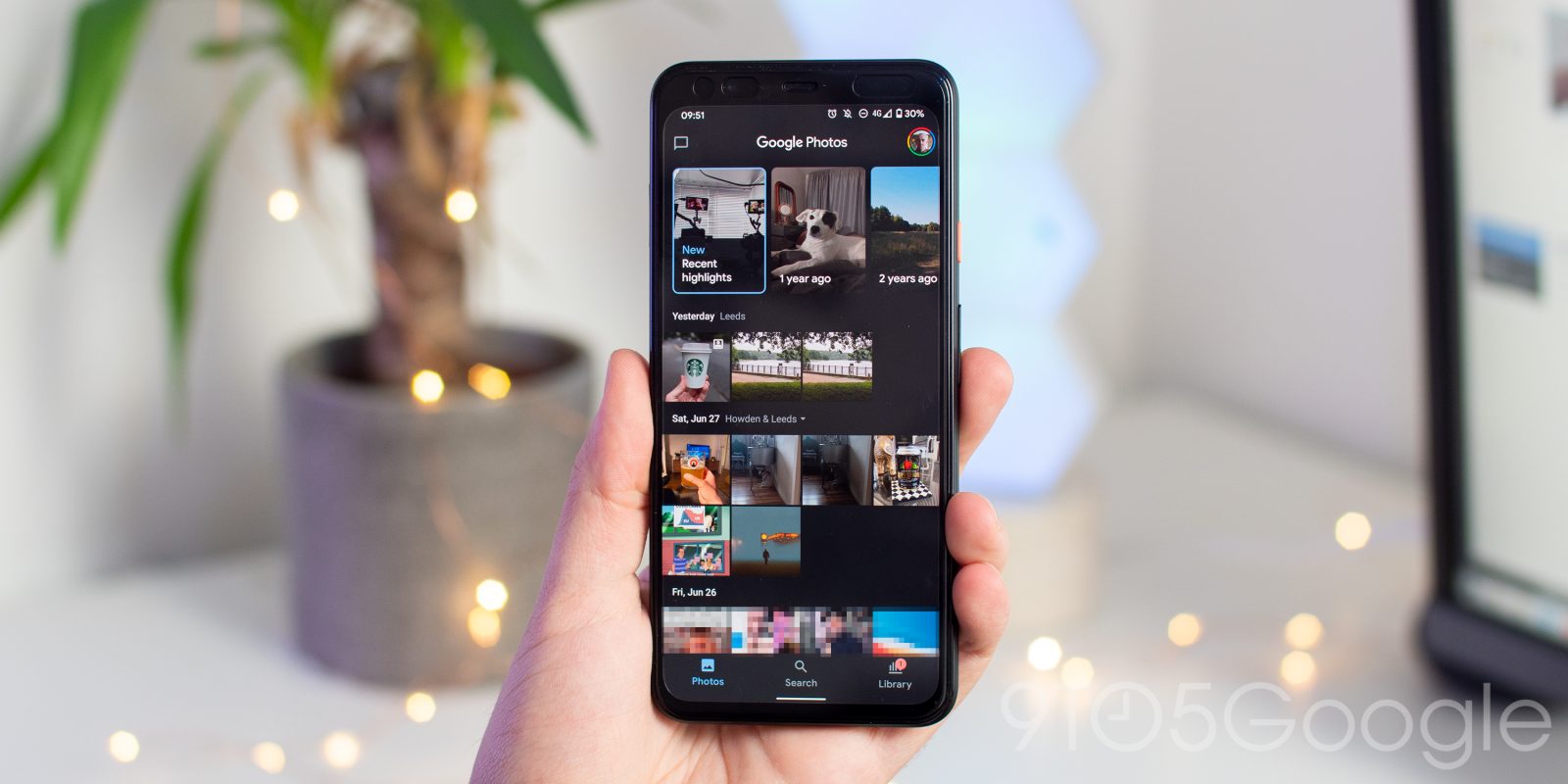
As part of the Pixel 4a 5G and Pixel 5 launch, Google Photos is getting an image editor redesign on Android that features “smart suggestions and easy-to-use granular adjustments.”
Google positions Assistant as being able to provide help throughout your day, and recently rolled out Gentle Sleep & Wake to all smart lights, while Routines let you quickly turn off devices for the night. Google Assistant is now readying integration with health services so that you can verbally ask for fitness and sleep information.
October is National Cybersecurity Awareness month, with Google yesterday highlighting what Chrome is doing to protect user privacy and security. Today, the company announced a Google Assistant guest mode and in-app critical security alerts.
Following an over year-long investigation and Congressional testimony from CEOs in July, the House Judiciary Committee on Tuesday published a report on “Competition in Digital Markets.” Google is one of the four companies facing scrutiny for its dominance and antitrust concerns.
In addition to announcing a revamped Wifi router today, Google is rolling out an update to existing units and Nest devices. The most prominent feature is a notification when new devices join your network.
Privacy Sandbox is Google’s initiative to build a more private web through open standards. Announced last year, Chrome in January announced that it plans to “phase out support” for third-party cookies. Google today provided a Privacy Sandbox update and put out a call for “continued help in increasing the privacy of web browsing.”
Google last year previewed persistent Cloud Anchors that can be tied to a specific location and lets information be permanently overlaid over the real world. With ARCore 1.20, it’s officially launching with a number of apps already taking advantage. Meanwhile, Google today showed off Earth Cloud Anchors.
Google is heavily pushing an AMP-based stories format, with last month seeing the launch of a WordPress plug-in and new Web Creators community. Web Stories are now officially coming to Google Discover in a much more prominent manner.
October is International Augmentative and Alternative Communication (AAC) Awareness Month, and Google is working to make Assistant available on Tobii Dynavox devices, as well as updating Action Blocks to provide a more familiar experience.
Following version 85’s release on Android, Mac, Windows, and Linux, the next release of Google’s browser is rolling out today. Chrome 86 makes a number of security-focused additions and a handful of other usability tweaks.
Last month, we first reported that a new Google Wifi was in the works. Less than a week after Launch Night In, the Google Store this morning quietly released a new router that looks exactly the same, but now starts at $99.99.
As part of Google Workspace, the company is rolling out new branding for its productivity apps. Gmail — as teased last month — will be getting a new icon, with Calendar, Drive, Docs, and Meet also following over the coming weeks.
The past few months have brought a flurry of changes to Google’s productivity apps. Some of the revamps were brought on by the COVID-19 pandemic, while others have long been in the works. The culmination of those changes is “Google Workspace.”
It’s both the new name of G Suite and a complete modernization of the company’s productivity offerings that reflects how work is increasingly getting done.
Since the revamped Snapshot feed launched in March, Google has been adding more and more features. Google Assistant now offers settings to control which cards appear in Snapshot.
Last month, the Pixel 2 and Pixel 2 XL were updated to Android 11, and just today received the latest security release. With this patch, the Pixel 2 will receive one last update in December.
Over the past year, Google ATAP has brought Jacquard to more than just Levi’s jean jackets. The first expansion of this technology was to an $895 backpack that was wholly out of reach for most buyers. Jacquard by Google is now more affordably available in a backpack form factor with the Samsonite Konnect-i for $200.
This month’s security patch is the very first release after Android 11 and — as is typical — includes a slew of bug fixes. The October update addresses two key Pixel 4a issues, while all other devices also benefit.
Following last month’s launch, the first update to Android 11 is rolling out today with the October security patch. It’s available for the Pixel 2, Pixel 3, Pixel 3a, Pixel 4, and Pixel 4a.
YouTube Music continues its flurry of new features by adding global top charts to the Explore tab. That second section in the bottom bar launched earlier this year to replace the video-focused Hotlist.
With the launch of the Pixel 4a in August, Google teased the two other phones that would make up its 2020 lineup. The Pixel 5 and Pixel 4a (5G) are now here, though Google is also calling that latter device by a slightly different name.
Google Play Music is set to stop working for users around the world starting this month. YouTube Music continues to add legacy features to ease the transition, with Google Assistant now working to play personal playlists.
While Google’s flagship phone shares the Pixel 4a’s design language, one key difference is the more uniform screen bezel. In fact, there’s no top grill as the Pixel 5 likely leverages an under-display speaker.