Abner Li has worked at 9to5Google since 2015 and in late 2020 took on the role of editor-in-chief. He is keenly focused on tracking what happens at Google, and is often the first to spot new features in Google’s ever-growing family of applications that are updated on a daily basis, including Search, Assistant, Maps, Workspace, Android, Chrome/OS, Wear OS, and YouTube Music.
To him, what Google does greatly impacts the technology space and modern life. Inside the company, he is particularly interested in the key products mentioned above, as well as services like Google Podcasts and Google Lens. Each are massive platforms that can be unwieldy to grasp, with Abner keenly bent on understanding their philosophy and future direction. He is most excited about Google’s plans for augmented reality glasses.
Abner spearheads the APK Insight program at 9to5Google to chronicle all changes in the company’s Android apps, often finding new features before they are officially announced. This includes redesigns and revamps, launches, and new products.
Most people primarily experience Material Design in Android apps, while web adoption is mostly limited to Google’s first-party sites. A new Material Design for WordPress plugin, which Google currently calls an experiment, possibly opens up the look to many more pages and blogs.
Back in October, Google officially dropped support for its virtual reality platform with Android 11. Daydream is no longer receiving updates, and now can no longer access the Google Play Store or other VR discovery features.
Augmented reality glasses will fundamentally change how we use technology and our relationship to the internet. Facebook is vocal about its general plans, and Microsoft has HoloLens for enterprise, while the rumors around Apple’s offering is at an all-time high. On the hardware front, Google speculation is notably absent. The lack of AR glasses rumors is not yet disconcerting due to Google’s software work and acquisitions, but it could get so soon.
With Android Enterprise, Google for the past several years has worked to get devices running its operating system into more corporate environments. Made by Google is now advertising Pixel phones as “Built for business.”
The vast majority of Google’s iOS apps have not been updated since early December. A trio of smaller Google applications saw new versions towards the end of last month, while YouTube for iPhone and iPad was just updated this evening.
In the early days of Google’s wearable platform, smartwatch apps were bundled with their phone counterparts. Android Wear 2.0 moved to a standalone app model as part of introducing the on-device Play Store. Google now plans to deprecate that legacy approach to Wear OS apps next month.
With Oculus VR headsets and Portal video conferencing smart displays, Facebook is increasingly becoming a hardware maker. One Facebook product reportedly in the pipeline is a smartwatch that’s trying to compete with Google-owned Fitbit and the Apple Watch.
A connection outage this morning is preventing Google Assistant on Home, Android, and other devices from controlling Philips Hue light bulbs and fixtures.
Cloud streaming particularly excels on devices that would otherwise never get access to AAA titles. To emphasize that today, Google announced that it’s giving most Chromebook owners a three-month Stadia Pro trial.
Back in 2019, Google provided dedicated Meet IP addresses to help network prioritization. That was focused on Workspace domains, and Google Meet is now listing a range of official, fixed IP addresses for all other users.
If you’re not using security keys, the Google Prompt is the next best two-factor authentication method to protect accounts. Google is now updating the Prompt’s Android UI with a much-needed dark theme.
Montblanc debuted its first smartwatch in 2017 and followed with the Summit 2 a year later. At the start of 2020, the luxury brand announced a “+” version, while rumors of something more affordable emerged in November. The Montblanc Summit Lite was announced just under a month ago with so little fanfare that we did not become aware of this Wear OS device until today.
While Chrome for iOS hasn’t seen a stable release since November amid an ongoing pause in updates, Google continues work on the beta channel and is currently testing a way to lock Incognito tabs with Face or Touch ID.
Google Search has historically evaluated “all content on a web page to determine if it is relevant to a query.” Back in October, alongside the launch of Hum to Search, Google announced passage ranking, and it’s now starting to roll out.
Google One primarily serves to give you more storage space for Gmail, Drive, and Photos. Last year, the subscription added a VPN and is now providing all Android users with access to “enhanced” Google Photos editing tools and filters that were previously only available on Pixel phones.
Microsoft’s first Android Foldable launched in September to mixed reviews, while updates in the intervening five months have been focused on stability fixes rather than new features. The Surface Duo is coming to Europe next week and getting a $400 price drop in the US.
Following an unexpected fifth title to start the year, February 2021 will see three games join Stadia Pro on Monday: Journey to the Savage Planet: Employee of the Month Edition, Lara Croft and the Guardian of Light, and Enter the Gungeon.
Google hasn’t updated the vast majority of its iOS services since December. Those apps are now throwing up “This app is out of date” messages when attempting a Google sign-in.
The Nest Thermostat is Google’s cheapest offering in that smart home category partly because the Thermostat E is no longer available for regular consumers to buy. Now limited to Nest Pro installers, Google late last month announced the “Nest Thermostat E + Goodman.”
YouTube Music has seen a few tweaks since the start of this year, with the latest one giving users a better preview of what songs are in playlists they’ve created, thanks to a grid view that matches Spotify and Apple Music.
Google last updated the second-generation Assistant headphones in September with a fix for audio cutouts after a set interval. Firmware 553 is rolling out to Pixel Buds today, though an update changelog has yet to be provided.
As of last year, downloading certain apps from the Play Store on Chrome OS would automatically “install” the Progressive Web App. The latest service to follow this PWA approach is YouTube Music, though Google is taking a circuitous route with a separate Chromebook listing.
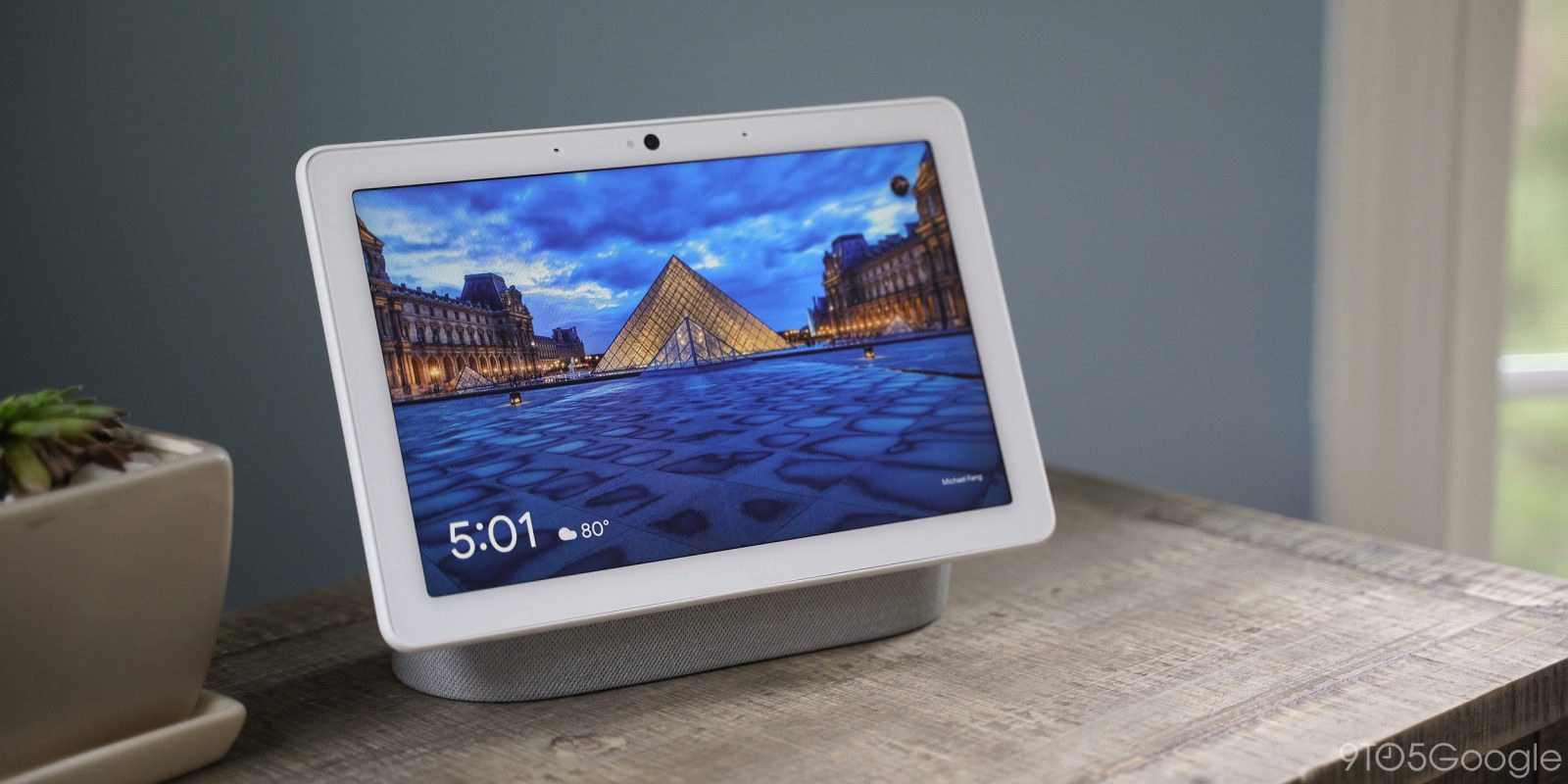
The Google Nest Hub and Hub Max are picking up a handful of new features with Cast firmware version 1.52. This release has been in the Preview Program for the last few weeks, and is now widely rolling out to all other users.